
Unbiased headlines. Facts, not spin.
Every story is an unbiased news briefing written from 110+ sources across the spectrum — sources linked so you can verify it yourself.
 politics
Notable (6/10)
July 27, 2026 at 07:22 PM
politics
Notable (6/10)
July 27, 2026 at 07:22 PM
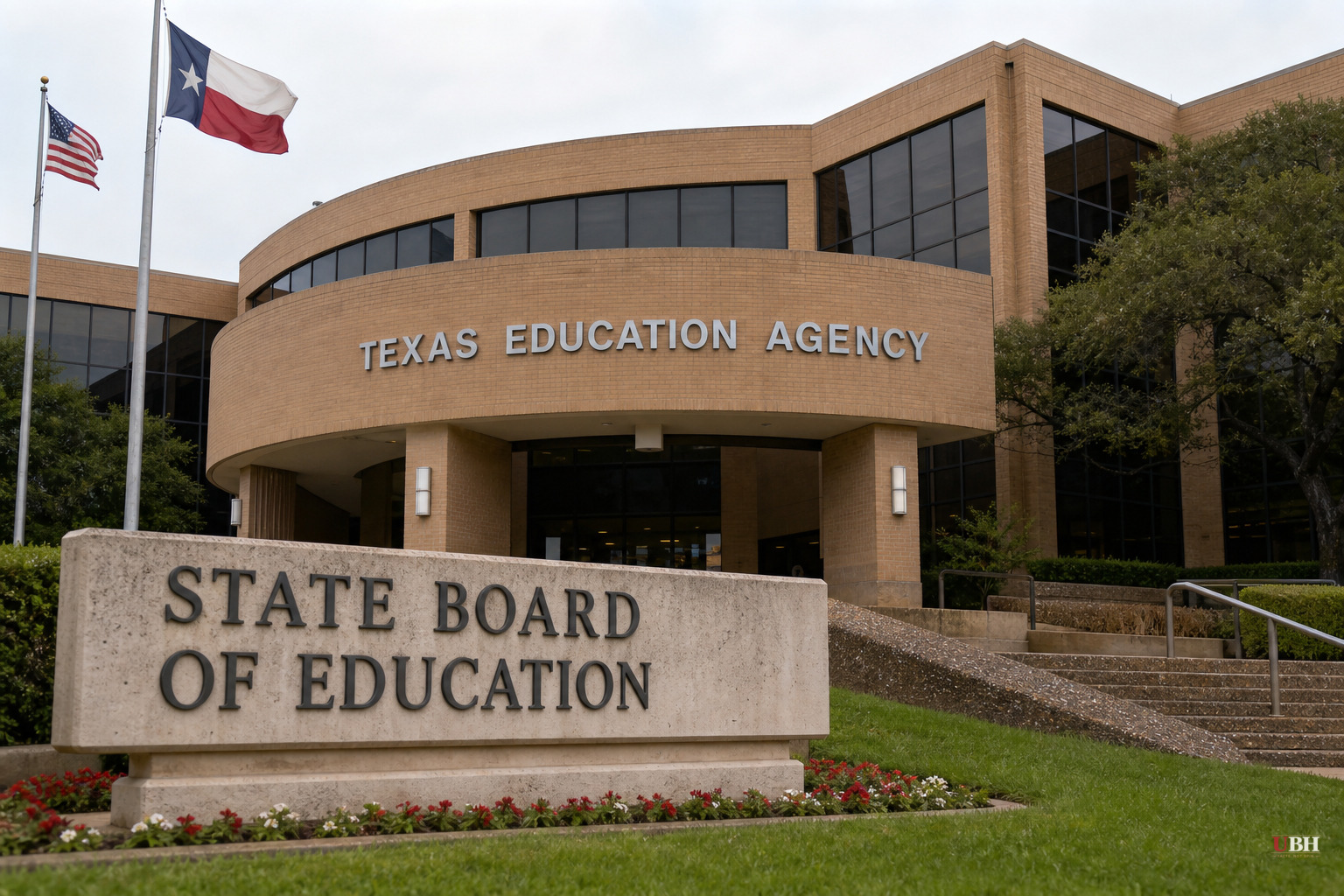
Texas Adds Bible Stories to Required Reading List for K-12 Public Schools
What Texas Actually Approved
The Texas State Board of Education signed off on a new required-reading curriculum this summer covering the state's 5.4 million public school students, from kindergarten through 12th grade. Students will now be assigned biblical excerpts and adaptations alongside familiar titles like The Cat in the Hat, The Snowy Day, The Giver, and Fahrenheit 451, according to The Atlantic.
The Bible material starts simple. Younger students get Jonah and the whale, David and Goliath. Older students move into denser material, including Job's complaint against God and, in seventh grade, the Sermon on the Mount. This isn't a standalone religion class. It's built into the existing literature curriculum.
This follows a Texas law passed last year requiring public schools to display the Ten Commandments in classrooms. Together, the two moves represent a deliberate push, as The Atlantic notes, to put religious text back into the public school day.
The Case For It
The argument, laid out by The Atlantic, is a literacy and history argument, not strictly a religious one. American history, law, and literature are saturated with biblical language, and a student who doesn't recognize it is missing context for understanding the country's own past.
The examples are concrete. Harriet Tubman was known as "Moses" for her work with the Underground Railroad, drawing on the way enslaved Americans read the Exodus story as a model for their own liberation. Abraham Lincoln's second inaugural address quoted Psalm 19 directly when he framed the Civil War's casualties as God's punishment for the sin of slavery. The phrase "four score and seven years ago" in the Gettysburg Address was, for Lincoln's original audience, a mournful echo of Psalm 90. Classic American novel titles, East of Eden, Absalom Absalom, The House of Mirth, The Sun Also Rises, Song of Solomon, come straight out of Genesis, Samuel, and Ecclesiastes.
None of that context is optional if the goal is actually understanding American literature and history rather than skimming it. A student who has never heard of the parting of the Red Sea or the Sermon on the Mount is working with a smaller vocabulary for understanding speeches, novels, and founding-era rhetoric that assumed biblical literacy as a baseline.
The Case Against It
The strongest objection is that this isn't really about literacy. To many liberals, requiring the Bible looks like an attack on civil liberties and cultural diversity. The Freedom From Religion Foundation said the decision sends "a clear message to nonreligious and non-Christian students and families that they don't quite belong or should convert."
The Dallas Morning News made a related point in an editorial, complaining that the Texas reading list includes "excerpts from the Bible but no other major religious works," and suggesting that the Quran and the Bhagavad Gita should also be represented given their comparable influence on world literature and law.
The Atlantic notes that Texas is home to almost 500,000 Muslims and a similar number of Indian Americans, and observes that in 1963, the idea of public schools needing to teach Bible stories to Hindu and Muslim students was largely hypothetical. In Texas today, it's a certainty.
What's Actually Being Tested
Whether Texas's new curriculum is treated as literacy education or religious promotion depends heavily on execution. State officials have avoided mentioning religion in their official explanations, instead framing the Bible stories as part of a "common literary canon." But as The Atlantic points out, teachers will face real complications: explaining the literary and historic quality of a verse like "Blessed are the poor in spirit, for theirs is the kingdom of heaven" while remaining strictly noncommittal about the existence of blessings, spirit, and heaven is no small task. Parental complaints are expected, and not just from non-Christian households, since Christian believers have their own stake in how the words of Jesus get explained in a public school classroom.
Combined with the state's parallel Ten Commandments law, the reading list guarantees Texas will remain the epicenter of this fight over where public education ends and religious instruction begins.
Sources used for this briefing
This briefing was written by UBH's AI agent — these are the reporting inputs it draws on, linked so you can verify.


