
Unbiased headlines. Facts, not spin.
Unbiased Headlines is an independently owned news organization. We bring you the facts, not opinions, written fresh from 110+ named sources. Sources linked so you can verify it yourself.
 politics
Notable (5/10)
West Virginia Voters Approve Citizens-Only Voting Amendment, 79% to 21%
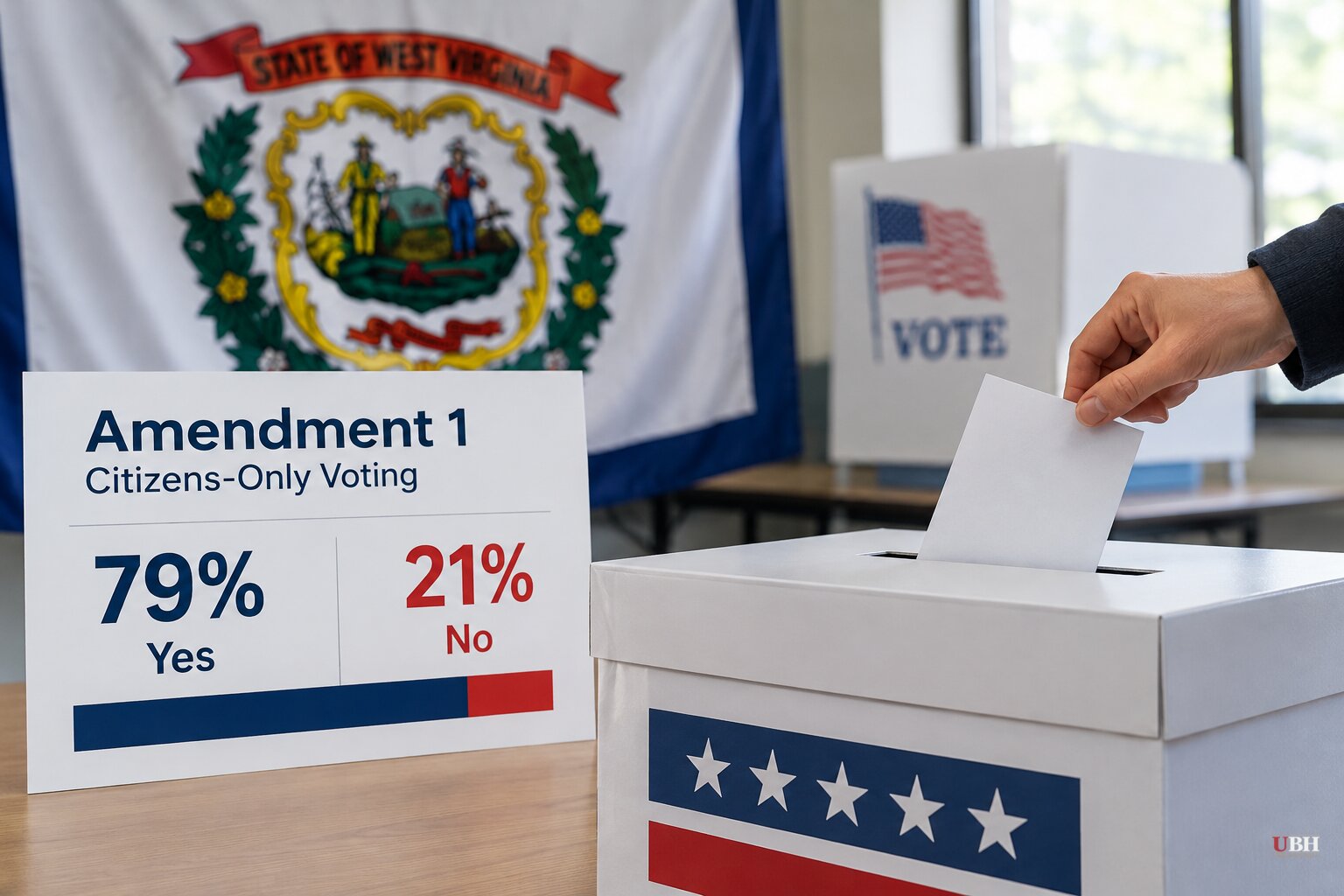
West Virginia voters on Tuesday, Nov. 3, approved Amendment 1, a change to the state Constitution that says only U.S. citizens may vote in state elections. With all of the vote counted, it finished with a 79-21 edge, with yes votes leading by more than 100,000.
In AP tallies with 68.7% of the vote reporting, the count stood at 339,487 yes (79.31%) to 88,547 no (20.69%). The amendment needed only a simple majority.
What the amendment changes
Noncitizens could not vote in West Virginia before this week. West Virginia Code §3-2-2 requires U.S. citizenship, and voting by noncitizens is already unlawful under state and federal statute.
The gap was in the constitution. Article 4, Section 1 said only that "citizens of the state" are entitled to vote. Article 2, Section 3 defines state citizenship to include a person "residing in this state."
Read literally, a resident who is not a U.S. citizen could qualify as a state "citizen" under the constitution. The amendment replaces that wording with language limiting the vote to "citizens of the United States who are citizens of this state."
The amendment keeps the existing disqualifiers. Minors, people declared mentally incompetent by a court, people under conviction of treason, felony or bribery in an election, and people who have not met the 30-day residency requirement still cannot vote. Military members stationed in the state are still not deemed residents by reason of that posting.
Why lawmakers put it on the ballot
The Legislature sent the measure to voters by Senate Joint Resolution, passed on the final day of this year's legislative session. Sen. Patricia Rucker (R-Jefferson), the assistant majority leader, spoke for it.
"West Virginia already has in code that only citizens can vote in elections, but that is not enough," Rucker said at a Sept. 15 press conference at the Capitol. "That's law, and law can change, as we know. But the language in our Constitution is not clear."
She said the change "will ensure that no future Legislature can just simply change things" and "gives us greater authority to enforce the law we currently have in place." Rucker is a naturalized citizen originally from Venezuela. She said citizenship and the right to vote are important issues to her.
That is the practical effect. Both the state and the federal government already require voters to be U.S. citizens, but the amendment places the requirement in the constitution, making the standard more difficult to change in the future.
Jack Tomczak, vice president of outreach for Americans for Citizen Voting, said the result shows "regardless of party, gender and race, Americans want only U.S. citizens to be allowed to legally vote in American elections." The group is a national advocacy organization that supports citizen-only voting initiatives.
Part of a wider set of ballot measures
West Virginia was one of four states with a citizenship-to-vote amendment on the ballot, alongside Arkansas, Kansas and South Dakota. According to AP figures, voters in all four approved their measures. Arkansas passed its amendment with roughly 68% in preliminary returns. Kansas' amendment makes only small, clarifying changes. South Dakota's makes explicit that noncitizens are disqualified.
Voter ID drew a more mixed result. Early Wednesday, AP figures showed North Carolina and Ohio on track to approve photo ID amendments. Ohio's includes an exception for people with a sincere religious objection to being photographed. California voters rejected a proposed constitutional ID requirement, and local media reported that Colorado voters were widely rejecting a measure to tighten ID rules for mail ballots.
UPI counted more than 140 state ballot initiatives across 39 states on Tuesday, covering voting rights, abortion rights, taxes and the rights of transgender youth.
The rest of the West Virginia ballot
Amendment 1 was the only constitutional amendment before West Virginia voters. In the U.S. Senate race, Republican Shelley Moore Capito led Democrat Rachel Anderson 58.33% to 37.91% in AP tallies with 93.69% reporting. Fox News called the race at 8:50 p.m. ET.
The AP called District 1 for Republican Rep. Carol Miller, who led Democrat Vince George 57.09% to 39.59% with 95.57% reporting. It called District 2 for Republican Riley Moore.
The amendment will modify Section 1, Article IV of the state Constitution to prohibit persons who are not U.S. citizens from voting in any election held within the state.
Backers framed the change as closing a legal gap in the constitution and protecting the state's existing law from future legislative change.
Sources used for this briefing
6 links from 6 independent newsrooms (syndicated copies of the same report count once)
These are the sources it draws on, linked so you can verify.


