
Unbiased headlines. Facts, not spin.
Every story is an unbiased news briefing written from 110+ sources across the spectrum — sources linked so you can verify it yourself.
 politics
Low Interest (4/10)
July 27, 2026 at 05:55 PM
politics
Low Interest (4/10)
July 27, 2026 at 05:55 PM
Historian Robert Kagan Says U.S. Retreat From Global Leadership Won't Automatically Hand China the World
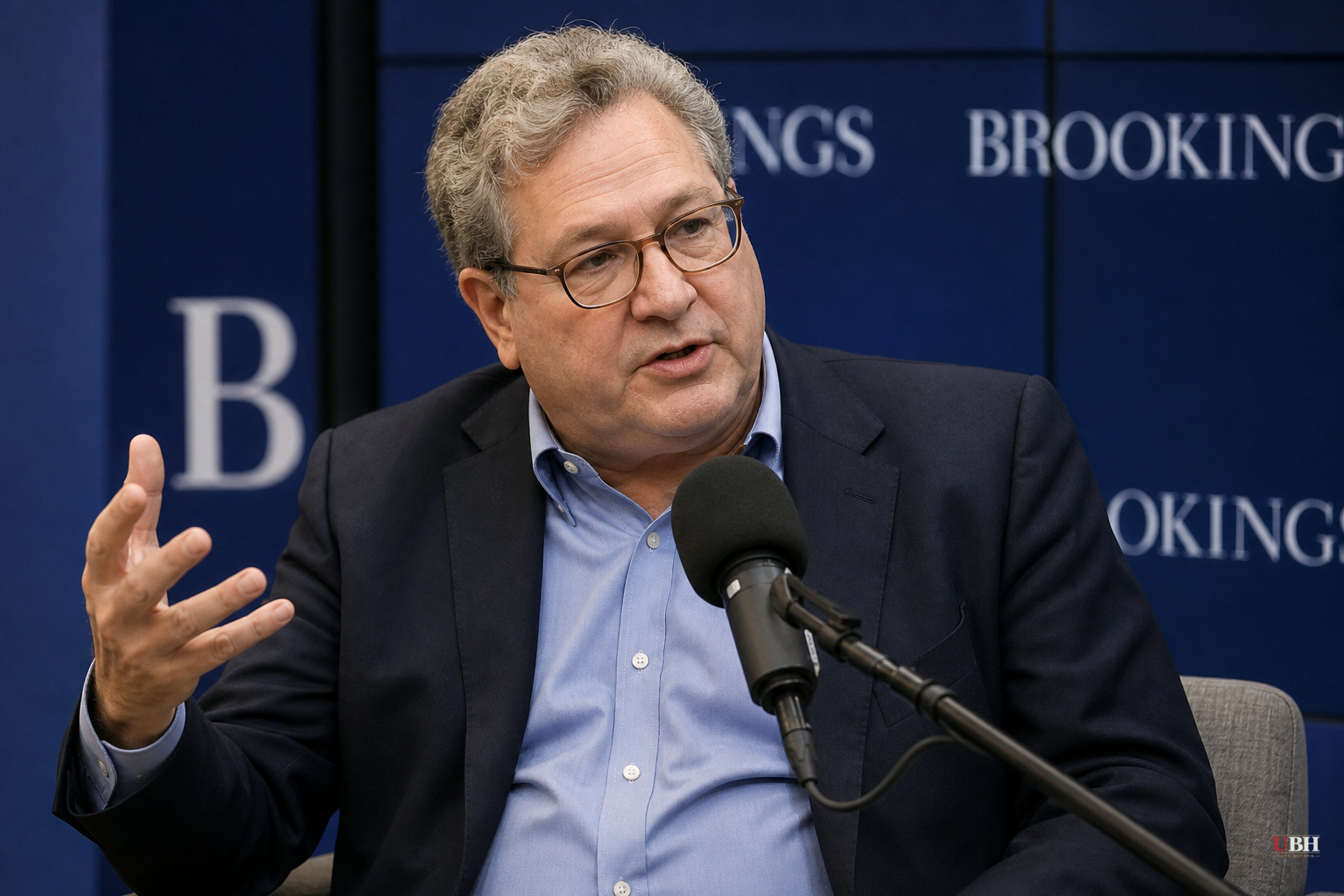
Robert Kagan, a senior fellow at the Brookings Institution's Strobe Talbott Center for Security, Strategy, and Technology, says the assumption that has anchored American foreign policy for decades is now genuinely up for grabs. Speaking on The Beijing Brief, a Brookings podcast hosted by China Center director Ryan Hass and co-host Jon Czin, Kagan put it bluntly: "We blew it."
The premise of the conversation is straightforward. For most of the post-World War II era, Washington operated on the assumption it should lead the international order, backstop alliances, and set the terms of global trade and security. Hass framed the current moment as one where that assumption is under real debate inside the United States, with Americans questioning the cost of maintaining that role and allies openly wondering whether Washington will still show up when it matters.
Kagan has spent much of his career writing about exactly this kind of inflection point. He's the author of "The World America Made," "The Jungle Grows Back," and "Dangerous Nation," along with his more recent book "Rebellion: How Anti-Liberalism Is Tearing America Apart Again." His argument across that body of work is that American-led order was never automatic or permanent. It required sustained political will, and that will can erode.
The China Question
Kagan expressed skepticism that China is positioned to simply step into whatever space America vacates. "China can't run the world unless it can at least run its own hemisphere, or at least its own region," Kagan said. That's a real constraint. Beijing's ability to project the kind of global authority Washington has held since 1945 depends first on whether it can secure dominance in East Asia, where Japan, South Korea, Taiwan, India, and a network of American alliances complicate any straightforward Chinese path to regional hegemony, let alone global leadership.
China's economy is enormous and its military modernization is real and well documented by the Pentagon's own annual reports to Congress. But economic scale and military hardware are not the same thing as the kind of alliance network, currency dominance, and diplomatic trust that let the United States write the rules of global trade and security for 80 years. Kagan's argument is that a vacuum left by American retreat doesn't get filled automatically or cleanly. It could just as easily produce disorder, regional power struggles, and instability rather than a smooth handoff to Beijing.
Iran as a Test Case
The conversation also touched on Brookings' "Blowback" project, which Kagan helped launch to examine how the recent war in Iran might reshape global dynamics. The transcript indicates Hass asked Kagan what prompted the initiative, though the available material cuts off before Kagan's full answer. The project's premise, per Brookings, is that the Iran conflict carries ripple effects for how other states, including China, calculate the durability of American commitments in their own regions.
What's Proven, What's Alleged, and What's Contested
The second Trump administration has taken a more transactional approach to alliances and international institutions than prior administrations, a shift widely reported across outlets from the Wall Street Journal to the Associated Press. Whether that shift constitutes American "decline" in a durable sense, or a recalibration that ultimately strengthens U.S. interests by shedding costly commitments, is a matter of genuine dispute among foreign policy analysts and not something this transcript resolves.
Kagan's own framing, that the U.S. "blew it," is his assessment as a historian and Brookings fellow, not a neutral finding. Brookings itself has a long institutional lean toward the traditional, alliance-centric view of American leadership that Kagan has championed for two decades. Readers should weigh his critique as one experienced voice in an ongoing argument, not a settled verdict. Conservative foreign policy voices, including figures aligned with the current administration's approach, would counter that decades of open-ended global commitments drained American resources and invited allies to free-ride on U.S. defense spending. This critique has its own long track record in Republican foreign policy debates going back to the Reagan era's burden-sharing fights with NATO.
The unresolved question Kagan leaves on the table is the one that matters most: if the United States pulls back and China can't cleanly fill the space, what actually happens next? Regional power vacuums, arms races among mid-sized states, or a genuinely multipolar order with no single anchor are all plausible outcomes he gestures toward but doesn't fully resolve in this conversation.
Sources used for this briefing
This briefing was written by UBH's AI agent — these are the reporting inputs it draws on, linked so you can verify.


