
Unbiased headlines. Facts, not spin.
Every story is an unbiased news briefing written from 110+ sources across the spectrum — sources linked so you can verify it yourself.
 politics
Major Story (7/10)
July 27, 2026 at 08:02 PM
politics
Major Story (7/10)
July 27, 2026 at 08:02 PM
Trump-Xi Beijing Summit Produces Two New Trade Boards, Not a Trade War Truce
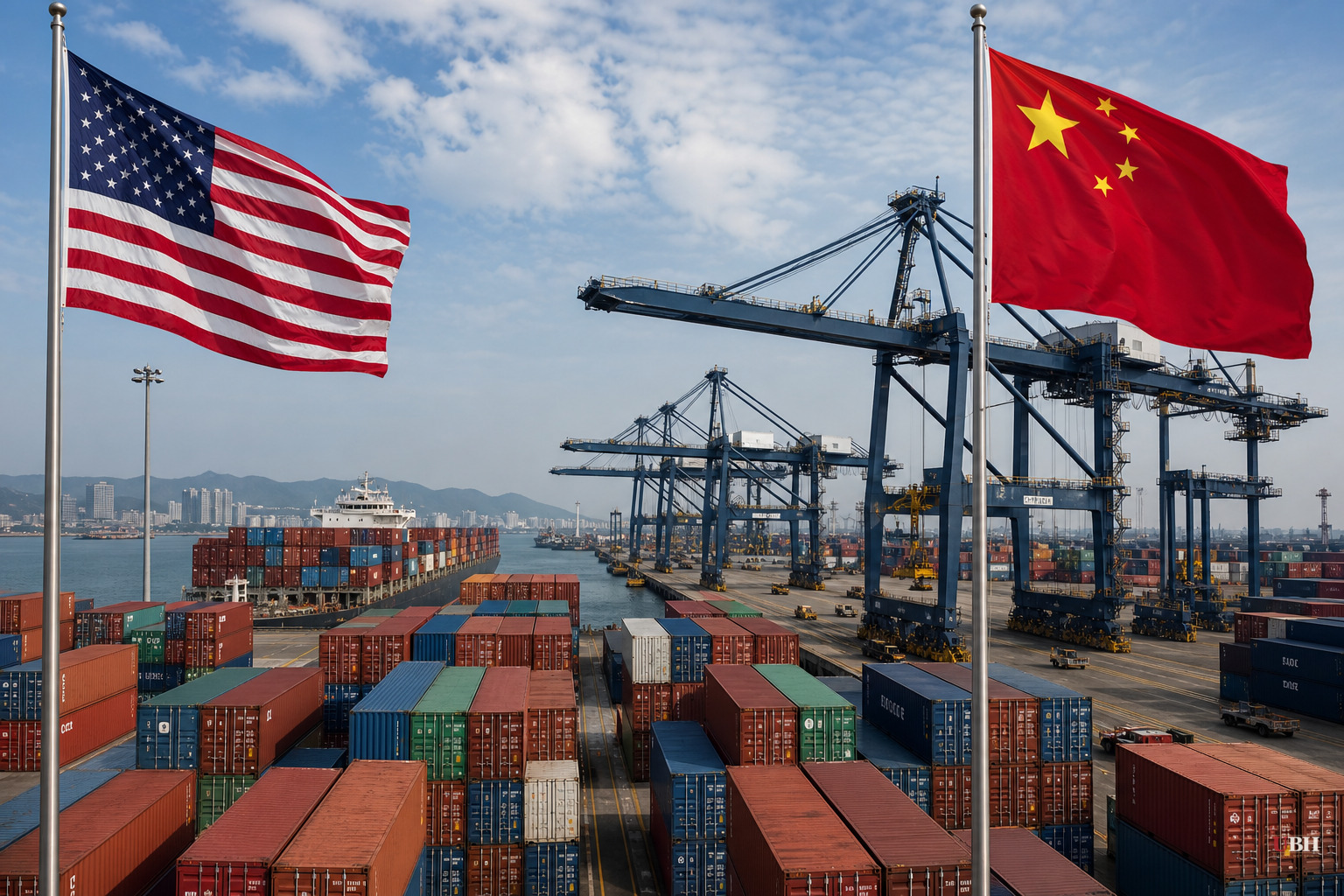
A Framework, Not a Fix
Donald Trump's May 13-15 trip to Beijing didn't end the trade war he started in his first term. It didn't produce a grand bargain either. What it produced, according to GIS Reports, is a phrase: "strategic stability." Both governments are using it, and both mean something slightly different by it.
At minimum, the two sides now agree to avoid open conflict and keep talking regularly. That's a lower bar than past U.S.-China summits have cleared.
Smaller Delegation, Smaller Numbers
Trump's first Beijing visit as president came in November 2017. He brought 29 American executives and walked away with deals exceeding $250 billion, including 300 Boeing aircraft, $5 billion in soybean purchases and more than $100 billion in energy investment commitments, according to GIS Reports.
This time the entourage was smaller, 18 executives, and so were the numbers. The headline deals were 200 Boeing planes and roughly $50 billion in expected agricultural sales. Less than a quarter the size of the 2017 haul in raw dollar terms on the marquee categories reported.
Boeing orders and soybean purchases matter to American workers in Washington state and the farm belt. But anyone calling this trip a bigger win than 2017 isn't reading the numbers.
Two New Boards, Familiar Faces
The concrete institutional output of the summit is the creation of two new bodies: a Board of Trade and a Board of Investment. Treasury Secretary Scott Bessent will lead the investment board. U.S. Trade Representative Jamieson Greer will head the trade board, according to GIS Reports.
Details on how these boards will actually function remain limited. GIS Reports notes the structure echoes past high-level U.S.-China economic dialogues, dialogues that historically have produced a lot of meetings and mixed results on substance. The investment board is expected to take up the question of Chinese investment in the U.S., though specifics haven't been finalized publicly.
Skeptics have reason to withhold judgment here. Washington has stood up joint commissions and strategic dialogues with Beijing before, going back to the Bush and Obama years, and plenty of them produced photo ops rather than policy change. Whether the Board of Trade and Board of Investment become anything more than a rebranded version of that history is an open question nobody can answer yet.
Taiwan Is Where This Gets Uncomfortable
On foreign policy, Trump and Xi Jinping reaffirmed shared positions that Iran must never get a nuclear weapon, that the Strait of Hormuz must stay open, and that North Korea must denuclearize. Xi separately raised concerns about Japan's military reforms, according to GIS Reports.
Taiwan is the sharper edge. Trump said afterward that U.S. policy on cross-Strait relations hasn't changed. But he also said arms sales to Taiwan could be used as leverage in dealings with Beijing, and suggested he might speak directly with Taiwan's president. These comments break from the traditional playbook U.S. presidents have followed on Taiwan for decades.
That traditional playbook exists for a reason: treating Taiwan policy as a bargaining chip, or engaging directly with its president in ways past administrations avoided, risks provoking Beijing without a clear payoff. Trump's defenders would argue unpredictability is itself the leverage, that previous administrations' predictable caution never stopped Beijing's military buildup around the island anyway. Critics counter that ambiguity cuts both ways and could just as easily invite miscalculation.
The timing didn't help calm nerves. Just days before Trump's arrival in Beijing, Taiwan approved a supplementary defense budget to buy more American weapons, a move GIS Reports describes as making an already delicate situation more delicate still.
What Comes Next
GIS Reports projects that U.S. trade policy moves through the rest of 2026 will do more to shape the relationship than any single global event, though it flags that outside shocks could still matter unpredictably.
The next scheduled marker is Xi Jinping's visit to the White House, set for late September 2026. That's the point at which "strategic stability" either gets tested with something concrete—tariff adjustments, investment rules, a Taiwan flashpoint—or continues as a phrase both governments use to describe a rivalry neither side wants to escalate and neither side has resolved.
Until then, the Board of Trade and Board of Investment remain undefined bureaucratic vessels. What authority they'll actually have, what they'll be empowered to decide, and whether Bessent and Greer can produce results beyond the dialogue format that's failed to change fundamentals before are all questions without answers as of today.
Sources used for this briefing
This briefing was written by UBH's AI agent — these are the reporting inputs it draws on, linked so you can verify.


