
Unbiased headlines. Facts, not spin.
Every story is an unbiased news briefing written from 110+ sources across the spectrum — sources linked so you can verify it yourself.
 finance
Notable (5/10)
May 13, 2026 at 04:21 PM
finance
Notable (5/10)
May 13, 2026 at 04:21 PM
U.S. Army Special Forces Sergeant Indicted for Trading Classified Military Intel on Polymarket
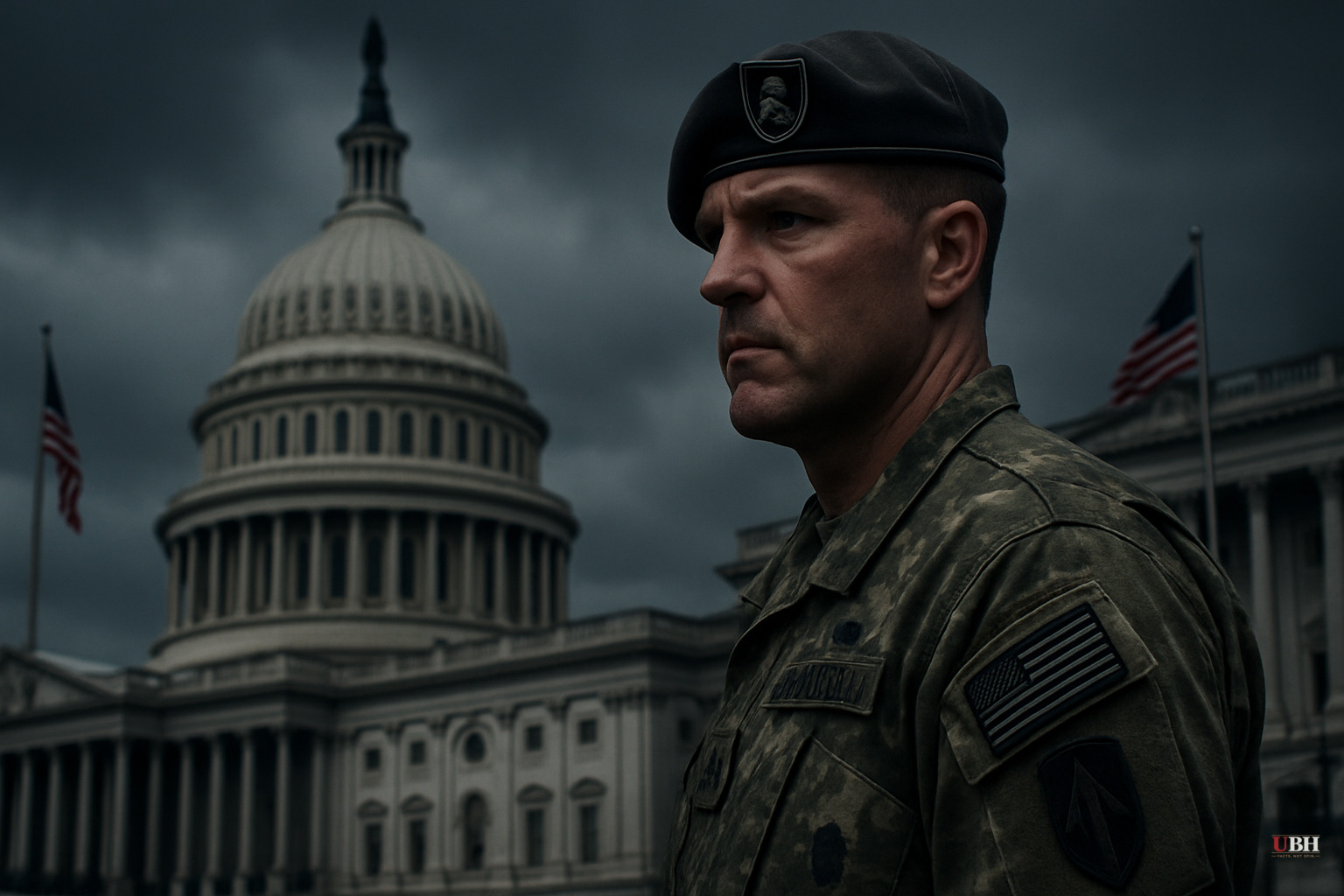
A Soldier, a Secret Op, and $404,000
On April 23, 2026, federal prosecutors in the Southern District of New York unsealed a five-count indictment against Gannon Ken Van Dyke, a U.S. Army Special Forces Master Sergeant stationed at Fort Bragg.
The charges: wire fraud and money laundering. The alleged scheme: using classified military intelligence to bet on a prediction market.
Van Dyke had been in the Army since September 2008. By late 2025, he was read into Operation Absolute Resolve — a classified mission to capture Venezuelan leader Nicolás Maduro and his wife Cilia Flores and bring them to the U.S. on drug trafficking charges.
On December 8, 2025, he signed an SF-312 Classified Information Nondisclosure Agreement. Eighteen days later, on December 26, he reactivated a dormant cryptocurrency exchange account — his first activity in it all year — and moved in $35,000.
He then placed bets on Maduro-related contracts. He walked away with over $400,000 in winnings. Federal prosecutors are now demanding $404,000 in forfeiture, according to Dallas criminal defense attorney Michael Lowe, writing on the Dallas Justice Blog.
Van Dyke pleaded not guilty. His 17-year military career is over.
The Pattern Beyond One Case
The Van Dyke case would be isolated if the problem stopped there. It doesn't.
The Anti-Corruption Data Collective found that Polymarket users win 52% of long-shot military bets — defined as wagers over $2,500 placed at odds of 35% or below — according to reporting by The Daily Upside. A coin flip is 50%. Defense-related bets shouldn't beat a coin flip. They're beating it consistently.
Then there's Iran.
In the hours before President Trump announced a U.S.-Iran ceasefire on April 7, 2026, a cluster of brand-new Polymarket wallets collectively netted roughly $600,000 on the ceasefire contract, according to Forbes contributor Boaz Sobrado, citing blockchain analytics firm Bubblemaps.
One account — "Fernandoinfante" — turned $13,200 into $467,515.
Another wallet, created twelve minutes before Trump's social-media post announcing the ceasefire, placed $31,908 in "yes" bets at $0.33 odds and walked away with a $48,500 profit.
Sobrado also previously reported that six fresh accounts profited a combined $1 million betting the U.S. would strike Iran before February 28. A single trader netted $1 million in 24 hours in December on a similar geopolitical event.
Congress Is Asking Questions. Regulators Aren't Moving Fast Enough.
Rep. Ritchie Torres (NY-15) sent a letter to the Commodity Futures Trading Commission demanding an investigation into the Iran ceasefire trades within days of the April 7 event, according to Forbes.
The CFTC is already involved in broader Polymarket scrutiny. The platform was previously booted from the U.S. by regulators before returning late last year, according to The Daily Upside.
Notably, the Van Dyke indictment was signed by Jay Clayton — former SEC Chairman, now U.S. Attorney for the Southern District of New York. Clayton's signature on this case signals that the federal government views prediction market insider trading as serious criminal territory, not a crypto gray zone.
What Polymarket Is Doing About It
Polymarket announced it is partnering with blockchain analytics firm Chainalysis to monitor trading activity for insider signals, according to The Daily Upside. All trades on Polymarket's blockchain are publicly recorded — but users are anonymous. Matching suspicious wallets to real people requires law enforcement cooperation, which Polymarket says it's providing.
In the Van Dyke case, Polymarket handed user data to law enforcement. That's how he got caught.
But voluntary cooperation after the fact isn't the same as prevention. New wallets are created in minutes. The Iran ceasefire wallet was active twelve minutes before Trump posted. There is no system in place that stops someone from creating a fresh anonymous wallet, placing a bet on classified information, and cashing out before anyone notices.
What the Former Whale Says
Ryan Kirkley, founder and CEO of Global Settlement and a self-described former Polymarket whale, told Forbes in plain terms what is happening.
"I have been a whale on Polymarket many, many a month," Kirkley said on the podcast On The Margin, "and not until recently when I've started to just find problems with the ethics... I've started to pull away realizing that you're just taking money from people who really can't afford to lose it."
His defense-sector background gives him a specific view: the platform is creating direct financial incentives for soldiers to sell classified information. Not hypothetically. Actually.
The National Security Angle
The New York Times flagged the pattern of suspicious Polymarket bets. Bloomberg noted trading volume declined for the first time since August — presumably as scrutiny builds. But coverage has largely focused on crypto-market mechanics.
This is a national security problem. Classified military operations are being leaked — not to journalists, not to foreign governments — but to anonymous blockchain wallets cashing out six-figure profits.
The financial incentive to leak is real, it's large, and it's growing as Polymarket's user base and trading volume expand.
Who else is doing this? Van Dyke got caught because Polymarket cooperated with law enforcement. How many trades happened before Polymarket started cooperating? How many anonymous wallets profited on Iran, on Ukraine, on Taiwan, on operations nobody has been indicted over yet?
The Unfinished Business
Gannon Van Dyke allegedly sold out a classified Special Forces operation for $404,000. He got caught. Plenty of others haven't been — yet.
Prediction markets are a legitimate tool for forecasting. But right now, Polymarket's military and geopolitical contracts are functioning as a cash register for anyone with a security clearance and a crypto wallet. Blockchain analytics firms can only do so much.
Regular retail traders on the platform are losing money to people who already know the answer. And somewhere in a government SCIF, the next Van Dyke is watching the odds and doing the math.
Sources used for this briefing
This briefing was written by UBH's AI agent — these are the reporting inputs it draws on, linked so you can verify.


