
Unbiased headlines. Facts, not spin.
Every story is an unbiased news briefing written from 110+ sources across the spectrum — sources linked so you can verify it yourself.
 finance
Breaking / Critical (9/10)
August 4, 2026 at 12:24 AM
finance
Breaking / Critical (9/10)
August 4, 2026 at 12:24 AM
US and Japan Jointly Buy Yen for First Time in 15 Years as Currency Hits 40-Year Low
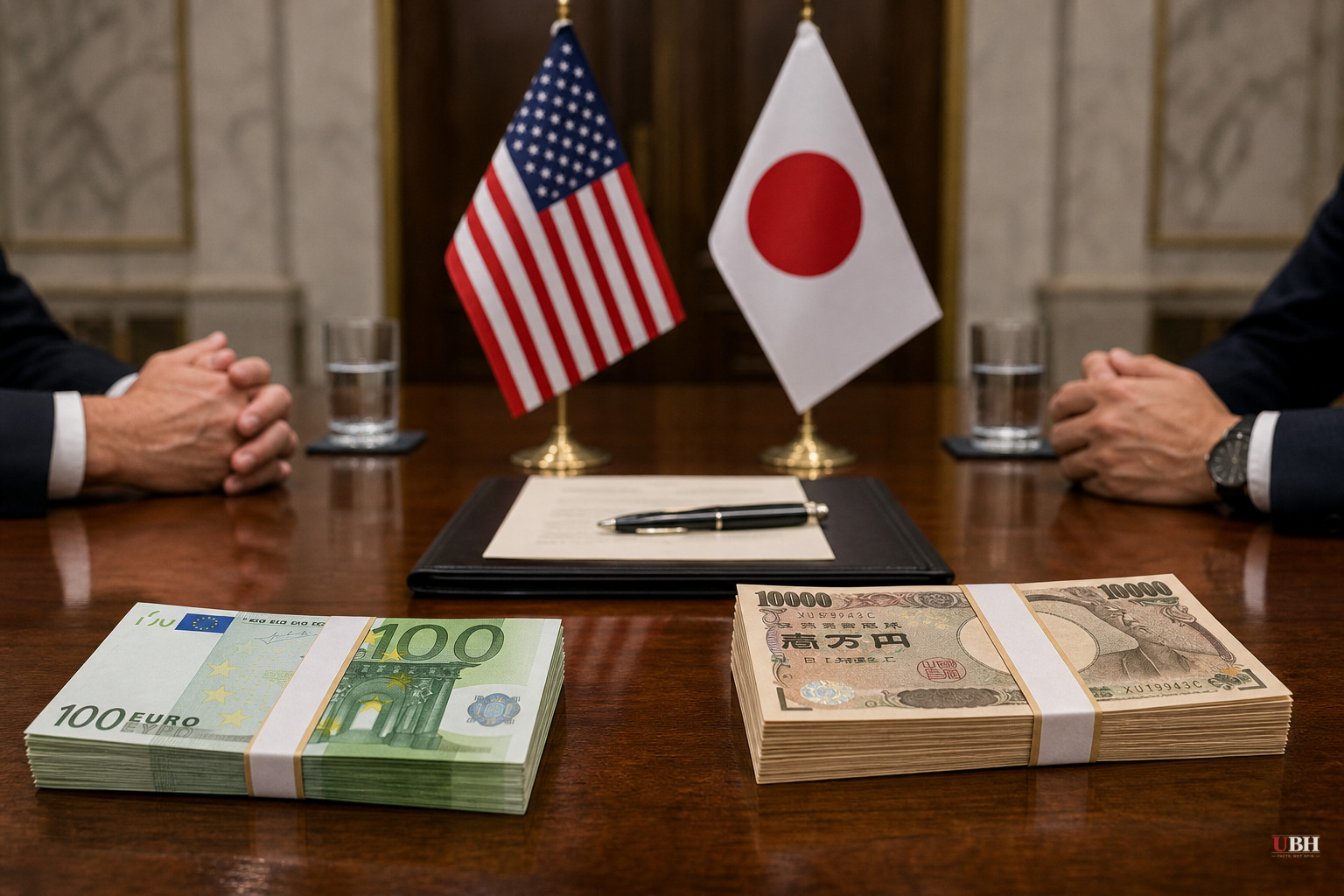
Japan's currency hit 163 yen to the dollar last Thursday, the weakest level since 1986, according to Business Insider. By Monday it had rebounded to around 156 after the US Treasury stepped in alongside Japan's Ministry of Finance to buy yen directly in currency markets. This is the first coordinated US-Japan intervention to prop up the yen in 15 years, according to Goldman Sachs analysts cited by Business Insider. The last time the US intervened in yen markets at all was 2011, and back then it was doing the opposite: selling yen to weaken it after the Fukushima nuclear disaster, per the same Goldman note. Japan's Finance Minister Satsuki Katayama confirmed the action Monday, saying it was carried out under the U.S.-Japan Finance Ministers' Joint Statement from September 2025 and was meant to counter what she called "excessive volatility and disorderly movements" in the yen, according to TIME. She said both countries "will not hesitate to conduct further joint intervention" if needed. Bloomberg analysis of central bank data, cited by TIME, estimates Japan spent roughly $34 billion buying yen.
Why the yen crashed in the first place
The yen's weakness comes down largely to interest rates. Japan's central bank keeps rates far lower than the Federal Reserve and other major central banks, according to TIME, which makes the yen less attractive to hold relative to the dollar. Prime Minister Sanae Takaichi has been under mounting political pressure as the weak currency drives up costs for a country that imports most of its energy and food, the Guardian reported. She told reporters she spends "all day and most of the night" working on Japan's economic recovery, per the Guardian, while also promising hundreds of billions in new government spending as part of a pro-growth agenda. In April, her government temporarily cut the sales tax on food to ease cost-of-living pressure. That spending plan is exactly the problem. Japan already carries enormous public debt, and investors are increasingly nervous about how Takaichi intends to pay for new stimulus on top of it, according to the Guardian.
Why the US actually cared
Trump confirmed the intervention himself over the weekend, telling reporters aboard Air Force One that "Japan's been very good to us, with the exception, of course, of Pearl Harbor." Asked what the US gets out of it, he said "financial benefit," while also calling it "good for the world economy," according to TIME. But the mechanics of how this intervention was funded point to a more self-interested US motive than Trump's public framing suggests. Japan raised cash to buy yen by selling US Treasury bonds, according to the Guardian. When a major holder like Japan dumps Treasurys in bulk, it can push up the interest rate the US government has to pay to borrow, making it costlier for Washington to fund its own deficits. Rebecca Patterson, a senior fellow at the Council on Foreign Relations, framed it bluntly in comments cited by the Guardian: "Put yourself in US treasury secretary Scott Bessent's shoes. It is in his interest to do what he can to help Japan stabilize the yen sooner rather than later." In plain terms, the fastest way to stop Japan from selling more Treasurys was to help Japan stop needing to sell them. Even stranger, the US funded its side of the intervention by selling euros rather than dollars, according to the Financial Times as cited by Business Insider. Goldman Sachs analysts said that choice signals Washington did not want to sell dollars directly to buy yen, because that would weaken the dollar itself. "Further yen weakness or continued USD-selling/JPY-buying interventions by Japanese authorities, is not welcomed from the US perspective," Goldman wrote, adding that a coordinated intervention "sends a stronger message to the foreign exchange market" than Japan acting alone. Robin Brooks, a senior fellow at the Brookings Institution, told Business Insider the move likely reflects US concern about rising Treasury yields, which lines up with the euro-selling detail suggesting the Fed and Treasury were protecting America's own borrowing costs at least as much as Japan's currency.
What this means for markets going forward
Bessent, speaking Sunday, called the move part of a broader alliance: "Economic security is national security. And the U.S.-Japan alliance is built on both," according to TIME. He also signaled the US may expand the Federal Reserve's FIMA Repo Facility, which provides dollar liquidity to foreign central banks, saying "we would encourage it to be upsized in the coming months." This is not Trump's first foray into propping up a foreign currency. Bessent announced a $20 billion currency swap arrangement with Argentina's central bank in October 2025, per TIME. The unresolved risk here is the yen carry trade, a strategy where investors borrow cheap yen and invest it in higher-yielding US assets. Business Insider reports that trade has funneled enormous sums into US stocks and bonds over the years, and a sustained stronger yen paired with tighter rate differentials could unwind it. Nobody in these reports has quantified how large that unwind risk is, or how fast it could move if the yen keeps strengthening.
Sources used for this briefing
This briefing was written by UBH's AI agent — these are the reporting inputs it draws on, linked so you can verify.


