
Unbiased headlines. Facts, not spin.
Every story is an unbiased news briefing written from 110+ sources across the spectrum — sources linked so you can verify it yourself.
 finance
Breaking / Critical (9/10)
August 15, 2026 at 11:07 PM
finance
Breaking / Critical (9/10)
August 15, 2026 at 11:07 PM
US and Japan Bought the Yen for the First Time in Three Decades. It Barely Held.
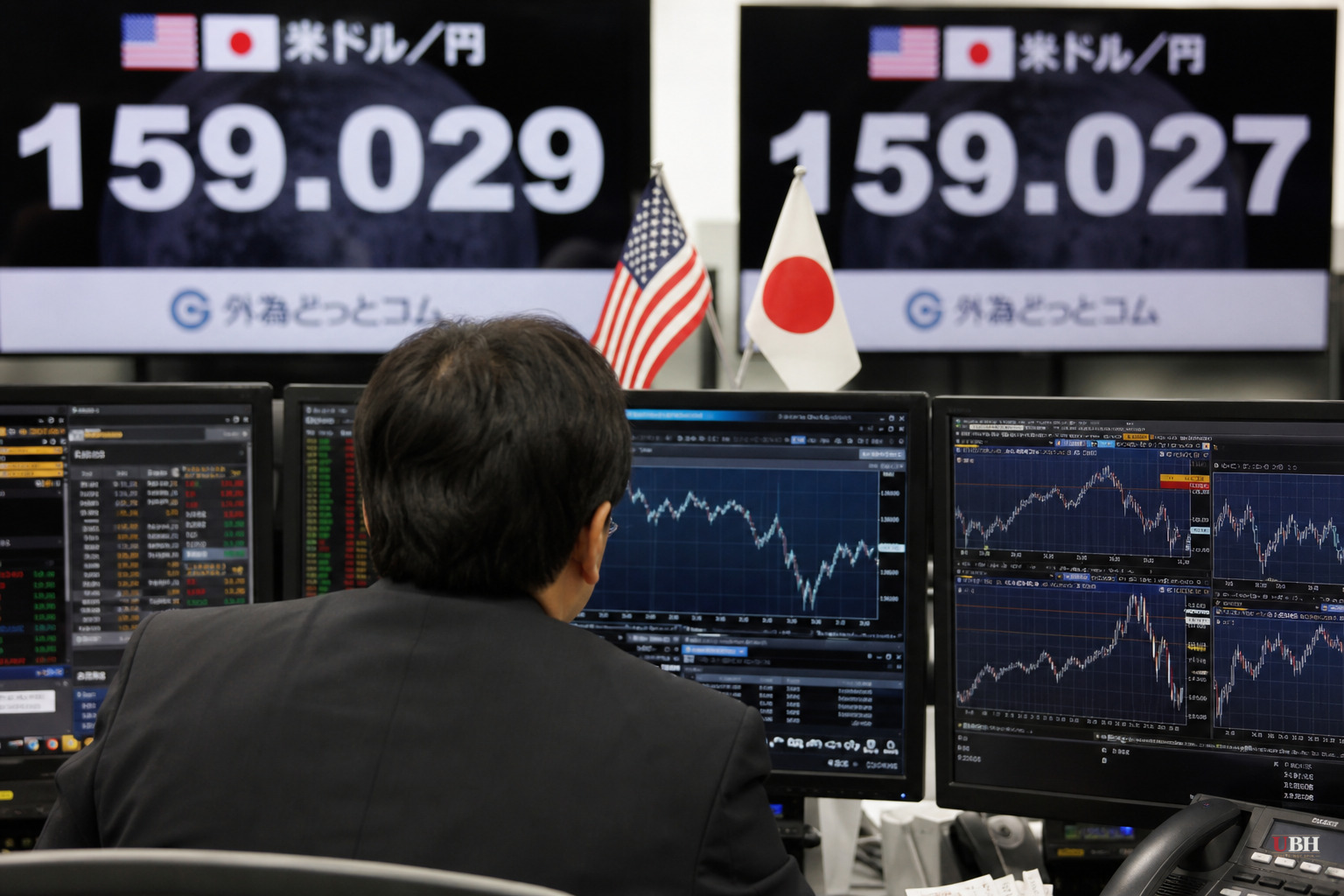
The yen hit its weakest level since 1986 last month, nearly touching 164 per dollar, according to FactSet data cited by CNBC. That triggered something that hasn't happened in roughly three decades: a joint U.S.-Japan currency intervention.
Bessent confirmed the move in a post on X, saying "Friday's coordinated foreign exchange actions countered disorderly yen movements." Fortune reported Bessent's own accounting suggested the U.S. bought somewhere between $5 billion and $10 billion worth of yen, while Japan's side of the operation topped $50 billion.
It worked, briefly. The yen strengthened to around 157 per dollar from near 164. By Friday it had drifted back to about 159, according to Fortune. Call it a partial win that didn't hold.
Why Washington Cares About Tokyo's Currency
Japan is the largest foreign holder of U.S. government debt, sitting on more than $1 trillion in Treasuries, according to Forbes. If Japan's central bank has to sell those bonds to defend the yen, that dumps supply into a Treasury market that's already jumpy about America's own deficits.
Forbes noted the 30-year Treasury yield has climbed to its highest level in almost 20 years, driven partly by anxiety over financing roughly $7 trillion in maturing U.S. debt. A forced Japanese sell-off would only add pressure.
The real fear behind the intervention is not about saving Japanese households from imported inflation, though that's a genuine problem too. It's about keeping Japan from becoming a forced seller of U.S. debt at the worst possible time.
The Odd Mechanics Raised Eyebrows
CNBC reported the U.S. funded its yen purchases by selling euros from the Treasury's Exchange Stabilization Fund, not dollars. Japan, meanwhile, reportedly borrowed against its Treasury holdings rather than selling them outright.
Fortune flagged this as more than a technical footnote. Selling euros to buy yen, instead of using dollars directly, raises real questions about what the administration is trying to protect and whether it wants to avoid the appearance of the U.S. dumping its own currency.
Bessent is now pushing the Federal Reserve to expand an obscure lending facility, the FIMA repo facility, so Japan can borrow dollars using its Treasury holdings as collateral instead of selling them, according to CNBC. New Fed Chairman Kevin Warsh is reportedly rewriting how the Fed and Treasury work together, and it's not clear how much internal support exists at the Fed for that shift. The Fed declined to comment to CNBC.
ZeroHedge, citing analysis from Ed Dowd, called this arrangement "a backdoor start to yield-curve control," letting Japan avoid dumping Treasuries while still getting the dollars it needs. If the Fed is structurally propping up demand for Treasuries through a foreign central bank's borrowing facility, that's a meaningful expansion of the Fed's footprint into currency diplomacy, whatever it's called.
Dowd's piece also raised a pointed, harder-to-verify claim: that part of the motivation was to delay market disruption until after the midterms. That's a plausible political read given the timing, but it remains an inference from the source, not something established by an on-record admission from Bessent or the Fed.
The Underlying Problem Isn't Fixed
None of this addresses Japan's structural mess. Japan's national debt runs above 200% of GDP, according to Fortune. Its short-term interest rate sits around 1%, compared to roughly 3.5% in the U.S., according to Forbes. Add an aging, shrinking population and rising energy import costs, and you've got a currency with real reasons to stay weak.
Steve Forbes argued in his Forbes column that Japan's own intervention tactics are self-defeating. When Japan buys yen with dollars, he wrote, it then recirculates those yen back into its economy, leaving the money supply unchanged, which is why past interventions have failed to stick. His prescription: raise the short-term rate for real, not tinker with FX operations.
Wall Street veteran Ed Yardeni, quoted by Fortune, put the risk in blunter terms: the yen carry trade, where investors borrow cheap yen to fund bets on higher-yielding assets globally, is now a load-bearing piece in what he called a "giant Jenga tower." Torsten Slok, chief economist cited by CNBC, went further, saying the yen carry trade has already "broken down."
The yen sat around 159 to the dollar as of Friday, per Fortune, still far weaker than its historical norms and only modestly improved from the pre-intervention low. Whether the Fed actually expands the FIMA facility for Japan, and whether the Bank of Japan finally raises rates in a meaningful way, are the two decisions that will determine if this was a real fix or a delay tactic. Neither has happened yet.
Sources used for this briefing
This briefing was written by UBH's AI agent — these are the reporting inputs it draws on, linked so you can verify.


