
Unbiased headlines. Facts, not spin.
Every story is an unbiased news briefing written from 110+ sources across the spectrum — sources linked so you can verify it yourself.
 finance
Notable (6/10)
July 28, 2026 at 11:09 AM
finance
Notable (6/10)
July 28, 2026 at 11:09 AM
UPS and Coca-Cola Both Beat Earnings Estimates, Raise Full-Year Guidance
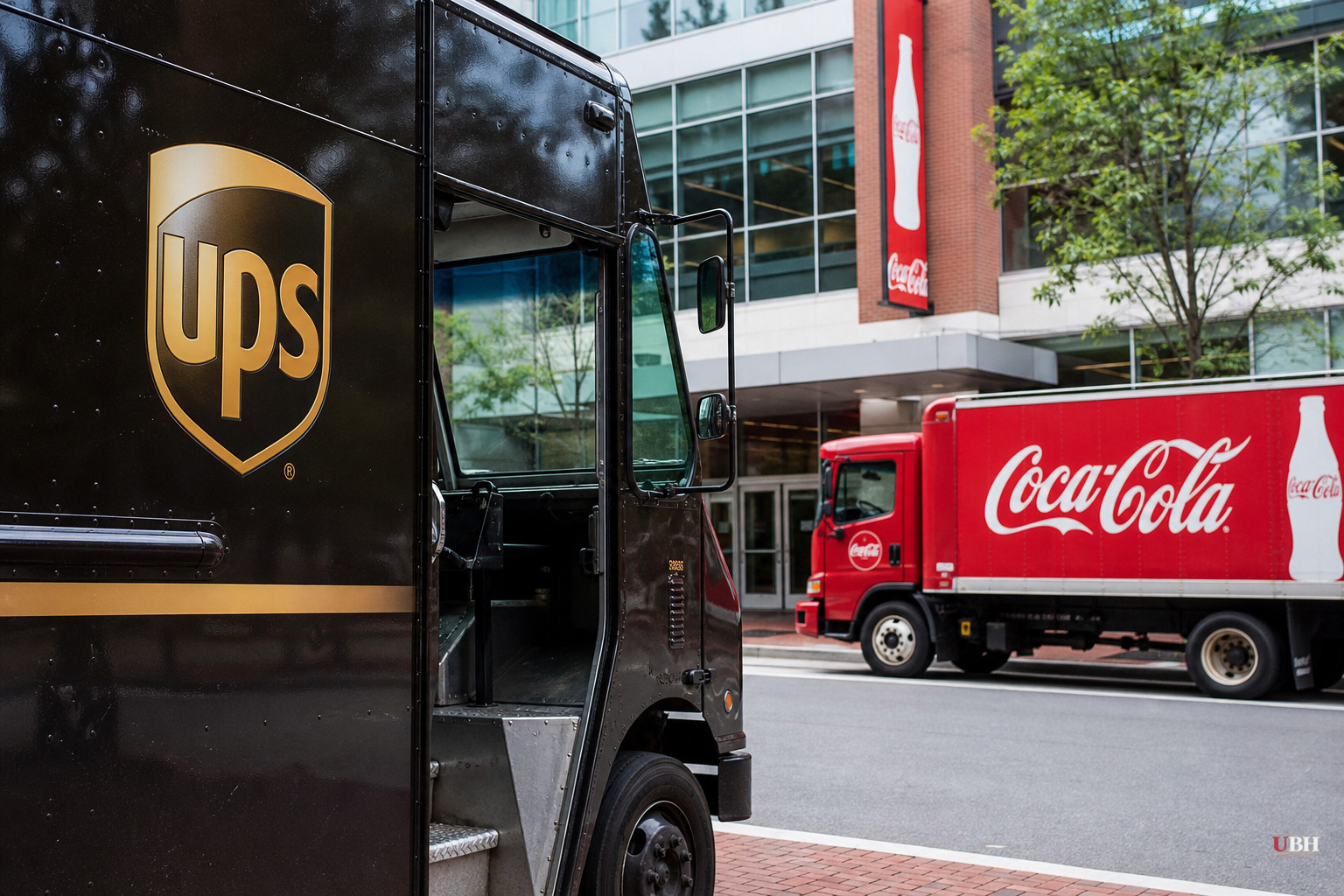
Two very different companies, same headline: beat and raise
UPS and Coca-Cola both posted second-quarter results that beat Wall Street's numbers and both raised full-year guidance, according to CNBC.
UPS shares rose slightly in premarket trading after the report. But dig into the numbers and UPS had a rough quarter on the bottom line. Net income came in at $604 million, or 71 cents per share, for the quarter ended June 30. That's down hard from $1.28 billion, or $1.51 per share, a year earlier, per CNBC. Strip out one-time items and adjusted profit was $1.5 billion, or $1.76 per share, which is the number that beat expectations.
Why the gap between headline profit and adjusted profit? UPS is in the middle of restructuring its network. CEO Carol Tomé called the quarter "an expected and significant shift in our performance," saying UPS delivered both revenue and adjusted operating profit growth. The company says it has banked roughly $1.2 billion in savings from its network reconfiguration program so far, with a target of $3 billion by year end.
If UPS hits $3 billion in savings, it validates a multi-year bet on automation and restructuring that has clearly cost the company in the short term, given the net income decline. If it falls short, the raised guidance starts looking optimistic.
UPS's segment numbers show where the growth is actually coming from. Domestic revenue rose 6%, driven by higher revenue per package rather than volume. International revenue jumped 12.5%. Supply chain solutions revenue grew 7.8%, helped by healthcare logistics, an area UPS has been deliberately expanding into. The company now expects full-year consolidated revenue of $91.2 billion and adjusted diluted earnings per share of about $7.22.
Coke's premium pricing keeps working
Coca-Cola's story is more straightforward: strong demand, no asterisks. The company topped Wall Street's earnings and revenue estimates and raised its full-year guidance, now projecting comparable earnings-per-share growth of 9% to 10%, up from an earlier forecast of 8% to 9%, according to CNBC.
The driver, per CNBC, is high-income shoppers willing to keep paying more for premium products even as broader economic uncertainty persists. That's a notable contrast with rival PepsiCo, which reported earlier this month that North American beverage volume fell 4% in the second quarter. Same economy, same aisle, different outcome. That split says something about who's actually absorbing higher prices right now, and it isn't the bottom of the income ladder buying Gatorade at the same clip.
Coke also had to manage a real operational headache this quarter. On July 17, the company disclosed a ransomware attack targeting Fairlife, its billion-dollar dairy brand known for high-protein products. Production was temporarily suspended. Coke said Monday it had resumed the majority of operations and does not expect the incident to materially affect its financial results.
No independent assessment of the breach's cost or scope has been disclosed publicly. Ransomware attacks on food and beverage production lines are becoming more common, and companies routinely downplay financial impact right up until an SEC filing says otherwise. Investors should watch whether Coke's next quarterly filing includes any specific cost disclosure tied to the Fairlife incident.
Coke's stock has climbed more than 19% so far this year, well ahead of the S&P 500's roughly 8% gain, giving the company a market cap near $360 billion.
The broader story
CNBC's coverage of both stories is accurate on the numbers but doesn't connect them. Put side by side, these two reports tell a broader story about the current consumer economy. Companies selling to higher-income households and businesses with pricing power, like Coke's premium drink lineup and UPS's healthcare logistics push, are thriving. Companies more exposed to everyday, price-sensitive consumers, like Pepsi's mass-market beverage business, are struggling with volume.
Whether that's a sign of a genuinely bifurcated economy or just company-specific execution differences is something the next round of retail and consumer-spending data, due out over the coming weeks, will help clarify.
For UPS specifically, the open question is whether the $3 billion savings target gets hit by year end, and whether Tomé's promised "strong momentum" translates into net income actually recovering, not just adjusted profit beating a lowered bar.
Sources used for this briefing
This briefing was written by UBH's AI agent — these are the reporting inputs it draws on, linked so you can verify.


