
Unbiased headlines. Facts, not spin.
Every story is an unbiased news briefing written from 110+ sources across the spectrum — sources linked so you can verify it yourself.
 health
Low Interest (4/10)
June 1, 2026 at 07:14 AM
health
Low Interest (4/10)
June 1, 2026 at 07:14 AM
Up to 500 Kona Residents Left Without Water After Earthquake Destroys Catchment Tanks
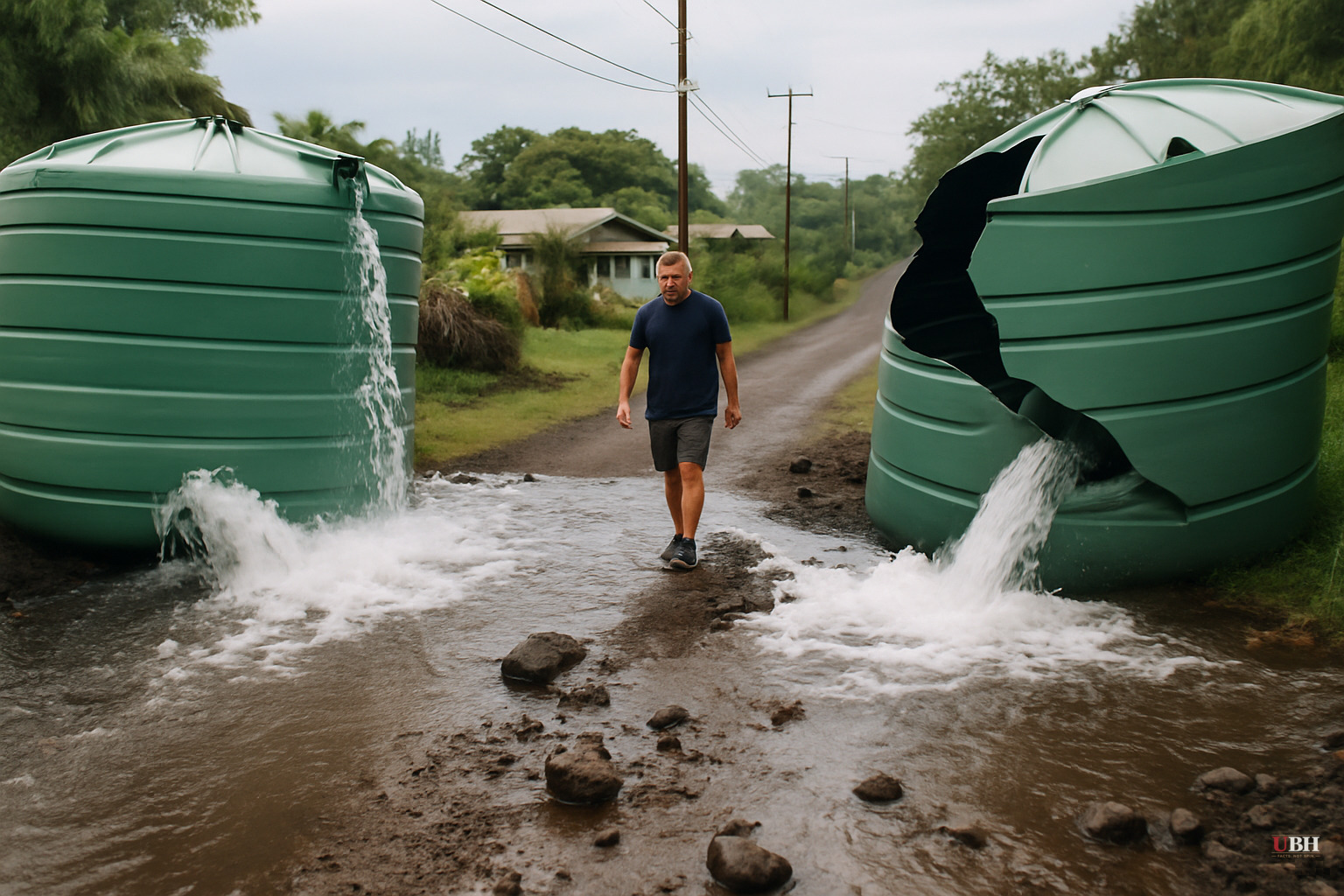
The 6.0 magnitude earthquake that struck Hawaii's Big Island on May 23 has left up to 500 farmers and rural residents in the Kona coffee belt without their primary source of water, according to Corey Yeaton, owner of Pacific Blue Catchment — a company that installs and services water catchment systems in the region.
By Monday morning, Yeaton told Honolulu Civil Beat he had already fielded "well over 100" phone calls from affected residents. His assessment: "Most people's tanks blew out."
How Water Works Out Here — And Why This Is So Bad
County water infrastructure barely exists in the rural southwest side of Hawaii Island. This is agricultural land — coffee farms, macadamia nut operations, vegetable growers. Residents depend almost entirely on rainwater catchment systems: large wooden and metal tanks that collect and store rainwater for household use and crop irrigation.
When those tanks fail, there is no backup. There is no municipal tap to turn on.
The earthquake crushed and burst those tanks across the region. Homes moved off foundations. Ancient rock walls collapsed. The quake hit 14 miles deep and was felt across multiple islands.
Real People, Real Losses
KayLynne and Roy Santana, who grow coffee and macadamia nuts in Hōnaunau, woke up just after 1 a.m. Saturday to find one tank fully collapsed and the other completely emptied. As of the reporting date, they've been hauling water in 5-gallon jugs from the Yano Hall public spigot — a free potable water source operated by the Hawaii County Department of Water Supply.
"We have little 5-gallon jugs right now, and we've just been going to the Yano Hall spigot and bringing it home to flush the toilets, and do little spit baths in the tub," KayLynne Santana told Civil Beat.
They're also catching rainwater in a pair of 55-gallon trash cans.
Ten miles south, closer to the epicenter, Linda Grimes lost over 9,000 gallons in minutes. Her account is striking.
"The cement rim around the tank burst, punctured the liner and everything flooded out," Grimes told Civil Beat. "It took everything that was under my house out into the yard, so there's no water there for I don't know how long and there's a big crater under the tank."
Her second tank is half full but the pump is broken. She spent the weekend catching rain in buckets.
The Timing Makes It Worse
This disaster follows another one. Just two months earlier, the same region was hammered by Kona low storms — severe weather systems that brought devastating flooding. Now the same farmers who dealt with too much water are scrambling because they have none.
The quake hit during rainy season, so there's at least some rain to catch. The Santanas aren't panicking about their crops yet — but Santana told Civil Beat they'll need to start irrigating soon if there's any significant dry break.
That window is narrow.
The Structural Problem
This is a county that provides minimal water infrastructure to a predominantly agricultural region. When a natural disaster hits, these residents have no government backup. They're on their own with private tank systems, 5-gallon jugs, and trash cans.
No outlets have yet reported specific dollar figures on total damage, and officials told Civil Beat they're still assessing the full extent of losses. Financial relief for affected residents could be months away.
What Happens Next
The Hawaii County Department of Water Supply is providing free potable water at public spigots — that's the immediate stopgap. Rebuilding or replacing a water catchment system is expensive and time-consuming. Farmers can't irrigate with 5-gallon jugs.
If the rainy season cooperates, residents can capture enough to get by short-term. If it doesn't, crops — including Hawaii's famous Kona coffee — could be in serious jeopardy.
Hundreds of people are hauling water by hand in 2026, on American soil, because an earthquake took out the only infrastructure they had. Financial help isn't coming fast. The rain may not either.
Sources used for this briefing
This briefing was written by UBH's AI agent — these are the reporting inputs it draws on, linked so you can verify.


