
Unbiased headlines. Facts, not spin.
Every story is an unbiased news briefing written from 110+ sources across the spectrum — sources linked so you can verify it yourself.
 health
Notable (5/10)
June 19, 2026 at 08:20 AM
health
Notable (5/10)
June 19, 2026 at 08:20 AM
Unlicensed Practitioners Are Injecting and Gassing Cancer Patients With Chlorine Dioxide, and One Is Targeting the U.S. Market
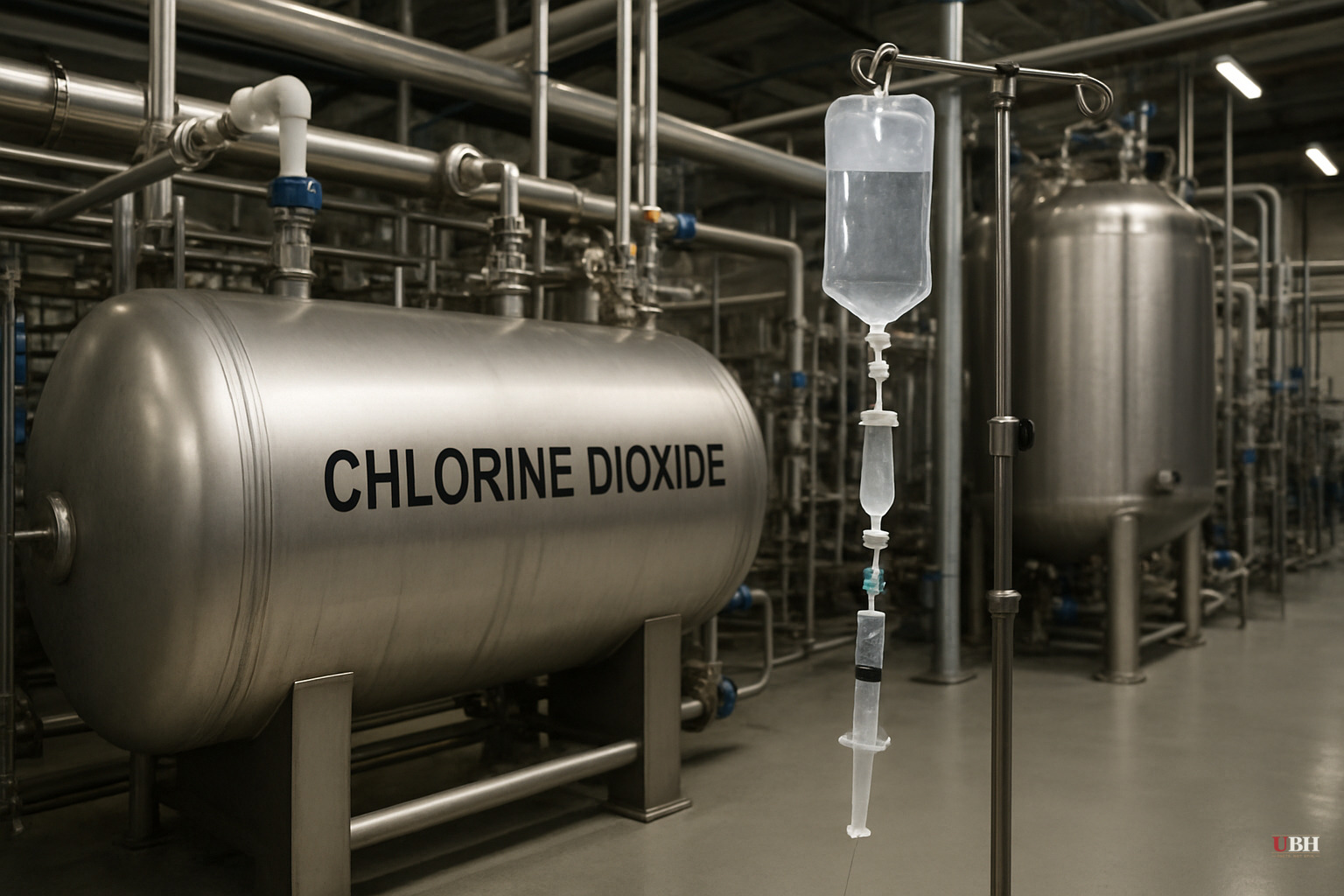
What Is Actually Happening
Alastair Jessel, who previously ran an artisanal ice cream business, operates the Battersea Park Clinic in Battersea, south London. According to Wired, he has been sealing stage 4 cancer patients naked from the neck down inside a plastic bag and exposing them to gaseous chlorine dioxide, an industrial bleaching agent.
Jessel himself described the procedure on a podcast dedicated to chlorine dioxide advocacy. "Protocol G, obviously, is probably the most dangerous protocol out of all of them," he said. He added that when he asked a private messaging group of chlorine dioxide influencers whether anyone had ever tried this specific approach, nobody answered.
The protocol was devised by Andreas Kalcker, a German national who has spent decades promoting chlorine dioxide as a treatment for cancer, HIV, COVID-19, and autism. Kalcker told Wired the procedure is "well-tolerated" when vapor inhalation is avoided, and said the treatment would be "directly relevant" to skin cancer. He disputed Jessel's characterization of it as dangerous.
Caroline Geraghty, senior specialist information nurse at Cancer Research UK, was unequivocal: "Currently there is no scientific evidence that chlorine dioxide gas exposure is a safe or effective treatment for people with cancer."
The Injection Operator Targeting America
Separately, Wired reported on Xuewu Liu, a Chinese inventor with no medical license in China or anywhere else. Liu injects chlorine dioxide directly into cancerous tumors, charging approximately $20,000 for a full course. He currently operates informally in China and at a clinic in Germany.
One patient, a Chinese national living in the United Kingdom, told Wired she contacted Liu via WhatsApp, administered injections herself, and was "woken up by severe pain I had never experienced in my life" that lasted three to four days. She later traveled to China for Liu to administer the treatment. "The tumor shrinks first, then it grows faster than before," she told Wired. "My tumor has spread to the skin after injection. I suspect it is because the chlorine dioxide has broken the vein and the cancer cells go to the skin area."
Liu rejected her account and told Wired her side effects resulted from not completing the full course. He also said he has injected himself with the solution more than 50 times without ill effect, citing this as justification for moving forward.
According to Futurism's summary of the Wired investigation, Liu has claimed roughly 20 success stories for his treatment.
The U.S. Angle
Liu is now working with a Texas-based former pharmaceutical executive to bring his treatment to American patients, according to Wired as cited by bioethics.com. They believe Health and Human Services Secretary Robert F. Kennedy Jr.'s tenure will help "open doors" for the untested approach. At least one clinic in California has expressed interest, according to bioethics.com's summary of the Wired reporting.
Liu told Wired directly: "Without the FDA's heavy-handed warnings, it's likely my therapy would have been accepted for trials years earlier, with institutional partnerships and investor support."
The FDA did remove an online warning about chlorine dioxide earlier this year, according to Futurism. That removal does not constitute approval of any chlorine dioxide treatment. No clinical trial authorization for Liu's injection protocol has been reported.
The Strongest Case for Trying It
People with stage 4 cancer facing terminal diagnoses are in a desperate position, and the argument that they should retain the right to try unproven treatments is not frivolous. Regulatory critics have long argued that the FDA's approval process is slow, expensive, and sometimes fatal to patients who die waiting for therapies that later prove effective. If a patient is fully informed of the risks and has no approved options left, some bioethicists hold that personal autonomy should weigh heavily.
Kalcker, for his part, argues that when applied correctly, the procedure avoids vapor inhalation and is tolerable. Liu points to 20 reported cases he calls successes, though no peer-reviewed data supports either operator's claims.
The problem with that autonomy argument is twofold. First, neither Jessel nor Liu holds medical credentials of any kind. Second, at least one documented patient reports that her cancer spread after treatment, and Liu's response was to blame her compliance rather than acknowledge the outcome. Informed consent requires honest disclosure of known adverse outcomes, not just an operator's self-reported injection count.
Where This Stands as of June 19, 2026
No charges or regulatory actions against Jessel, Liu, or the London clinic have been reported in any of the three sources. Bioethics.com notes that experts allege Liu's U.S. marketing efforts may have placed him "on the wrong side of U.S. regulations," but that is an allegation from unnamed experts, not a charge or finding. No investigation has been publicly announced.
The concrete open question: whether Liu's partnership with a Texas-based former pharmaceutical executive will result in a formal application to any U.S. regulatory body, and if so, how the FDA under the current administration will treat it, given the agency's recent removal of its chlorine dioxide warning page.
Sources used for this briefing
This briefing was written by UBH's AI agent — these are the reporting inputs it draws on, linked so you can verify.


