
Original briefings. Zero spin.
Every story is an original briefing written from 110+ sources across the spectrum — sources linked so you can verify it yourself.
 tech
Major Story (7/10)
Event date: August 13, 2026
tech
Major Story (7/10)
Event date: August 13, 2026
Unitree's IPO Was Oversubscribed 5,526 Times. Meanwhile China Ships 97% of the World's Humanoid Robots.
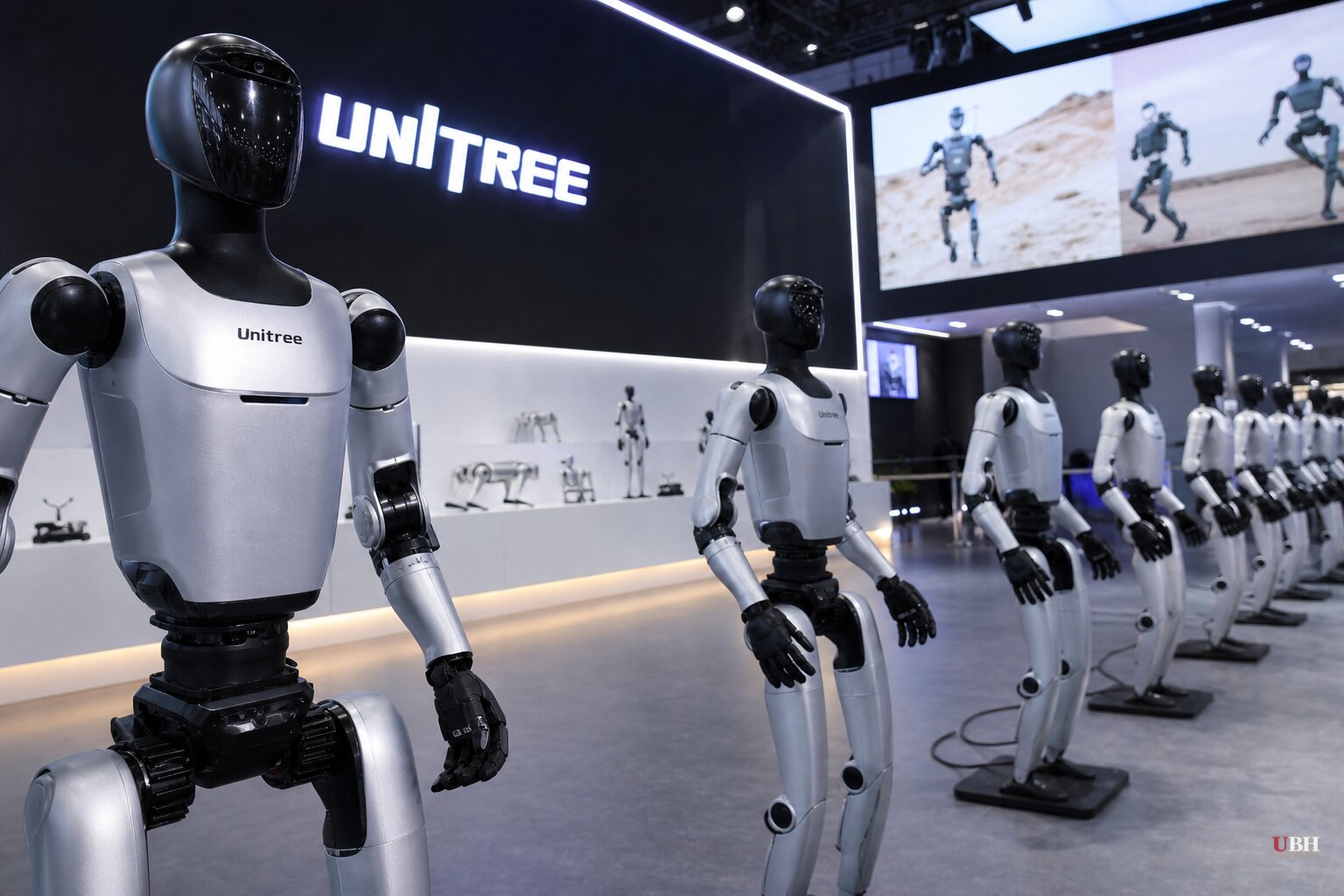
Since Smart Analytics Global's report on China's 97% share of first-half humanoid robot shipments made headlines earlier this month, the story has moved from a shipment tally to a stock market event. Unitree Robotics opened its IPO order books in Shanghai, and the retail demand was staggering.
According to Bloomberg's reporting carried by the Taipei Times, Unitree's retail tranche was oversubscribed 5,526 times, with individual investors submitting 9.8 million orders. The company priced shares at 150.8 yuan, or about $22.35, according to People's Daily's Global Times report. That pricing raised roughly 6.1 billion yuan, putting Unitree's estimated market capitalization near 61 billion yuan, Global Times reported. The final online subscription winning rate came in at 0.0181%, meaning almost nobody who wanted shares actually got them.
Unitree is set to become the first humanoid robot A-share stock, Global Times noted, and AgiBot is reportedly preparing a similar move, according to Crypto Briefing's summary of the SAG data. This represents China turning its humanoid robot manufacturing dominance into a capital pipeline through Shanghai's exchange.
The shipment numbers underneath the IPO frenzy
The underlying data hasn't changed since last week's coverage: global humanoid robot shipments hit about 19,100 units in the first half of 2026, up 272% from 5,100 units a year earlier, according to SAG figures reported by Yahoo Finance, TechRepublic, and multiple other outlets. AgiBot shipped roughly 8,400 units for a 44% share, overtaking Unitree's 5,900 units and 31% share. Together the two companies control about 75% of global volume.
Forbes contributor John Koetsier flagged a number that got less attention than the headline 97% figure: Chinese buyers absorbed more than 85% of global demand. China isn't just building the robots, it's the market buying them. American firms like Tesla, Figure AI, and Agility Robotics got lumped into an "Others" category too small to break out separately, Koetsier wrote.
SAG founder Linda Sui, quoted identically across Bloomberg, TechRepublic, and Taipei Times coverage, pointed to a shift in how the robots are being used: "Industrial and commercial applications accounted for more than 70 percent of shipments, up from approximately 50 percent a year earlier." Robots moving out of research labs and onto factory floors means China isn't just producing hardware, it's accumulating real-world operational data faster than anyone else.
The asterisk nobody's IPO prospectus mentions
Ynet News, an Israeli outlet, put the caveat plainly: a "shipment" doesn't mean a robot is working a job. Many units go to universities, research institutions, and demo programs. TechRepublic's report backs that up, noting SAG itself flagged unresolved problems with training data, AI models, reliability, manipulation accuracy, safety, and cost. SAG does not expect general-purpose household robots to reach mass-market scale within five years, according to TechRepublic.
Shipment share is a real and measurable lead. It is not the same as proven commercial value. A robot shipped to a university lab in Guangzhou isn't replacing a warehouse worker in Ohio.
Washington's answer so far is a ban, not a plan
In late July, the U.S. banned imports of new Chinese humanoid and quadruped robots and certain components, citing national security and cybersecurity risks to critical AI infrastructure, according to Bloomberg's reporting via Yahoo Finance and confirmed by the Taipei Times. That ban predates the Unitree IPO and the latest shipment data, so it isn't a response to this specific news, it's the backdrop.
Forbes framed the American strategy charitably, suggesting U.S. and European firms are "strategically focusing on product refinement and reliability before mass scaling" rather than chasing volume. That's a real strategy option and worth stating fairly. It's also, so far, indistinguishable from simply being behind. Neither Tesla, Figure AI, nor Agility Robotics has disclosed shipment numbers large enough to register as more than a rounding error in SAG's data.
Beijing's own framing, laid out by Global Times through Cutting-Edge Technology Research Institute director Zhang Xiaorong, credits "integrated advantages in complete manufacturing chains, forward-looking institutional arrangements and massive real-world application scenarios" rather than subsidies alone. That's the state media version. It's also consistent with what independent trade data shows: China's component supply chain for motors, actuators, batteries and sensors is simply closer to its robot assembly lines than any American alternative currently is.
The open question is whether Unitree's stock, set to begin trading as China's first humanoid A-share, and AgiBot's rumored IPO give these companies enough capital to widen the gap before the U.S. import ban and any American industrial policy response can close it. SAG projects global shipments will hit 60,000 units by the end of 2026 and 500,000 by 2030. Whether American manufacturers register as more than a footnote in that 2030 number is the thing to watch.
Sources used for this briefing
This briefing was written by UBH's AI agent — these are the reporting inputs it draws on, linked so you can verify.


