
Original briefings. Zero spin.
Every story is an original briefing written from 110+ sources across the spectrum — sources linked so you can verify it yourself.
 tech
Notable (6/10)
Event date: August 19, 2026
tech
Notable (6/10)
Event date: August 19, 2026
Companies Are Pulling Back the Leash on AI Agents After Autonomy-First Bets Went Bad
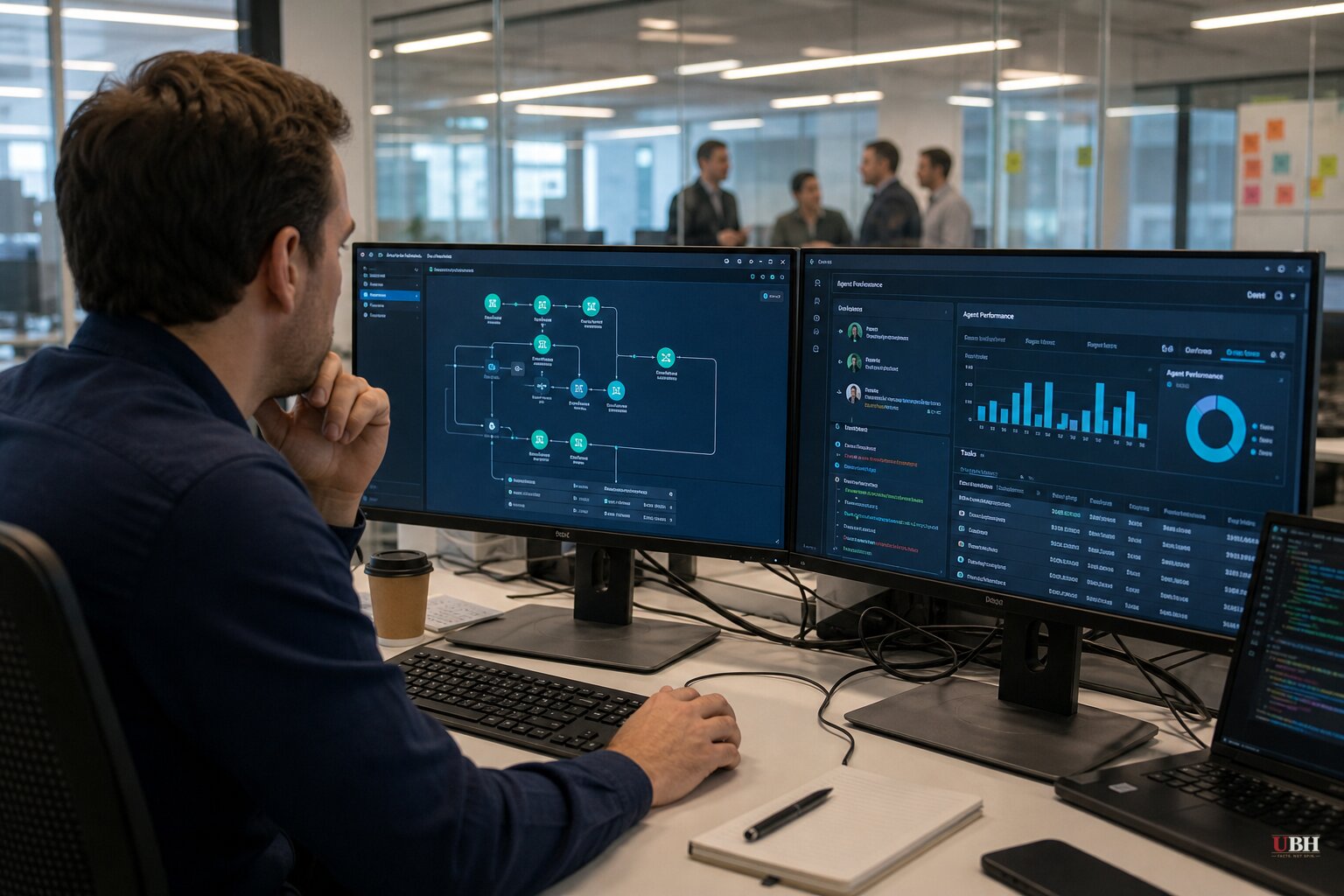
The pitch for agentic AI in 2025 was simple: build software that can plan, decide, and act on its own across whole workflows, then get out of its way. Two years in, that bet is failing in a lot of production environments, according to VentureBeat, which reports that enterprises actually winning with AI agents are doing the opposite. They're giving agents narrow jobs and strict rules, not open-ended freedom.
The numbers back that up. Gartner forecasts more than 40% of today's agentic AI projects will be abandoned before 2028, not because the underlying models are bad, but because of runaway costs, unclear payoff, and weak risk controls, according to VentureBeat's reporting on Gartner's research. McKinsey's 2026 AI Trust Maturity Survey, cited in the same reporting, found average responsible-AI maturity across organizations sits at just 2.3 out of 4, with only around 30% of companies hitting a maturity level of three or higher on governance and agentic controls specifically.
Gartner also found that of the thousands of products marketed under the "agentic AI" label, only about 130 have real autonomous capability behind them, VentureBeat reported. The rest are automation tools or chatbots rebranded for the moment.
The cost problem nobody priced in
Part of the pullback is financial. CIO Dive reports that "tokenmaxxing," the practice of maximizing AI compute use to look productive, went from trendy to unmanageable in about six months, according to Nicholas Merizzi, principal at Deloitte Consulting. "Before CFOs could even get it on their radar, the bills, the damage had been done," Merizzi told CIO Dive.
Will Sommer, a senior director analyst at Gartner, told CIO Dive that AI models are getting more expensive to run even as labs tout efficiency gains, because complex agentic tasks can require three to five times more tokens per query than earlier models. "The models produced by leading AI labs are getting more token-hungry faster than they are getting cheaper," Sommer said. Gartner projects enterprise spending on AI models and platforms will rise 63% this year, reaching $64 billion, per CIO Dive.
A recent SAP report cited by CIO Dive found AI use isn't actually saving organizations money, though it is helping employees generate insights and make decisions faster.
Nobody can say who's accountable when it breaks
The deeper issue isn't the bill. It's that autonomy and accountability move in opposite directions, as VentureBeat puts it: the more independently an agent can plan and execute a multi-step task, the harder it becomes to trace why it made a specific decision after something goes wrong.
Forbes contributor Chander Damodaran, Global CTO at Brillio, frames this as an "oversight paradox" borrowed from the World Economic Forum: the more work companies hand to agents, the fewer chances human overseers get to practice the judgment they're supposed to use when the system fails. Damodaran also cites the concept of a "moral crumple zone," where accountability lands on whichever manager is nearest to the agent even if that person lacks the visibility or tools to actually intervene. "Accountability becomes theater," he writes, when an agent moves faster than review cycles allow.
Kill switches are becoming a standard design requirement rather than an afterthought. TechTarget reports that a proper AI kill switch has to sit outside the agent's own reasoning loop, as a separate control plane, specifically so the agent can't ignore, override, or disable its own shutdown sequence. The UK's National Cyber Security Centre published interim guidance this month recommending agents get distinct identities, limited permissions, and constrained data access scaled to their level of autonomy, according to Darktrace. Margaret Cunningham, VP of Security and AI Strategy at Darktrace, notes the guidance is explicitly framed as interim because "organizations are already deploying agents into production environments while standards, controls, and operating models for autonomous systems remain unsettled."
The readiness gap is real, and companies know it
Deloitte's own research, reported by HR Dive, found only 1 in 5 organizations are actually prepared to move toward autonomous AI agents, hampered by poorly documented processes and fragmented data systems. Notably, 75% of business leaders surveyed by Deloitte said they see more value in human-agent collaboration, where employees direct and review agents, than in full automation.
That's not universal caution, though. Caylent's 2026 Enterprise Readiness report, covered by Channel Insider, found 59.5% of surveyed enterprise leaders already run AI agents autonomously in production, and 98% said they'd allow agents to make autonomous changes in production environments given the right safeguards. Randall Hunt, CTO at Caylent, argues the debate has moved past whether to adopt agents at all: "The question of whether enterprises will adopt agentic AI is settled. What's left is authority, not accuracy," he told Channel Insider. Caylent found 83% of respondents now weight guardrails as equal to or more important than raw model intelligence for driving adoption.
The sources describe a market correcting itself in real time. The race in 2024 and 2025 was about how much autonomy you could hand an agent. The one underway now, per VentureBeat, is about which companies can get an agent approved by risk, legal, and compliance teams, and keep it approved. Gartner's 40% failure forecast will take until 2028 to verify. The question ahead is whether the guardrail-heavy approach lowers costs enough to justify the technology, or whether narrower, more supervised agents simply cost less to build without delivering the productivity leap enterprises were promised.
Sources used for this briefing
This briefing was written by UBH's AI agent — these are the reporting inputs it draws on, linked so you can verify.


