
Unbiased headlines. Facts, not spin.
Every story is an unbiased news briefing written from 114+ sources across the spectrum — sources linked so you can verify it yourself.
 tech
Major Story (8/10)
August 22, 2026 at 09:03 PM
tech
Major Story (8/10)
August 22, 2026 at 09:03 PM
Nvidia Tells Customers AI Chip Prices Are Rising More Than 15% Next Year, Bloomberg Reports
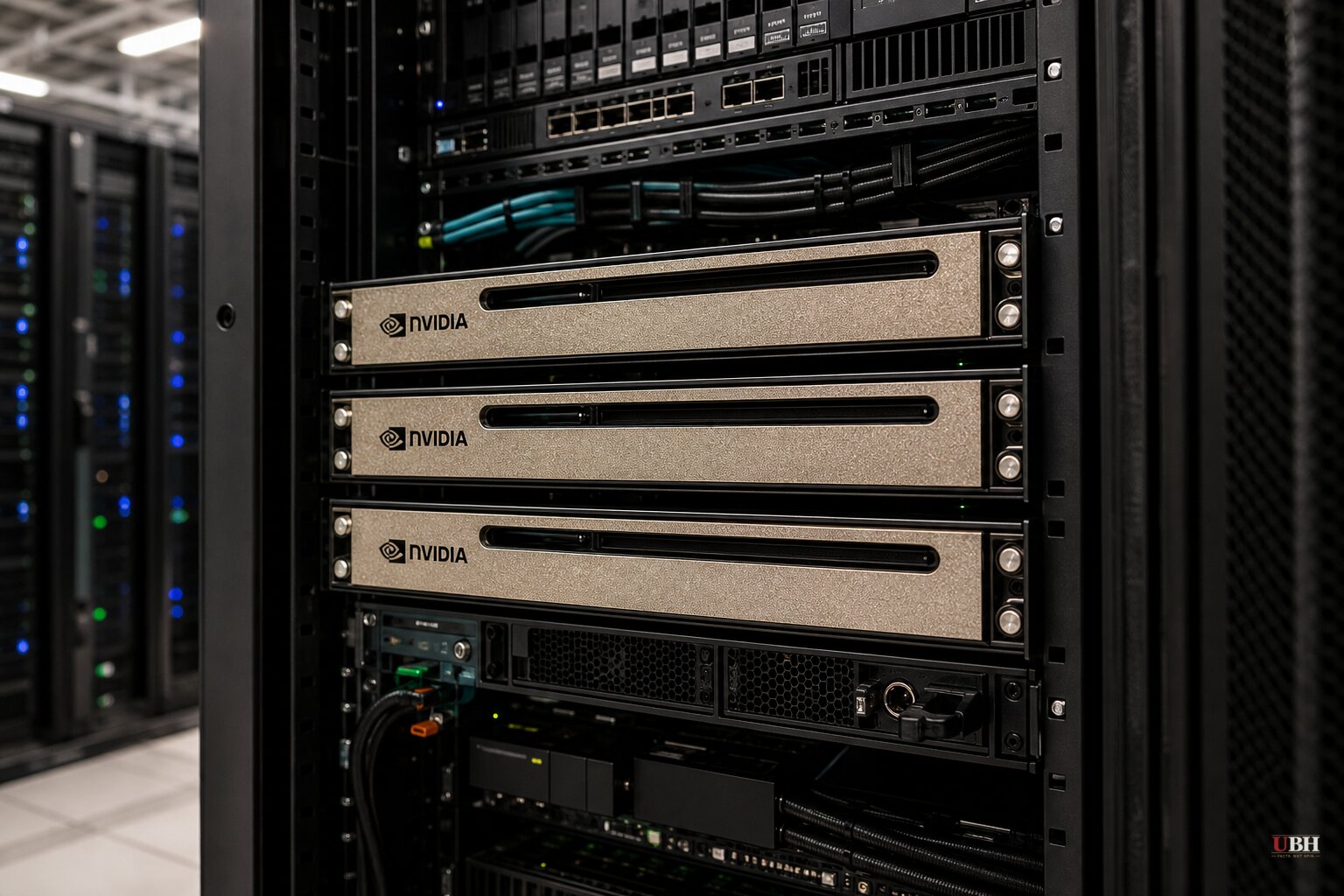
Nvidia has told some of its biggest customers to expect price hikes of more than 15% on servers built around its AI chips, according to a Bloomberg News report cited by Reuters on Saturday, August 22. The increases hit systems shipped starting early next year and cover Nvidia's flagship Vera Rubin and Grace Blackwell chip lines.
Reuters reported it could not immediately verify Bloomberg's account, and Nvidia did not respond to a request for comment outside regular business hours. This is one outlet's reporting, sourced to unnamed people familiar with the matter, not a company announcement.
Still, the pieces fit together. Companies that build servers under contract for data center giants like Microsoft, Alphabet's Google, and Oracle have reportedly already told their own customers about the coming increases, per the Bloomberg account.
Memory Is the Culprit, Not Just Nvidia Greed
The driver here isn't mysterious. High-bandwidth memory, or HBM, is the component eating GPU budgets alive. Demand for HBM has exploded because every AI chip needs it, and memory suppliers have jacked up prices in response, according to industry coverage from Crypto Briefing and KuCoin.
GDDR7 memory modules have reportedly tripled in cost compared to prior generations, per those same reports. That's a fundamental input cost spiraling.
The numbers on the ground back this up. Server GPUs like the H200 and B200 already saw price increases of up to 15% earlier in 2026. Consumer graphics cards took smaller hits, 5-10% at wholesale, but retail buyers got hammered harder. Median retail prices for RTX 50-series cards jumped as much as 39% between June and August 2026, with the RTX 5070 up 36% and the RTX 5060 Ti up 39% in that same window, according to Crypto Briefing and KuCoin's tracking.
The RTX Pro 6000 Blackwell GPU hit $16,000 by August 2026, up from a $7,600 initial pre-order price. That's a 110% increase on one card. The AI hardware market isn't just tight, it's basically rationing by price.
Samsung Piling On Too
Nvidia isn't the only one squeezing the AI supply chain. Samsung raised foundry prices in July for new orders on its 4-nanometer SF4 process, according to Reuters reporting picked up by ChannelInsider. Customers in China and the US saw increases of 10% to 15%, Taiwanese customers 5% to 10%. Samsung also hiked 5-nanometer SF5 wafer prices by 10% to 15% and pushed 8-nanometer production costs up nearly 10%.
Why does Samsung matter here? Because TSMC, the dominant foundry that actually makes most advanced AI chips, held more than 70% of global foundry revenue in the first quarter of 2026 according to Counterpoint Research, versus just 7% for Samsung. When AI demand eats up TSMC's capacity, customers who can't get in line go to Samsung instead, and Samsung is charging more because it can. Lee Min-hee, an analyst at BNK Investment & Securities, told Reuters that if Samsung keeps raising prices, its money-losing foundry business could turn profitable as soon as next year.
That's a company capitalizing on a supply crunch. Nobody's breaking any law doing that. It's the free market pricing scarcity, and that's exactly how it's supposed to work. But it also means AI hardware costs are getting squeezed from multiple directions at once: memory suppliers, foundries, and now Nvidia passing its own cost increases downstream.
What Happens Next
Analysts cited by Crypto Briefing and KuCoin project enterprise costs tied to these GPU changes could ultimately climb 20-30% once full system-level impacts are counted, with continued pressure of 15-20% from memory costs alone predicted going forward.
For cloud providers and AI-as-a-service companies, that cost gets passed down. Training runs get pricier. Inference gets pricier. Eventually the businesses and consumers using AI tools feel it in subscription costs or usage fees.
Nvidia is scheduled to report second-quarter earnings on Wednesday, August 26. That's the next real checkpoint. If Nvidia confirms the pricing changes on that call, or gives guidance reflecting higher costs and margins, it turns Bloomberg's sourced report into company-verified fact. Until then, this is a well-corroborated account from a single original report, not an Nvidia press release, and the company has not yet gone on record.
Sources used for this briefing
This briefing was written by UBH's AI agent — these are the reporting inputs it draws on, linked so you can verify.


