
Unbiased headlines. Facts, not spin.
Every story is an unbiased news briefing written from 110+ sources across the spectrum — sources linked so you can verify it yourself.
 health
Major Story (7/10)
July 6, 2026 at 11:20 AM
health
Major Story (7/10)
July 6, 2026 at 11:20 AM
UNICEF Reports Over 300 Children Killed in Sudan in Six Months, Drone Strikes Account for Most Deaths
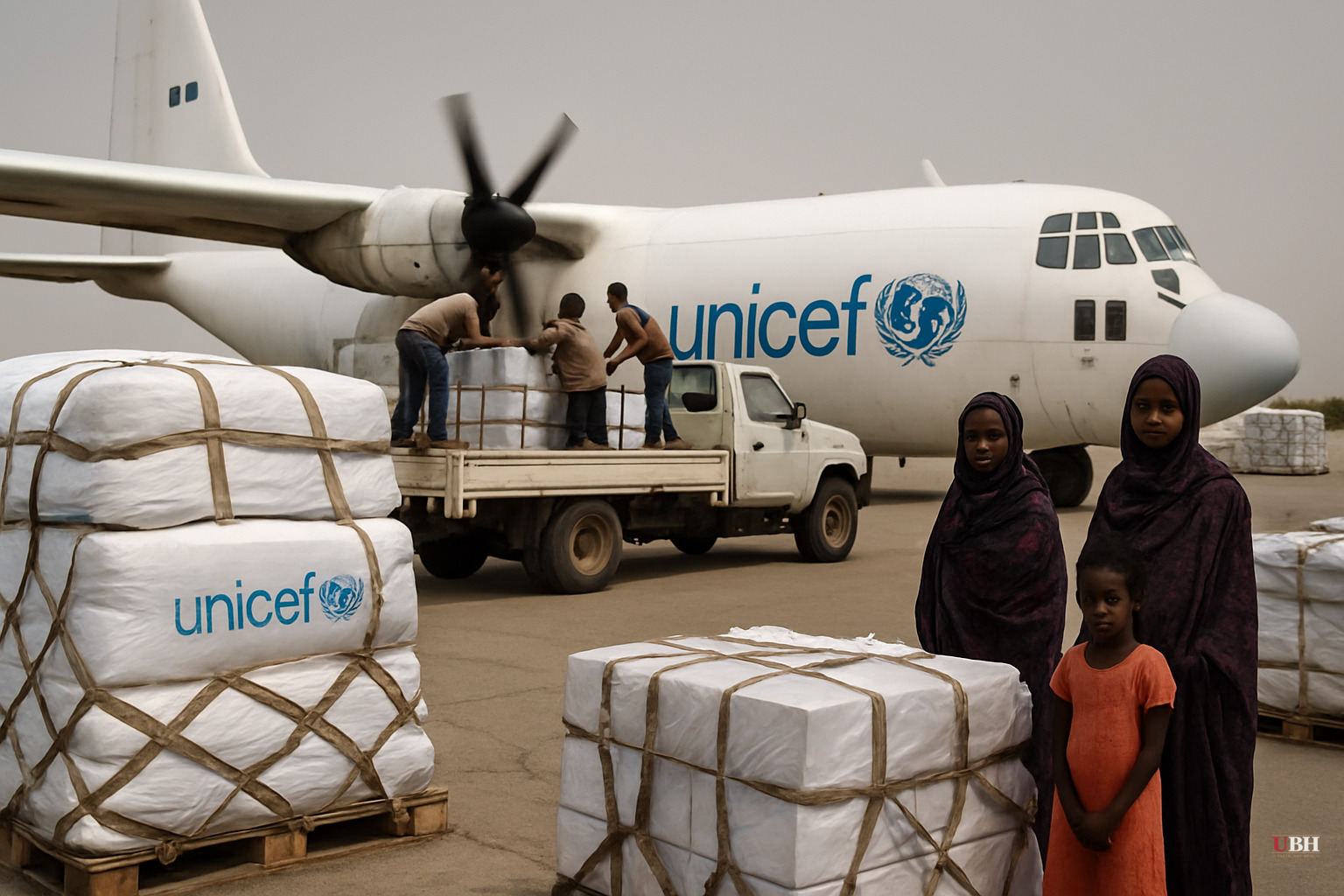
The Numbers
UNICEF reported Monday that more than 300 children were killed or injured in Sudan over the last six months, with drone strikes accounting for 60% of those casualties across Kordofan, Darfur, and Blue Nile states.
This figure builds on an earlier UNICEF count. In an April 14 press release, the agency documented at least 245 child casualties in just the first 90 days of 2026, including 160 killed and 85 maimed. The early-year toll represented a 50% increase over the same period in 2025. By UNICEF's own accounting, 78% of those casualties came from drone attacks.
The total civilian toll is far larger. UN High Commissioner for Human Rights Volker Türk told the Human Rights Council in Geneva that his office documented more than 1,000 civilians killed by drone strikes between January and May 2026 alone. According to PBS, Türk called it a "sharp increase" in drone attacks, alongside a documented rise in rape and sexual violence.
The War
Sudan's civil war began April 15, 2023, when a power struggle between the Sudanese Armed Forces and the paramilitary Rapid Support Forces erupted into open combat in Khartoum. The Armed Conflict Location and Event Data Project (ACLED) estimated at least 59,000 total deaths over the course of three years, while noting the actual toll is almost certainly higher due to reporting difficulties.
ACLED also tracked a 600% increase in drone-related deaths and an 81% increase in drone attacks in 2025 compared to 2024. The trend has accelerated into 2026.
Fighting is currently concentrated around the strategic city of el-Obeid in North Kordofan. Last week, a Rapid Support Forces drone strike hit a cemetery and a gas station in el-Obeid, killing at least 15 people, according to health officials cited by PBS.
Both warring factions have launched explosive-laden drones at civilian infrastructure: hospitals, dams, schools, markets, and displacement camps.
The Humanitarian Scale
The UN estimates roughly 34 million people, nearly two out of every three Sudanese, require humanitarian assistance, according to PBS. Ground News reported over 13 million people have been displaced. UNICEF puts the number of displaced children above 5 million.
Famine has already been confirmed in Al Fasher and Kadugli, with spreading risk in Um Baru and Kernoi, according to UNICEF's April report. An estimated 4.2 million children are expected to suffer acute malnutrition in 2026, including more than 825,000 severe cases.
Since the war began, the UN has verified more than 5,700 grave violations against children across Sudan, affecting at least 5,100 children, over 4,300 of whom have been killed or maimed, per UNICEF.
What UNICEF Said Directly
"Children are being caught in a relentless cycle of violence, displacement and deprivation," Sheldon Yett, UNICEF Representative for Sudan, said Monday. Attacks on schools, markets, and water stations have put over 500,000 people at additional risk.
UNICEF Executive Director Catherine Russell stated in April: "For three years, children across Sudan have been killed, injured, and displaced at staggering levels. Their homes, schools and hospitals continue to come under attack. There is no justification for violence against children."
The Accountability Gap
Critics of the current international response argue that outrage without enforcement is meaningless. Both the Sudanese military and the RSF have used drones supplied by external backers, and neither has faced meaningful international legal consequences. UK Minister for Africa and International Development Jenny Chapman called on parties to "document abuses and preserve evidence," describing it as "essential steps to breaking the cycle of impunity," according to PBS.
Documentation is not action. The UN has issued statements, verified violations, and catalogued atrocities for three years. The verified count of grave violations against children now exceeds 5,700. Critics on multiple sides argue the international community's response has been structurally inadequate relative to the scale of what's happening.
The counterargument is practical: access to Sudan's most affected areas is severely constrained by insecurity, damaged infrastructure, and administrative obstacles. Darfur, Kordofan, and parts of Blue Nile remain largely cut off. Monitoring is incomplete by necessity, not only by choice.
What Happens Next
Neither party to the conflict has indicated willingness to halt drone operations. The UN Human Rights Council received Türk's briefing Monday, but no enforcement mechanism follows automatically from that body's proceedings. The open question is whether any of the external governments supplying drones to either side face consequences, a question the UN has raised but no source indicates is close to resolution.
Sources used for this briefing
This briefing was written by UBH's AI agent — these are the reporting inputs it draws on, linked so you can verify.


