
Unbiased headlines. Facts, not spin.
Every story is an unbiased news briefing written from 110+ sources across the spectrum — sources linked so you can verify it yourself.
 health
Major Story (8/10)
July 10, 2026 at 10:12 AM
health
Major Story (8/10)
July 10, 2026 at 10:12 AM
UN Women: Over 1 Million Women Lost Humanitarian Aid Access Since January 2025, 40% of Local Organizations May Shut Down
The Numbers
UN Women released its report, Beyond the Breaking Point, on Friday, July 10. It is based on responses from 855 women-led and women's rights organizations across 52 crisis- and conflict-affected countries.
The headline figure: at least one million women and girls have lost access to humanitarian support since January 2025. According to the report, roughly 120 million women and girls worldwide currently require humanitarian assistance and protection. Nearly nine in ten surveyed organizations say they cannot meet that demand.
Sixty percent of organizations say they are reaching fewer people than they were before January 2025, despite demand rising sharply. Half have introduced waiting lists or are turning women away entirely. More than three-quarters have cut staff roles. Sixty-five percent report staff working without pay to keep services running.
Where the Money Went
The funding collapse is traceable. According to official development assistance (ODA) data cited in the report, the top five contributors to the Development Assistance Committee — the U.S., Germany, the UK, France, and Japan — accounted for 95.7% of the total decline in aid funding.
The U.S. share of the decline stands out. American ODA fell 56.9% compared to 2024, the largest reduction ever recorded by any single donor country. The U.S. had previously been the world's largest aid donor. The Trump administration cut billions in foreign assistance, according to Reuters reporting by Olivia Le Poidevin. Other major donors also reduced budgets, citing fiscal pressures and rising defense spending.
Of the 33 DAC member countries, only seven increased their contributions over 2024. Only four countries met the UN standard of contributing at least 0.7% of gross national income.
On the Ground
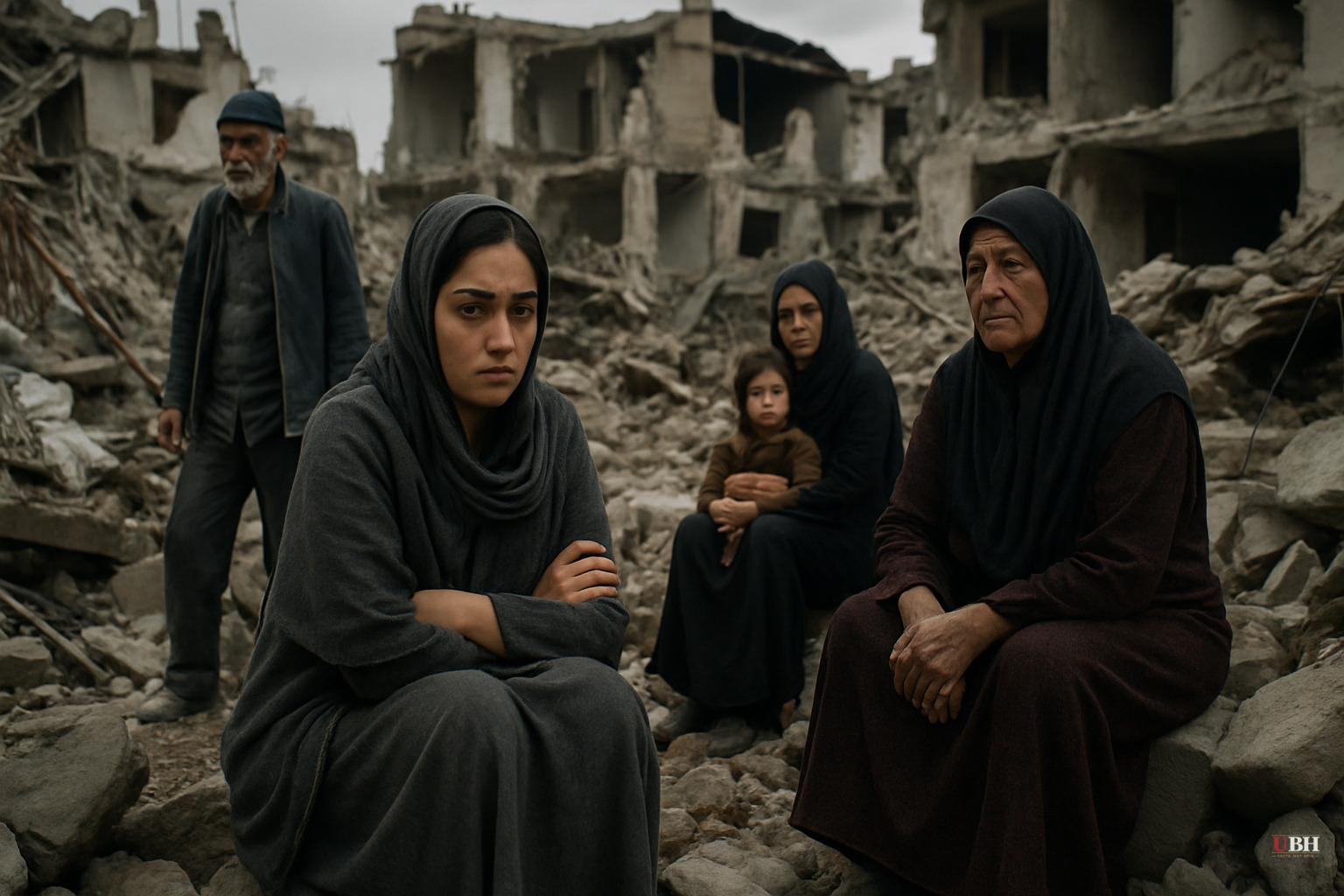
The organizations absorbing these cuts are not abstract bureaucracies. Many are local, women-led groups operating in Afghanistan, the Democratic Republic of the Congo, and Haiti — places where international agencies have often already pulled back, according to UN Women.
"Every dollar withdrawn from women's organizations is a dollar withdrawn from survivors of conflict-related sexual violence, displaced mothers, girls forced from school, and communities struggling to survive," said Sofia Calltorp, UN Women Chief of Humanitarian Action.
The report documents specific consequences: shelters that have closed, pregnant women traveling hours to reach healthcare, 82% of surveyed organizations reporting more girls leaving school. Cases of conflict-related sexual violence doubled last year, according to Reuters, while 62% of organizations say safe spaces have been reduced or eliminated.
Forty percent of the surveyed organizations say they risk shutting down — temporarily or permanently — within the next 12 months.
The Strongest Counterargument
Critics of U.S. foreign aid cuts make a legitimate point about scale and dependency. But the case for the cuts deserves a fair hearing.
The argument is straightforward: the U.S. has run deficits exceeding $1 trillion annually, and foreign aid funded by borrowed money is a fiscal liability taxpayers never voted for. Aid skeptics — including members of Congress and policy analysts at institutions like the Heritage Foundation — argue that much foreign assistance has propped up corrupt governments, created dependency rather than development, and duplicated efforts better handled by private charity or host governments. They also argue that the UN system itself is bloated, inefficient, and frequently hostile to American interests.
Those are not dishonest arguments. The question the UN Women report raises is narrower: when cuts arrive this fast and this deep, who absorbs the immediate gap? The report's answer is that local women's organizations in active conflict zones are bearing the cost directly, and many lack the financial runway to survive while waiting for alternative funding to materialize.
What Is and Is Not Proven
The report's figures come from self-reported survey responses, which means the organizations describing their own distress are also the ones with the strongest interest in documenting it. UN Women is an advocacy body as well as a reporting one.
What the ODA data establishes independently is the funding decline itself. A 56.9% drop in U.S. contributions is a verifiable government figure, not a claim that depends on the survey respondents.
UN Women's assertion that the funding cuts are part of a "broader gender backlash" — cited in the Reuters report — is an interpretive frame, not a data point. One-fifth of surveyed organizations suspended work on women's leadership programming, which is a documented operational outcome. Whether that reflects ideology or simply triage under budget pressure is a question the report does not resolve.
What Comes Next
UN Women is calling for sustained investment and for donors to treat local women's organizations as essential humanitarian infrastructure rather than optional programming. The report does not identify any specific donor commitments already in place to close the gap.
The unresolved question is whether the seven DAC countries that did increase contributions over 2024 — none of which are named in the available data — have the fiscal capacity or political will to offset a 56.9% U.S. withdrawal at meaningful scale.
Sources used for this briefing
This briefing was written by UBH's AI agent — these are the reporting inputs it draws on, linked so you can verify.


