
Unbiased headlines. Facts, not spin.
Unbiased Headlines is an independently owned news organization. We bring you the facts, not opinions, written fresh from 110+ named sources. Sources linked so you can verify it yourself.
 tech
Notable (5/10)
UN Telecom Official Warns AI Gap Between Rich and Poor Nations Could Widen, Puts Price Tag at $2.8 Trillion
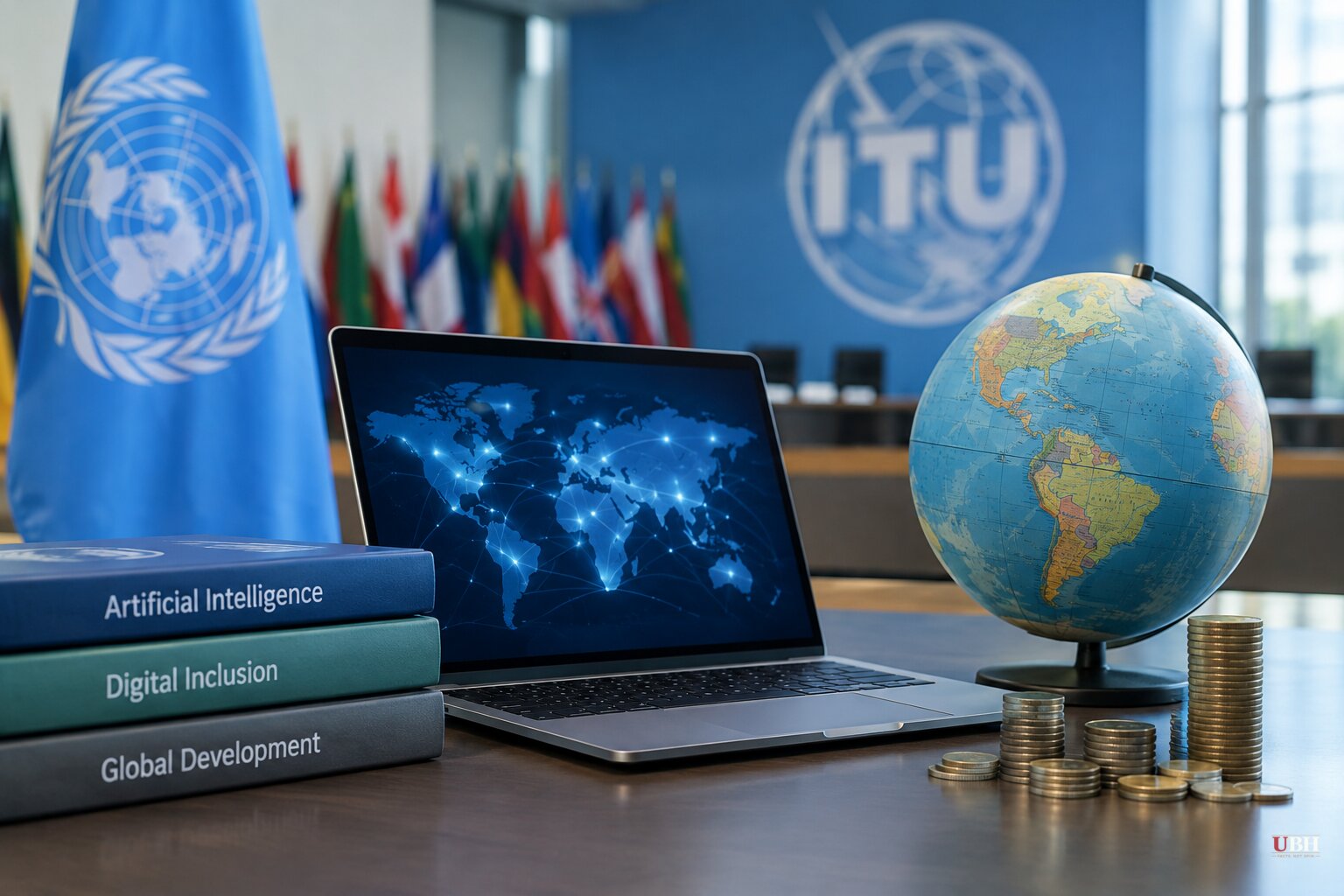
Tomas Lamanauskas, deputy secretary-general of the International Telecommunication Union (ITU), the UN agency that handles information and communication technology, warned today, Oct. 25, that artificial intelligence could widen the gap between rich and poor countries.
He spoke on the sidelines of the UN Conference on Trade and Development (UNCTAD) World Investment Forum in Doha, Qatar.
"I think the AI divide is really the big concern because it's really not just about the digital divide," Lamanauskas said. "A great divide could really mean an opportunity divide, and really could deepen the socioeconomic divide."
The numbers Lamanauskas cited
Lamanauskas pointed to infrastructure first. Africa and Latin America together hold just 3.3% of global data centre capacity, he said. About 2.2 billion people worldwide still have no internet access.
He put the cost of closing the digital infrastructure gap at an estimated $2.8 trillion in investment by 2030. That is his estimate, not a budget anyone has approved.
Adoption is lopsided too. Roughly 29% of working-age people in developed countries use generative AI, he said. In developing countries the figure is 16%.
Lamanauskas also said AI translation tools cover only 7% of African languages, which limits who can use them at all.
A December 2025 report from the UN Development Programme (UNDP) made a related warning. It said AI could trigger a new era of inequality between nations and reverse decades of progress in narrowing economic gaps. Countries with unreliable power, limited connectivity and thin technical skills risk missing out on the gains, the UNDP said.
Jobs: net gain, but disruption
Lamanauskas acknowledged growing anxiety about AI-driven job losses. He cited estimates that AI could eliminate 90 million jobs while creating 170 million new ones. He added that a net gain would not spare individual workers from disruption.
He also cited an estimate that 40% of workplace skills could change by 2030.
The 2026 International AI Safety Report, published in February, estimated that about one billion people now use AI for tasks such as medical guidance and writing. It said AI-related changes could affect about 60% of jobs in advanced economies and 40% in emerging ones. The report also said concrete data on this are unavailable.
Fazl Barez, a senior researcher at the University of Oxford focused on AI safety and governance, said concerns about AI are justified. He drew a line, however, between automating individual tasks and eliminating whole jobs. Occupations built on routine cognitive tasks are the most exposed, Barez said, but the scale of any job losses remains uncertain. He warned that AI automation also threatens government tax revenues, living standards and citizens' power.
Lamanauskas said stopping AI or halting its rapid development is not a realistic option.
A separate UN report makes a broader case
A new report from the UN Department of Economic and Social Affairs (DESA) frames the issue more widely. It says AI, the green energy shift and other economic transitions risk leaving vulnerable groups behind. It names women, young people, older persons, persons with disabilities, migrants, Indigenous Peoples and low-income communities.
The report argues that inclusion is "a moral imperative" and "an economic necessity." It says widening opportunity enlarges the productive workforce and spreads productivity gains more broadly.
Its recommendations include continuous training and reskilling for workers whose jobs are replaced or transformed, rather than a sole focus on creating new jobs. It also calls for affordable internet access and technology training in disadvantaged communities. Another recommendation is to stop relying mainly on GDP and to track poverty reduction, access to education and healthcare, employment security, inequality and environmental protection as well.
UN Secretary-General António Guterres said in a video message for the launch: "Inclusive societies are more productive, resilient, and prosperous." He added, "Transformations are inevitable. Inequality and exclusion are not."
Who pays
The DESA report acknowledges that these investments need resources. Guterres warned that nearly half of the world's poorest countries are in or at high risk of debt distress, with interest payments relative to revenue at their highest levels in a generation.
He called on leaders to honor last year's Doha Political Declaration on Social Development and the Sevilla Commitment on financing for development. He also pushed for reform of international financial institutions so they better represent and serve developing countries.
Financing is the open question. Lamanauskas put the infrastructure bill at $2.8 trillion by 2030. The countries most affected, by Guterres's own account, are the ones carrying their heaviest debt-service burdens in a generation. How that money would be raised, and by whom, was not answered in Lamanauskas's remarks in Doha.
Sources used for this briefing
4 links from 4 independent newsrooms (syndicated copies of the same report count once)
These are the sources it draws on, linked so you can verify.


