
Unbiased headlines. Facts, not spin.
Unbiased Headlines is an independently owned news organization. We bring you the facts, not opinions, written fresh from 110+ named sources. Sources linked so you can verify it yourself.
 tech
Major Story (7/10)
Event date: October 21, 2026 ·
39 Data Center Ballot Measures Slated for November in Eight States as UMass Poll Finds 65% Oppose Local Projects
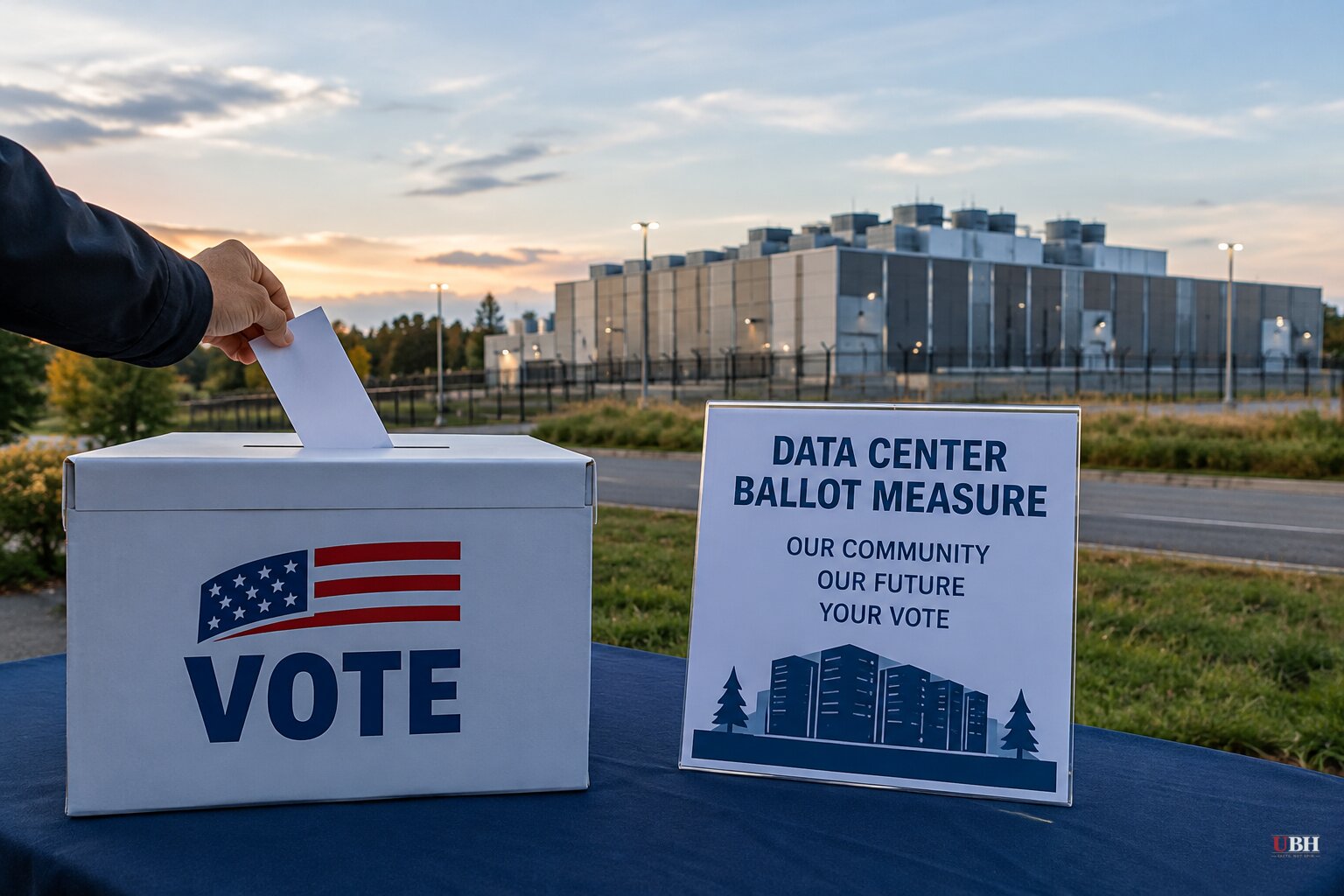
Since the data center fight became a midterm issue this fall, it has moved well past local zoning boards. Voters in eight states face 39 data center-related ballot measures scheduled for November, according to Stateline's count. They include proposals to ban facilities, change zoning rules or require voter approval. Data centers are among the issues that Wired reports could decide key midterm races in less than two weeks.
The polling explains why. A University of Massachusetts Amherst poll found 65% of Americans oppose building AI data centers in their communities. Only 11% support them. A 2026 Gallup survey found seven in 10 Americans would oppose one locally, and 48% would oppose it strongly.
Data Center Watch, which tracks the sector, says local opposition blocked or delayed at least 75 projects worth roughly $130 billion in the first quarter of 2026 alone.
The politicians are backing away
The backlash is not confined to one party. In Ohio, which has 154 operating data centers and 84 more in development, Republican Sen. Jon Husted faces criticism for previously championing tax breaks for the industry. Candidates in Ohio and Pennsylvania have distanced themselves from earlier support for development.
Texas Gov. Greg Abbott, also a Republican, has issued a moratorium on new data center permits, according to Stateline's reporting.
Critics cite electricity costs, strain on power grids, pollution, water use, noise and lost farmland. Many also object to tax incentives for developers and to projects negotiated behind closed doors without public input. That last complaint is a taxpayer-money question, not a partisan one.
The scale is large. Data centers draw about 49 gigawatts nationwide, and planned or under-construction projects total nearly 350 gigawatts.
What Ireland already went through
Paris Marx, the Big Tech critic and host of the Tech Won't Save Us podcast, lays out a foreign precedent in his new book, Hyperscale: The Ambition and Excess of Big Tech's Data Empires. He told Wired the Netherlands and Singapore had moratoriums going back to 2019.
In Ireland, Dublin passed a moratorium in 2021. Marx says the grid operator itself concluded there were too many data centers and not enough capacity to connect more.
According to Marx, the industry did not stop. Companies looked beyond Dublin and toward the gas network, and began developing dedicated gas power plants. Because Ireland's grid is public, he says, data center companies lobbied for legislation allowing private companies to build electricity cables. He also says the Irish Environmental Protection Agency issued emission licenses to burn fossil fuels while warning that climate targets would get harder to meet.
"The gas stuff looks so prescient with what's happening in the US now," Marx said. American companies are racing to build private gas plants for data centers, while facing shortages of turbines, chips and other equipment.
Marx also points to The Dalles, Oregon. He says Google got the city council to keep its water use secret for the better part of a year. When the numbers came out, he says, the facility was using 29% of the town's water.
Northern Virginia: the preview
Loudoun County, Virginia, is the densest data center region in the country. The Nation counted 233 facilities there, covering more than 3% of the county's land.
In September, the county Board of Supervisors voted 7-1 to impose a 12-month pause on board action for data centers and electrical substations.
The Nation's account describes the opposition as cross-partisan and driven largely by residents in their 50s and 60s protecting their own homes. One of them, Jessica Medeiros, 55, lives in Sterling at the end of a street where the Vantage VA2 data center rose. The Nation reports the facility is not connected to the grid and runs on gas turbines with backup diesel generators. Medeiros pointed to where soot usually falls.
Some of those activists told the magazine's writer that fears of AI itself are "overblown." Their objection is to the building next door.
The industry's case
Technology companies and industry-backed political groups argue that data centers strengthen U.S. competitiveness in artificial intelligence, create construction jobs and generate property tax revenue. Supporters say projects can win public acceptance if developers address environmental concerns and community needs.
Marx is a longtime critic of the industry, so his account of the Irish playbook is one side's reading of events.
Whether the buildout can even be completed is a separate question. Marx raised it in the Wired interview: whether all the planned projects get built before demand for AI is reassessed, given shortages of turbines, chips and other equipment.
What comes next
The ballot measures are scheduled for November. Their results will show whether the polling translates into binding limits on zoning, permits and tax incentives. Loudoun's 12-month pause, meanwhile, is a live test of whether a county can slow the sector in its densest market.
Sources used for this briefing
6 links from 6 independent newsrooms (syndicated copies of the same report count once)
These are the sources it draws on, linked so you can verify.


