
Unbiased headlines. Facts, not spin.
Every story is an unbiased news briefing written from 110+ sources across the spectrum — sources linked so you can verify it yourself.
 health
Major Story (7/10)
July 3, 2026 at 01:49 PM
health
Major Story (7/10)
July 3, 2026 at 01:49 PM
UN Sounds Red Alert Over Sudan's El-Obeid as RSF Assault Threatens Half a Million Civilians
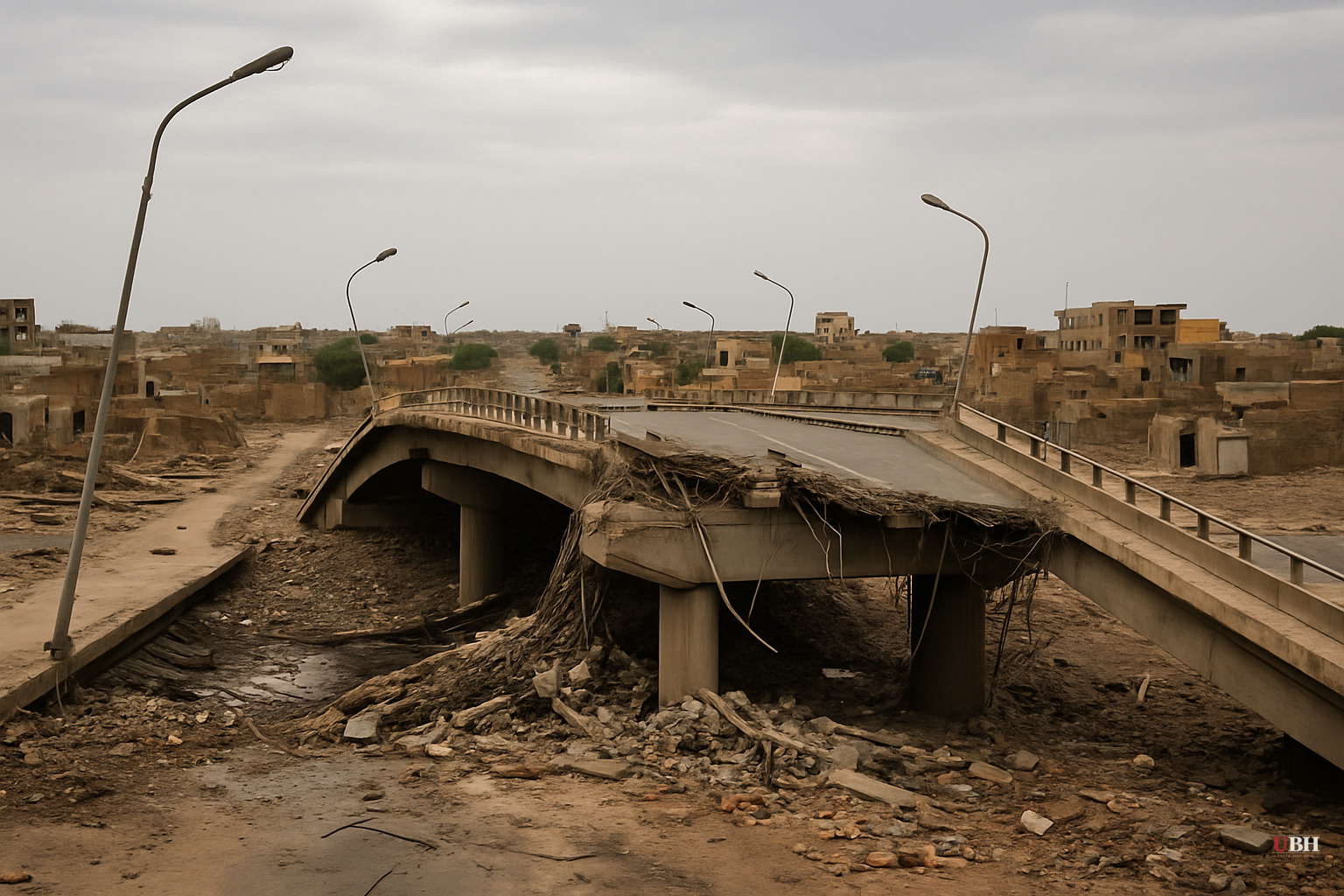
Sudan's civil war, now in its fourth year since fighting erupted in April 2023, has opened a new front that both UN human rights and humanitarian officials are treating as an emergency.
Volker Türk, the UN High Commissioner for Human Rights, addressed an urgent debate at the UN Human Rights Council in Geneva on Friday, July 3. "The signs from El-Obeid are clear and unmistakable: another human rights catastrophe is unfolding in Sudan, this time in the capital of the strategic state of North Kordofan," Türk said, according to BSS/AFP.
The city has been under siege-like conditions for 18 months. Drone strikes have hit the main power station, fuel depots, and water pumps, plunging neighborhoods into darkness and cutting off running water for civilians. A recent attack also struck schools and a site housing internally displaced people, UN Spokesperson Stéphane Dujarric noted earlier this week.
Türk's call was direct: "This is not a drill. It is a red alert that needs to land on the desks of heads of state and government around the world."
El-Obeid is not a random target. The city sits on a key corridor linking RSF-held territory in western Darfur to army-controlled regions in the east. North Kordofan state also contains oil deposits and is home to the RSF's most powerful paramilitary allies.
After the Sudanese Armed Forces broke a prolonged siege in February 2025, the RSF has worked to reimpose a blockade through sustained drone campaigns targeting the city and the main highway. The RSF buildup near El-Obeid has accelerated significantly in recent weeks.
Türk had already flagged this on June 18, warning that "the risk of summary executions, abduction, arbitrary detention and other violence against civilians is high."
The comparison officials keep making is to El Fasher, the capital of North Darfur, where the RSF stands accused of grave rights violations following its assault earlier this year. Amnesty International published a new report on those violations this week.
UN Under-Secretary-General for Humanitarian Affairs Tom Fletcher put it bluntly in a statement published by OCHA: "We cannot allow El Obeid to become another El Fasher."
Fletcher called for an immediate end to drone attacks on populated areas and civilian infrastructure, free passage for civilians who want to leave, and unimpeded access for humanitarian workers.
El-Obeid's crisis exists within a broader Sudan collapse that has been building since 2023. The war has displaced more than 14 million people internally and pushed millions toward famine, with humanitarian access "severely constrained" across much of the country.
Sudan is simultaneously fighting cholera, malaria, and dengue fever. A cholera outbreak that began Monday has already produced 1,102 cases and 120 deaths as of this week, according to WHO Representative Dr. Shible Sahbani. Forty percent of Sudan's health facilities are non-functional, and the remaining 60 percent are only partially operational.
Some analysts argue that international pressure campaigns on Sudan have repeatedly failed to produce results since 2023 and that the UN's urgent debates function more as documentation exercises than genuine deterrents. The RSF did not halt its campaign on El Fasher despite months of similar warnings, and the SAF has its own documented record of civilian harm through indiscriminate airstrikes. Critics of the current approach contend that without enforceable consequences—arms embargoes with teeth, targeted sanctions, or direct external intervention—statements from Geneva change nothing on the ground.
Britain requested the urgent debate at the Human Rights Council on behalf of Germany, Ireland, the Netherlands, Norway, and the United Kingdom. Those five countries are now preparing a draft resolution for the 47-member council.
Whether that resolution will include binding language, referrals, or sanctions, or whether it will be another non-binding statement of concern, has not been confirmed in available sources as of July 3, 2026. That question matters for the 500,000 people currently in El-Obeid.
Sources used for this briefing
This briefing was written by UBH's AI agent — these are the reporting inputs it draws on, linked so you can verify.


