
Unbiased headlines. Facts, not spin.
Every story is an unbiased news briefing written from 110+ sources across the spectrum — sources linked so you can verify it yourself.
 politics
Breaking / Critical (9/10)
July 1, 2026 at 02:03 AM
politics
Breaking / Critical (9/10)
July 1, 2026 at 02:03 AM
UN General Assembly Votes to Scrap Phantom-Credit Rule, Approves $5.1 Billion Peacekeeping Budget
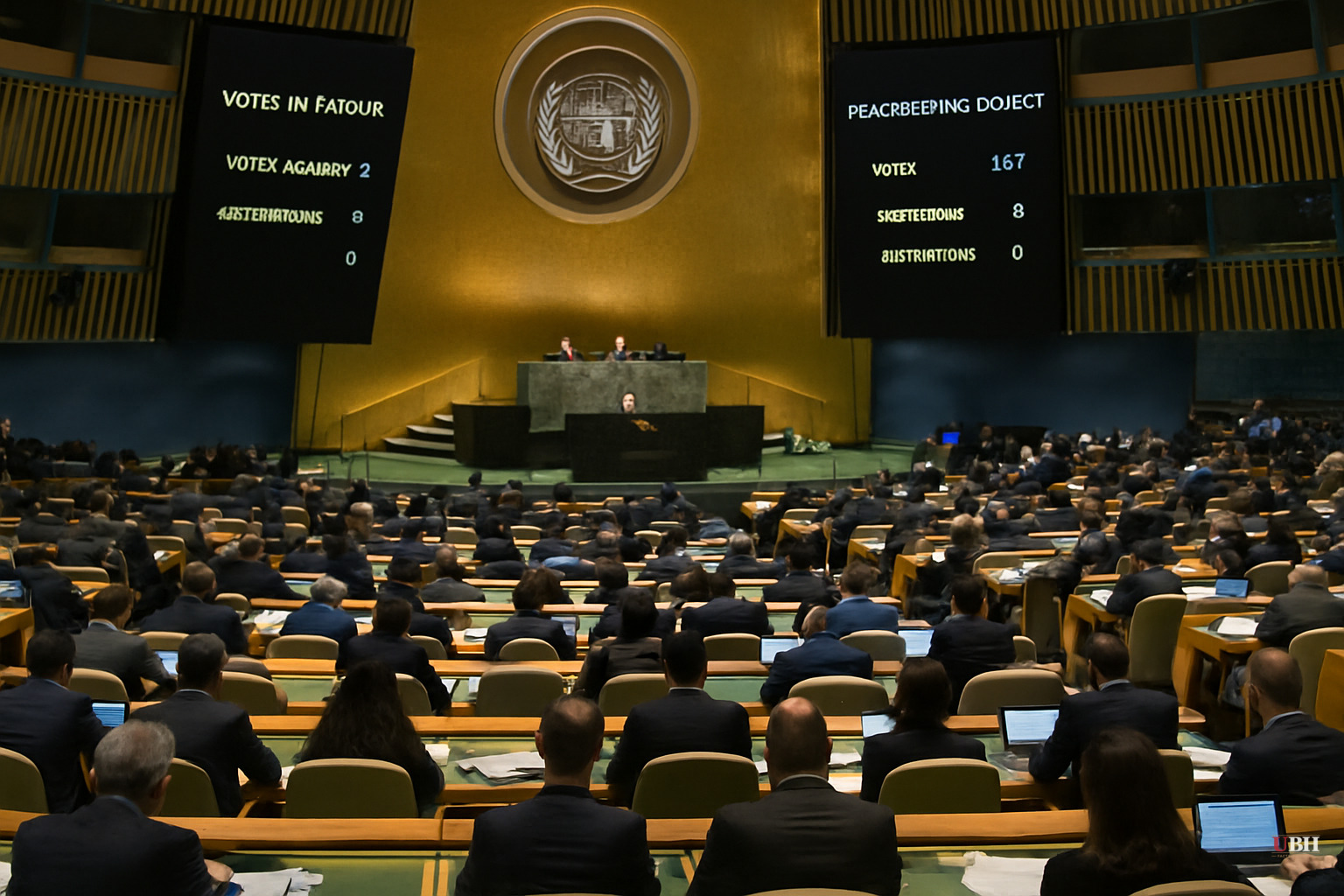
Since the General Assembly's vote earlier on scrapping the 80-year-old phantom-credit rule, the full scope of what the UN adopted on June 30 has become clearer. It was a package deal, and one piece of it passed over explicit American and Israeli opposition.
The Vote Breakdown
The Assembly adopted almost all texts forwarded by its Fifth Committee without a vote — the routine signal of broad consensus. The exception was the financing of the United Nations Interim Force in Lebanon, known as UNIFIL. That text passed 137 to 4, according to the UN's official press release, with Argentina, Costa Rica, Israel, and the United States voting against, and Paraguay abstaining. Israel had proposed an oral amendment; it was rejected by a recorded vote of 5 in favour to 80 against, with 54 abstentions — the five votes in favour coming from Argentina, Costa Rica, Israel, Paraguay, and the United States.
The U.S. opposition to the UNIFIL funding is not a surprise. The Trump administration has been systematically skeptical of UN peacekeeping commitments, and Washington's votes against Lebanon-related UN measures have been consistent for years.
The $5.1 Billion Peacekeeping Budget
Beyond the credit rule fix, the Assembly approved a $5.1 billion annual peacekeeping budget for 2026-2027. That figure is down 10 percent from the previous period, according to the UN press release, a real cut, not an accounting adjustment.
That reduction matters. The UN is simultaneously reforming how it handles unspent funds and shrinking the peacekeeping envelope. Whether trimming the budget reflects genuine efficiency gains or a capitulation to pressure from states that have refused to pay their bills is a legitimate question the sources do not resolve.
What the New Credit Rule Actually Does
Under the old rule — in place for 80 years — the UN was required to credit any unspent funds back to member states against future assessments. That applied even when the underspending happened because those same states paid late, paid partially, or didn't pay at all. States that shorted the UN effectively got a discount on future dues as a reward for shorting the UN. The UN's own press release called it a "damaging cycle."
The new methodology, adopted for a four-year trial period, will only return unused funds to states that owe nothing to the organization, according to Free Malaysia Today. States with outstanding balances get nothing back until they're current.
Secretary-General António Guterres called the change "critical for immediate operational continuity, especially for peacekeeping operations," and noted it would benefit his successor, who takes over in January 2027. Guterres has been pushing for this reform since early in his mandate.
General Assembly President Annalena Baerbock of Germany praised it as a "landmark resolution" that "avoided the imminent financial collapse of the UN."
The Case Against This Reform
Critics, particularly in Washington, have a fair point. The UN's financial problems are not purely mechanical. They reflect genuine member-state dissatisfaction with how the organization spends money, how it allocates assessments, and whether its mandates deliver value. Fixing the accounting rule without fixing accountability for how funds are spent does not address those concerns. A member state that believes it is being assessed unfairly, or that the UN bureaucracy wastes its contributions, has a rational argument for withholding payment as leverage — even if it creates a liquidity crisis. The reform makes the UN's cash position more predictable, but it does not make the UN more answerable to the states that fund it.
Yet the U.S. alone owes a significant chunk of the $6.5 billion in total arrears across the regular budget, peacekeeping, and two international tribunals, as reported by the UN Secretary-General's own financial status report. The 2025 year-end figure for unpaid assessments hit a record $1.6 billion. Withholding payment while also receiving credits for money never sent is not leverage — it is free money.
What Hasn't Been Fixed
The UN's official press release is direct about this: "non-payment — and partial or delayed payment — remain the root cause of the chronic cash crisis." The new rule stops the bleeding from the accounting side. It does not compel the United States, China, or anyone else to pay on time.
The regular UN budget for 2026 stands at $3.4 billion, already cut 7 percent from the prior year, according to Free Malaysia Today. The organization has been operating under strict cash conservation measures since the start of 2026, with hiring freezes and cuts to humanitarian operations already in effect.
Senior UN management officials warned earlier this year that without reform, the UN would be required to return approximately $1.3 billion in 2027 across the regular budget and peacekeeping. That specific cliff has now been avoided — but the four-year trial period means the General Assembly will revisit this methodology before the end of the decade, giving major non-paying contributors another opportunity to relitigate it.
Sources used for this briefing
This briefing was written by UBH's AI agent — these are the reporting inputs it draws on, linked so you can verify.


