
Unbiased headlines. Facts, not spin.
Every story is an unbiased news briefing written from 110+ sources across the spectrum — sources linked so you can verify it yourself.
 politics
Breaking / Critical (9/10)
July 1, 2026 at 01:23 AM
politics
Breaking / Critical (9/10)
July 1, 2026 at 01:23 AM
UN General Assembly Scraps 80-Year-Old Budget Rule That Credited Money It Never Collected
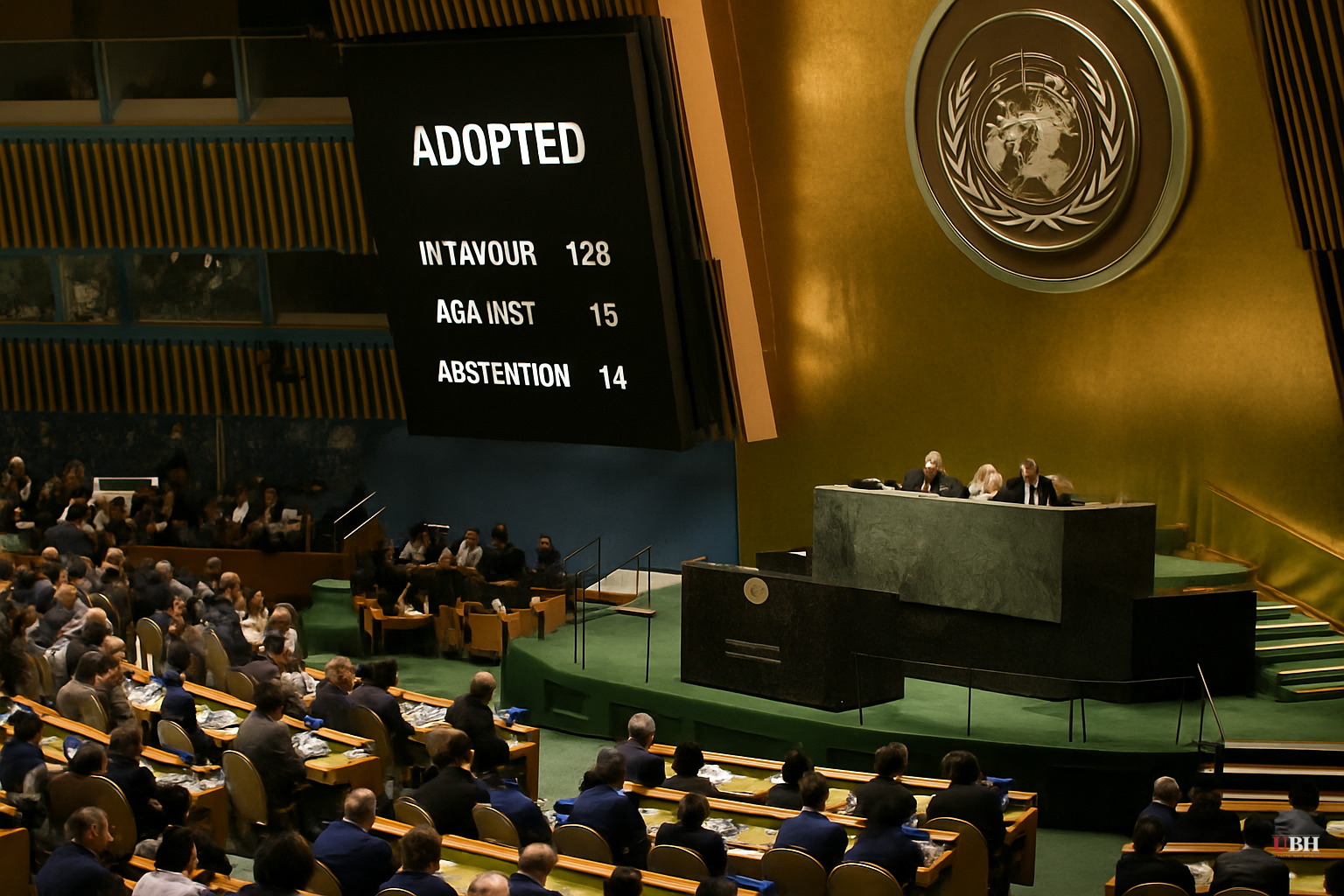
Since the UN's liquidity crisis deepened through 2025, the organization has been operating under strict cash conservation measures while Secretary-General António Guterres publicly warned of potential financial collapse. On Tuesday, the General Assembly acted.
What the Old Rule Actually Did
The rule dated back 80 years. Under it, any unspent funds at the end of a budget period had to be credited back to member states against their future assessments, regardless of why those funds went unspent. If a country paid late, paid partially, or didn't pay at all, the resulting underspending still generated a credit for that country, reducing what it owed next year.
According to the UN press office, this created a self-reinforcing cycle: unpaid contributions caused cash shortages, cash shortages forced spending freezes, spending freezes produced unspent balances, and those balances were then credited back to the very states that hadn't paid. The organization started each new budget period with less cash than the previous one.
Without Tuesday's change, the UN would have been required to return approximately $1.3 billion in 2027 across the regular budget and peacekeeping operations, according to UN management officials cited in the press release.
What Was Voted On
The General Assembly adopted the new methodology as part of a broader package of texts forwarded by its Fifth Committee, which handles administrative and budgetary matters. The new rule is a four-year trial. Under it, unspent funds will only be returned to member states that have no outstanding obligations to the UN. States that are current on their payments will receive credits.
The Assembly also approved a $5.1 billion peacekeeping budget for 2026-2027, down 10 percent from the prior period, according to the UN press office.
One text was not adopted without objection: the financing resolution for UNIFIL, the UN Interim Force in Lebanon, passed 137-4, with Argentina, Costa Rica, Israel, and the United States voting against, and Paraguay abstaining. An oral amendment proposed by Israel was rejected by a recorded vote of 5 in favour to 80 against, with 54 abstentions.
The Numbers Behind the Crisis
The UN's regular budget for 2026 is $3.4 billion, already down 7 percent from the previous fiscal year, according to Free Malaysia Today. The organization ended 2025 with a record $1.6 billion in unpaid assessments. Total arrears across the regular budget, peacekeeping, and two international tribunals exceed $6.5 billion, per Guterres's most recent financial status report.
The two largest contributors, the United States and China, are the most frequently cited for late and delayed payments. Free Malaysia Today specifically noted that Guterres warned in January that countries including the US under President Donald Trump were among those whose non-payment threatened collapse.
Reactions
Guterres called the vote "critical for our immediate operational continuity, especially for peacekeeping operations," and said the change would also benefit his successor, who takes over in January next year. He noted the incoming Secretary-General "will no longer be hamstrung by being forced to return funds that were, all too often, never even received in the first place."
General Assembly President Annalena Baerbock of Germany, who raised the issue before the European Parliament in February, said: "With this landmark resolution, the General Assembly avoided the imminent financial collapse of the UN and modernized an outdated 75-year-old financial rule that has, for too long, undermined the organization's financial stability."
The Strongest Case Against This Change
Critics, including the United States government, have legitimate concerns worth stating plainly. Large contributors argue that the UN has a spending discipline problem, not just a collection problem. If the organization can now hold onto funds without returning them to member states, the incentive for internal budget rigor weakens. The new rule also effectively penalizes states that do pay on time by denying them credits when other members default, meaning responsible payers absorb the cost of deadbeats. The US voted against the UNIFIL financing resolution Tuesday, signaling it has not warmed to the direction the General Assembly is taking.
Those concerns are real. The counterargument is that the old rule was architecturally broken: it rewarded non-payment with automatic credits, meaning the act of withholding money produced a financial benefit. The new rule removes that perverse incentive. Whether tighter internal accountability accompanies the rule change is a separate, unresolved question.
What This Does Not Fix
Tuesday's vote addresses the symptom, not the disease. As the UN press office noted directly, "non-payment, and partial or delayed payment, remain the root cause of the chronic cash crisis." The new methodology stops the bleeding from the accounting loop. It does nothing to compel the United States, China, or any other member state to pay what they owe.
The four-year trial period means the General Assembly will have to revisit this before the end of the trial window. If major contributors continue withholding payments at the current scale, the organization will face the same structural insolvency with a different set of rules around it. The open question heading into the next budget cycle is whether any mechanism, beyond diplomatic pressure, exists to enforce payment from sovereign states that have decided non-compliance is acceptable policy.
Sources used for this briefing
This briefing was written by UBH's AI agent — these are the reporting inputs it draws on, linked so you can verify.


