
Original briefings. Zero spin.
Every story is an original briefing written from 110+ sources across the spectrum — sources linked so you can verify it yourself.
 defense
Major Story (7/10)
Event date: August 19, 2026
defense
Major Story (7/10)
Event date: August 19, 2026
UN Experts Demand Action to Shield ICC After US Sanctions Hit Court's President Akane
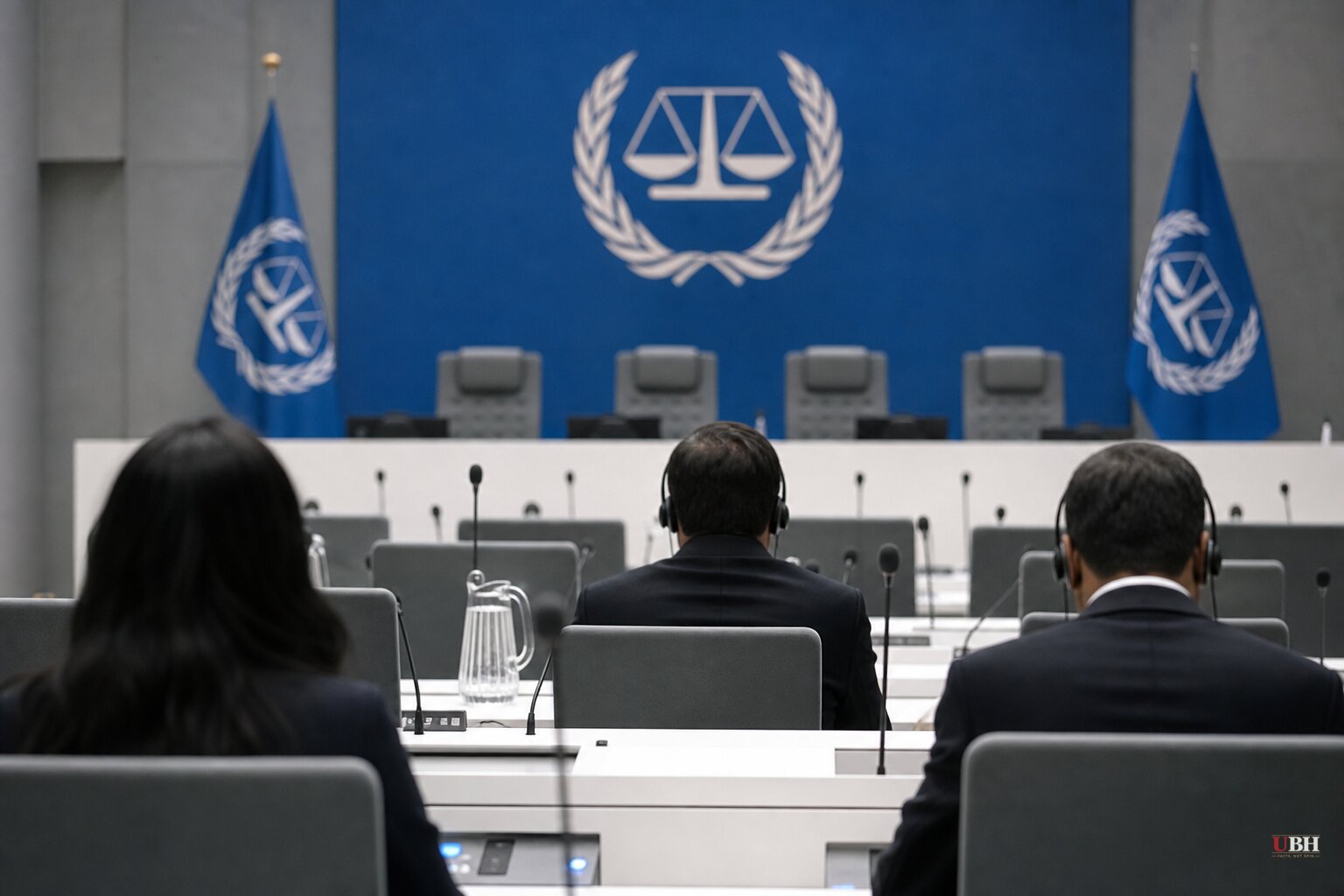
Since the State Department sanctioned International Criminal Court President Tomoko Akane and senior trial lawyer Abdoulaye Seye on August 18, the diplomatic fallout has widened across Tokyo, Geneva, and U.S. courts.
The sanctions, issued under Executive Order 14203, freeze any U.S. assets belonging to Akane and Seye and cut them off from the U.S. financial system. Secretary of State Marco Rubio called the ICC "a corrupt and fatally politicized supranational court that has maliciously abused its authority and exceeded its mandate," according to the Associated Press. Rubio has said he intends to pressure the court's 125 member states to withdraw entirely.
According to a press release from UN Special Rapporteurs on human rights defenders dated August 28, the sanctions bring the total number of current or former ICC judges and personnel targeted by the U.S. to 11. That includes nine of the court's 18 sitting judges, both deputy prosecutors, the court's former chief prosecutor, and now Seye. The UN experts are calling on the European Union to activate its Blocking Statute, a mechanism that would bar EU banks and service providers from complying with the U.S. sanctions, and are urging ICC member states to ratify the Agreement on Privileges and Immunities to shield court staff.
Canadian ICC judge Kimberly Prost, sanctioned in an earlier round, told the AP she lost access to her credit cards and that Amazon's Alexa stopped responding to her. "Your whole world is restricted," she said.
Japan's response hardens
Akane, a Japanese national, held an online press conference covered by the Philippine Daily Inquirer's Global Nation desk, vowing to "resist any adverse consequences." "I have no reason to incur sanctions," she said, adding that the threats "will not change the way I approach my judicial duties."
Japanese Prime Minister Sanae Takaichi initially called the sanctions "very unfortunate" when asked by a reporter, a response some in Japan criticized as too soft given that Japan was the ICC's largest financial contributor in 2025. Takaichi later toughened her language, calling the sanctions "incompatible with Japan's position" on the rule of law and saying her government was taking the matter "very seriously," according to Global Nation.
Withdrawals and a lawsuit
Venezuela and Chad have announced plans to leave the court, bringing to five the number of countries that have moved to withdraw from the ICC over the past year, the AP reported. Under the Rome Statute, a country's withdrawal takes a year to formalize.
Separately, AP News reported that advocacy groups have filed a lawsuit against the Trump administration challenging its ICC sanctions campaign.
The sovereignty argument
The U.S. position, as Rubio has framed it, rests on the fact that Washington never joined the Rome Statute and never consented to the court's jurisdiction. Neither did Russia, China, India, or Israel. The ICC has opened investigations touching U.S. service members over conduct in Afghanistan and issued an arrest warrant for Israeli Prime Minister Benjamin Netanyahu in November 2024, despite neither country being a member state. That is a sovereignty concern shared across administrations of both parties to varying degrees; the Biden administration also declined to recognize ICC jurisdiction over Israeli officials.
Critics of the sanctions counter that punishing individual judges and prosecutors for doing their jobs, rather than contesting jurisdiction through legal channels, sets a precedent that any powerful state can financially cripple international justice mechanisms it dislikes. The court itself called the sanctions a "flagrant attack" on judicial independence, warning that when "judicial actors are threatened for applying the law, it is the international legal order itself that is placed at risk."
A separate and more contested claim comes from commentary in Global Issues (IPS), which links the sanctions campaign to U.S. military strikes on suspected drug-smuggling boats in the Caribbean and eastern Pacific that have killed more than 200 people. UN human rights chief Volker Türk has said he believes the strikes violate international law, and a group of UN experts concluded last October they amount to extrajudicial executions. The U.S. government has not accepted that characterization, and no ICC investigation into the strikes has been opened. Whether the court could ever assert jurisdiction over strikes in the territorial waters of member states like Colombia, St. Lucia, or Trinidad and Tobago remains a legal question, not a settled fact.
The European Union now faces a decision: whether to invoke its Blocking Statute against a U.S. sanctions program, a step it has been reluctant to take against Washington in the past, and whether that would trigger a broader transatlantic legal confrontation.
Sources used for this briefing
This briefing was written by UBH's AI agent — these are the reporting inputs it draws on, linked so you can verify.


