
Original briefings. Zero spin.
Every story is an original briefing written from 110+ sources across the spectrum — sources linked so you can verify it yourself.
 defense
Major Story (7/10)
Event date: September 1, 2026
defense
Major Story (7/10)
Event date: September 1, 2026
Ukraine's Drone War Now Consumes 4% of World Germanium Supply, and China Still Refines Nearly All of It
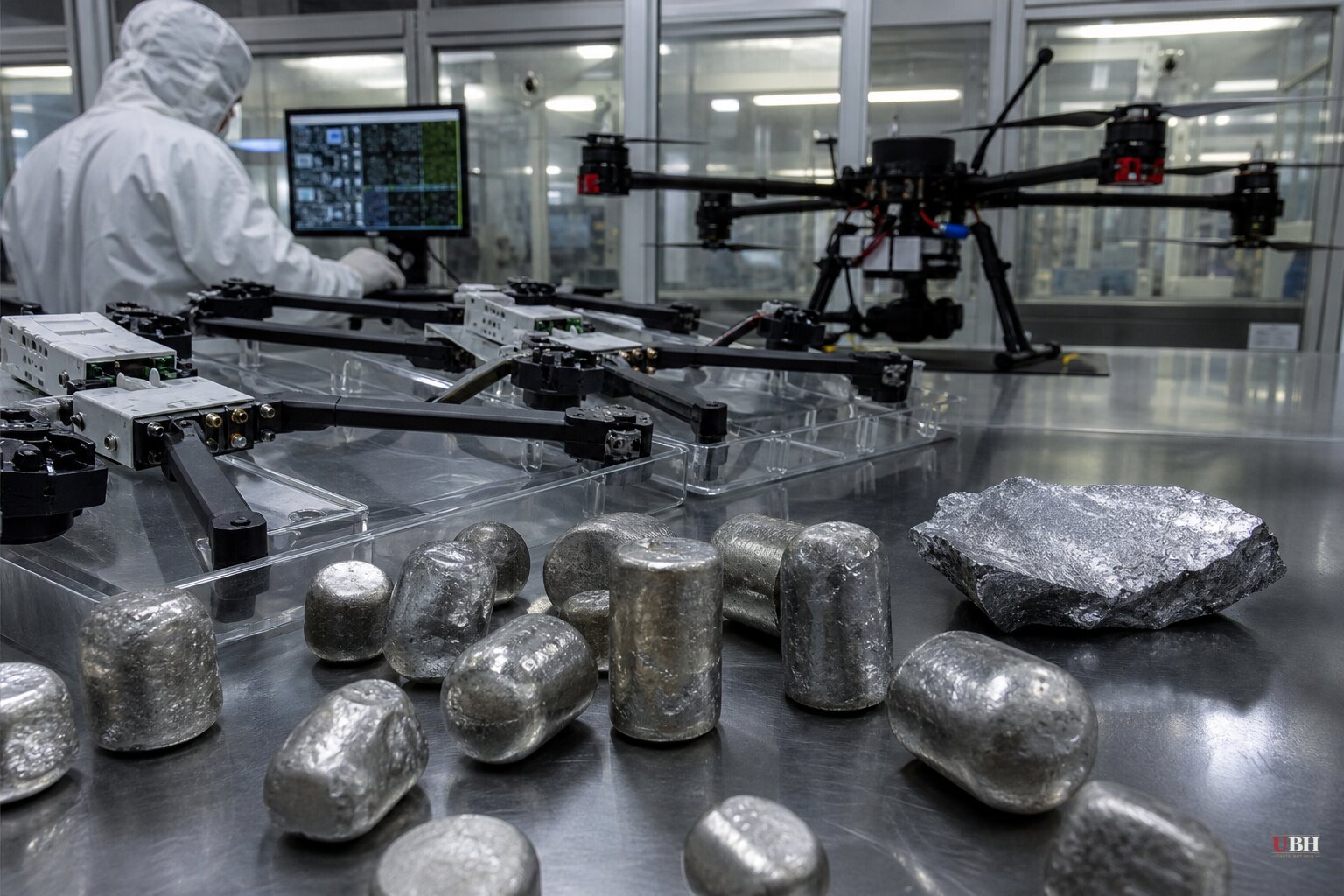
Ukraine's Drone War Now Consumes 4% of World Germanium Supply, and China Still Refines Nearly All of It
Drone warfare isn't just changing how wars are fought. It's straining a handful of obscure metals that most Americans have never heard of.
BMO Capital Markets released a report on Tuesday, September 1, estimating that roughly 15 million drones will be deployed in the Russia-Ukraine war this year. Producing and operating that fleet, according to BMO commodities analysts George Heppel and Helen Amos, will consume the equivalent of about 4% of global germanium demand. The analysts wrote that the world has entered the era of mass drone warfare, calling it arguably the biggest shift in modern warfare in decades, as reported by The Northern Miner.
The numbers behind that 4% figure are tiny on a per-unit basis. BMO estimates an average battlefield drone contains about 46 grams of neodymium-iron-boron magnets, 1 gram of germanium, and just 0.1 gram of gallium, according to Rare Earth Exchanges. Multiply that by millions of expendable drones, and germanium demand moves in a way gallium and magnet demand mostly don't. BMO itself notes the drone effect on overall gallium and magnet markets is relatively small. Germanium is the outlier.
Germanium prices reflect that. Rare Earth Exchanges reports BMO estimates germanium is now trading above $11,000 per kilogram, versus a historical average around $2,000. That's before accounting for counter-drone systems, which also consume gallium, germanium and rare earths including gadolinium, yttrium, ytterbium and samarium for detection and tracking, per BMO's findings cited by The Northern Miner.
The money moving into this fight is large but not fully deployed. BMO puts total drone and counter-drone funding pledges from governments and alliances at roughly $150 billion (C$208 billion) since 2025, with only about half appearing firmly committed, according to IndexBox. NATO announced in July it will invest more than $40 billion over five years in counter-drone capabilities and aims to train five times as many drone operators by the end of 2027. Ukraine's defense ministry says it wants to produce more than seven million drones this year, up from four million in 2025, and BMO says drones now account for more than 80% of enemy targets Ukrainian forces destroy.
All of that runs into a supply chain that one country dominates. A U.S. Geological Survey study published in June, using 2023 data, found China produced 98% of the world's primary refined gallium, 77% of refined germanium, and 68% of mined rare earths. Beijing imposed export licensing requirements on gallium and germanium in 2023 and banned exports of both to the United States in December 2024. That ban was suspended in November 2025, but only until November 27, 2026, according to IndexBox.
The price gap between Chinese and non-Chinese material is stark. The International Energy Agency's 2026 outlook found European prices for gallium, dysprosium and terbium running about five times Chinese domestic prices, and germanium prices almost three times higher, with the agency pointing to export controls as a factor, according to eubiznews.
Western miners are trying to close that gap, slowly. Teck Resources plans to spend up to C$850 million at its Trail complex in British Columbia to double germanium and antimony output and add gallium production, according to Geomechanics.io, which cited Mining.com reporting. Rio Tinto is piloting gallium recovery at its Complexe Jonquière facility in Quebec, targeting 40 tonnes a year, about 5% of current global supply. Neo Performance Materials commissioned a small heavy rare-earth separation line at its Silmet facility in Estonia in April, producing initial separated dysprosium. Aclara Resources' Carina project in Brazil is aiming for 156 tonnes a year of dysprosium and 27 tonnes of terbium, but not until 2028.
None of that fixes the near-term problem. Rare Earth Exchanges, a critical-minerals research outlet, warns that Washington is confusing final assembly with actual supply-chain independence. A U.S. drone maker may buy a motor from Mexico or Thailand, but that motor's magnets often trace back to Chinese oxides and alloys several tiers up the chain. The outlet argues President Trump's August tariffs on drone components risk a sequencing problem: higher costs and constrained motor supply hitting manufacturers before qualified non-Chinese magnet and motor sources actually exist at scale. "Tariffs can protect industrial capacity. They cannot substitute for it," the outlet wrote.
ZeroHedge frames China's export tightening more bluntly as a deliberate economic-warfare tool aimed at Western defense and semiconductor supply chains, pointing to Beijing's status as the sole G20 holdout on trade-imbalance language and the Treasury Department's expanded Iran sanctions targeting Chinese entities as evidence of worsening bilateral tensions. Beijing has not publicly confirmed a strategy of weaponizing mineral exports, though the underlying trade data on China's refining dominance is consistent across the USGS and BMO figures cited here.
The open question is what happens November 27, 2026, when China's suspended export ban on gallium and germanium to the United States is set to expire. Whether Beijing lets the ban lapse, extends the suspension, or reinstates it will land squarely in the middle of a drone-production ramp that both Ukraine and NATO have no plans to slow down.
Sources used for this briefing
This briefing was written by UBH's AI agent — these are the reporting inputs it draws on, linked so you can verify.


