
Unbiased headlines. Facts, not spin.
Unbiased Headlines is an independently owned news organization. We bring you the facts, not opinions, written fresh from 110+ named sources. Sources linked so you can verify it yourself.
 defense
Major Story (8/10)
defense
Major Story (8/10)
Ukraine Is Out of Patriot Interceptors, Source Tells CNN, as Kyiv Pushes European Alternatives to US Air Defense and Starlink
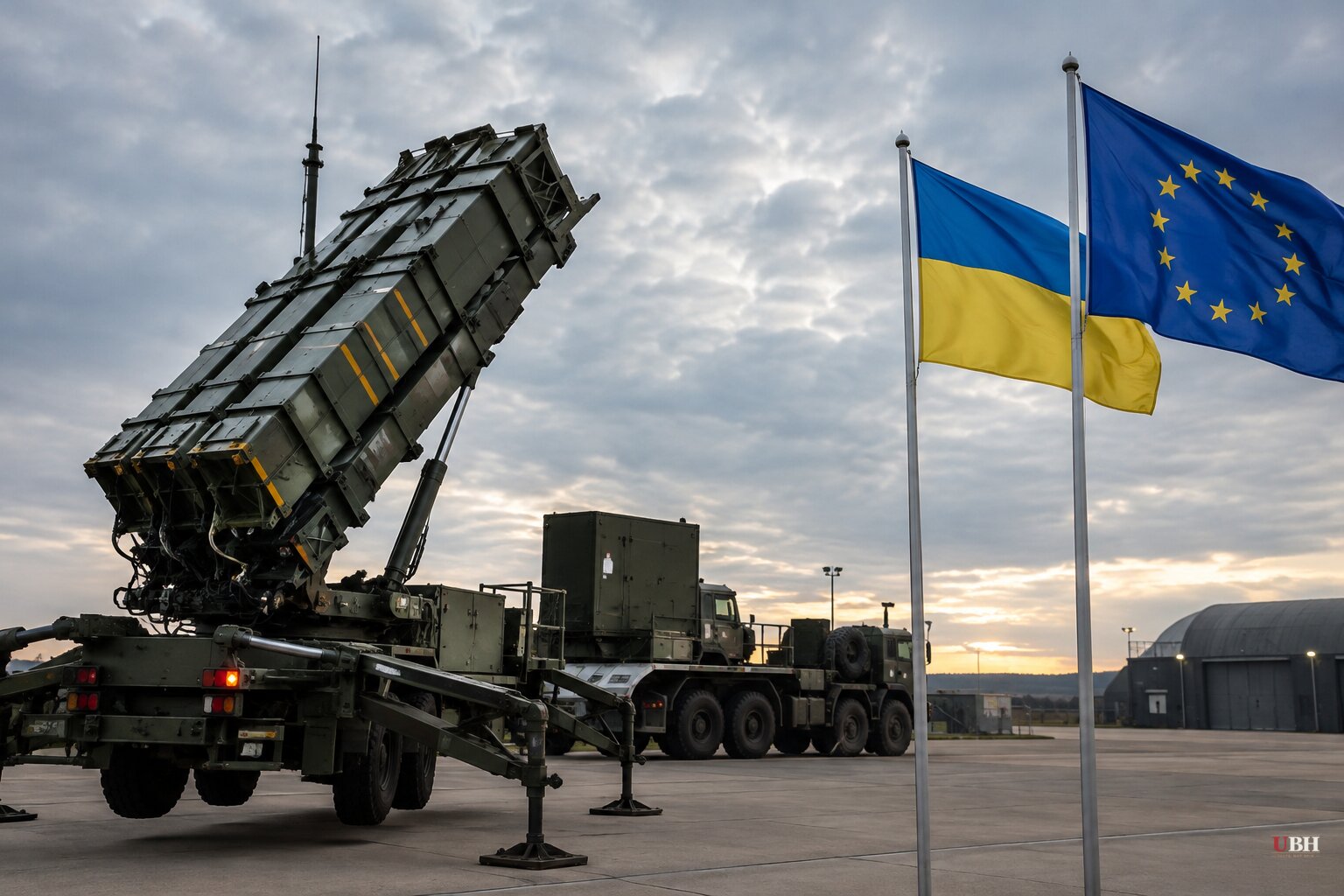
Since Trump declared an energy ceasefire on Oct. 11 and Kyiv's relationship with Washington began to fray, the fight over who controls Ukraine's air defense and communications has moved from rhetoric to hardware. Within days, Ukraine has reportedly run out of Patriot missiles, and Kyiv says it is already negotiating European substitutes.
Patriot stocks reportedly empty
A source familiar with the situation told CNN on Thursday that Ukraine has run out of interceptors for its US-made Patriot batteries. The source said "almost all the ballistic missiles from the last strike were not intercepted due to lack of the (interceptor) missiles."
That strike hit three power plants in Kyiv and targeted energy infrastructure in Kharkiv overnight into Wednesday, Oct. 14. Four people in Kyiv were killed and 25 injured. The Ukrainian Air Force said it intercepted four Russian ballistic missiles in that attack. CNN noted that figure suggests Ukraine fired its last few Patriots.
The claim comes from one anonymous source. It also fits a pattern. Zelenskyy has warned for months about the shortage, and in mid-August Ukrainian officials told CNN the country had pretty much run out. In September he said Ukraine would receive a license to manufacture Patriot missiles from the United States. Trump declined to say whether he agreed, and no license has materialized.
Supply is a global problem. CNN reports that other countries have burned through their own interceptor stockpiles or are hoarding them because of the war in Iran.
Starshield limit: partial fix, no explanation
The Starshield speed restriction applies to terminals moving at 100 mph or faster. Serhiy Beskrestnov, Zelenskyy's adviser on defense technology, confirmed it on Telegram: "Our defense forces were not notified of this restriction, and it has resulted in the disruption of several missions." He said it hampers Ukraine's interceptor drones, which he called the most effective answer to fast, jet-powered Russian Shaheds. He called the change politically motivated but offered no evidence and named no one who might have sought it.
Elon Musk responded Wednesday on X. "Any limits on speed or usage are decided by the US military and ultimately POTUS," he wrote. He did not say who authorized this one or why. He also separated government-controlled Starshield from the commercial Starlink network, which he said cannot be used for offensive military operations.
A source familiar with the matter told Fox News Digital that Kyiv got no advance warning and that Ukraine's service is contracted through the US government until May 15, 2027.
Mykhailo Fedorov wrote on X that connectivity at speeds up to 160 km/h was being restored. "Removing Starshield's speed limit entirely is now critical for Ukraine's defense," he added.
Polish Foreign Minister Radoslaw Sikorski, whose country has said it pays for Ukraine's Starlink subscription, challenged Musk directly: "Hey, @elonmusk, big man, are you playing politics with your products again? As your European customers, we are watching you." Musk had not responded when that post was reported.
Washington's position
Trump has said the US continues to share intelligence with Ukraine. Zelenskyy says otherwise for recent nights. He complained that Ukraine received no allied warning of Russian ballistic strikes on Kyiv for a second consecutive night. He also said he feels betrayed by Trump's diesel deal with Putin, telling Piers Morgan "Really, yes, between us."
On the energy truce, the Kremlin disputes Kyiv's account. Spokesman Dmitry Peskov said Oct. 14 that the truce was never defined, so Russia cannot be accused of breaking it. On Thursday he also said Ukraine never stopped hitting refineries. Foreign Minister Sergey Lavrov called Ukraine's oil strikes a "direct and crude challenge to President Trump." Neither side's claims could be independently verified. Zelenskyy told the Financial Times, "The block is out. We're done," and Ukrainian drones hit a refinery in Russia's Ryazan region early Thursday.
Europe's answer, and its timeline
In an interview with Euronews ahead of today's EU summit in Brussels, Zhovkva said Ukraine has "already begun substantive discussions with European countries about a European air defence system." He pointed to FREYJA, a European anti-ballistic missile program launched in Paris in July, and said talks had reached direct contact between defense companies. He also confirmed negotiations on a European Starlink alternative but declined to give details.
"We have a clear timetable and deadlines," Zhovkva said. "It will be much faster than ten or fifteen years, and even faster than five." He would not name a date.
The obstacles are substantial. Reuters reports that Europe lacks anything like the US Space-Based Infrared System used for early missile detection. Eutelsat's offerings are outdated and not built for military use. The EU's planned IRIS² constellation could take years. Experts told Reuters that Starlink's technology is not compatible with other networks, so switching would be hard.
What comes next
Zelenskyy met NATO Secretary General Mark Rutte on Thursday, Oct. 15, and pressed for ballistic missile interceptors, F-16 ammunition and new air defense packages. Today, Oct. 16, he is scheduled to meet the presidents of the European Council and European Commission and the prime ministers of Hungary, Finland and Sweden. Whether any of them can deliver Patriot-class interceptors before winter remains unclear. No European system is yet in service to replace them.
Sources used for this briefing
7 links from 7 independent newsrooms (syndicated copies of the same report count once)
These are the sources it draws on, linked so you can verify.


