
Unbiased headlines. Facts, not spin.
Unbiased Headlines is an independently owned news organization. We bring you the facts, not opinions, written fresh from 110+ named sources. Sources linked so you can verify it yourself.
 defense
Major Story (7/10)
defense
Major Story (7/10)
Ukraine Claims Neptune Missile Strike Hit Six Russian Su-34M Bombers at Borisoglebsk Airfield
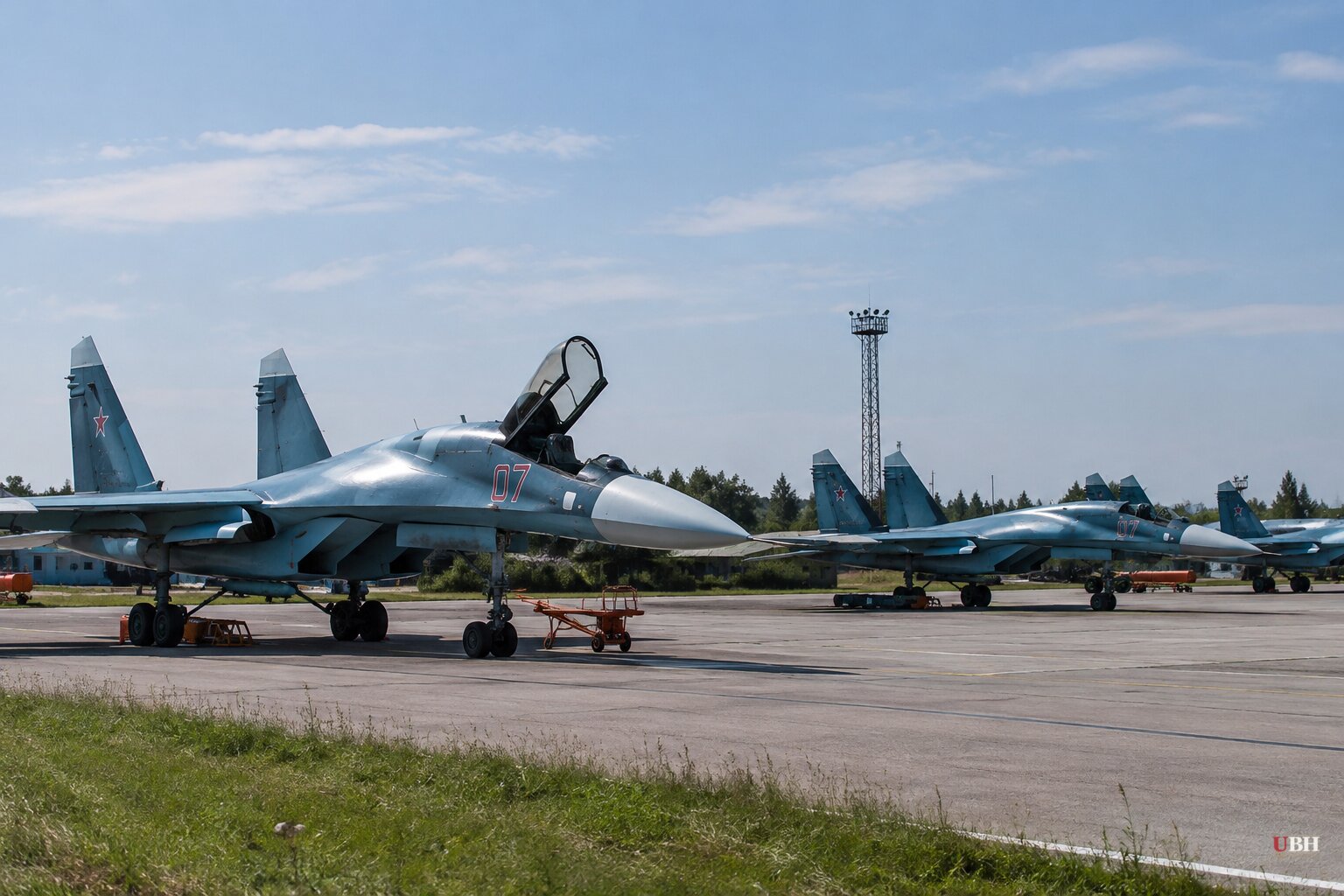
Ukraine says it hit six of Russia's most heavily used bombers in a single overnight strike on Thursday, Oct. 15.
The Ukrainian Navy said it used the Neptune coastal missile system against the Borisoglebsk military airfield in Russia's Voronezh region. "As a result of the strike, six Su-34M bombers were destroyed," the Navy said. It added that support equipment was also destroyed and that secondary detonations and a fire were recorded on the airfield. "Information is being clarified," the Navy said.
Destroyed or damaged
The two Ukrainian military statements do not use the same word. The Navy says "destroyed." Ukraine's General Staff, in a Telegram statement, said it had confirmed "damage of varying degrees" to all six aircraft.
That gap matters. A destroyed bomber is gone. A damaged one can be repaired, cannibalized for parts or returned to the line, depending on the harm.
No Russian account of aircraft losses has been published alongside Ukraine's claim.
What is documented so far is indirect. Local channels reported successive explosions and a large fire at the airfield, according to Ukrinform. Videos circulating on social media showed flashes, blasts and a large fire with smoke visible across the city. Voronezh Governor Alexander Gusev had issued repeated warnings of a drone attack in the region.
Why the Su-34M matters
The Su-34M is a modernized supersonic fighter-bomber. It is one of the main aircraft Russia uses to drop guided glide bombs on Ukrainian positions and frontline towns from well behind the line of contact. Reuters put the cost at tens of millions of dollars apiece.
The Ukrainian Navy argues that losing the jets will thin out Russian tactical aviation in the affected sectors and cut the frequency of those bombing runs. That is Kyiv's projection, not a measured outcome. Russia's glide-bomb campaign depends on the whole fleet and its supporting crews, and six aircraft is a fraction of it. No source gives the size of that fleet.
The strike fits a pattern. On Oct. 4, Ukraine claimed a 500-km drone raid on Russian Su-35 and Su-34 fighters. Ukrainian drones also targeted two Russian fighter jets at an air base in the Adygea region, according to Ukrinform.
The energy-strike backdrop
The airfield strike came as Kyiv's targeting choices were already a live issue with Washington. The Washington Post reported on Monday, Oct. 12, that U.S. intelligence threatened to halt intelligence sharing if Ukraine kept attacking Russian energy facilities.
President Volodymyr Zelenskyy has since said Ukraine will resume strikes on Russian oil refineries and that the ban on such strikes has been lifted. Neither the Post's account nor Zelenskyy's statement explains who imposed the restriction or on what terms.
The Navy statement framed the airfield hit as part of continuing work. It said it "continues to strike Russian military targets, systematically degrading Russia's combat capabilities." Military aircraft on an airfield are a conventional military target. Refineries are the category Washington reportedly objected to.
War at sea near NATO territory
Separately, the Black Sea has become more dangerous this week. Romanian officials said rescuers were searching Thursday for eight missing crew members after two chemical tankers caught fire overnight in Romanian territorial waters near the mouth of the Sulina Canal.
Romania's naval authority said it received an emergency alert from the San Marino-flagged tanker Wine Trader, where eight of 12 crew were missing and four were safe. The Comoros-flagged Yara J also caught fire, and all its crew were safe. Romanian authorities initially said it was unclear whether Yara J had been attacked.
Russian drones reportedly entered Romanian airspace the same night. Officials stopped short of linking the fires to the drones. The fires follow strikes on at least five other cargo ships near the Romanian and Bulgarian coasts over the previous 10 days, with at least 23 sailors reported lost, just outside NATO's territorial waters.
Russian strikes on Ukraine's Black Sea ports have pushed Kyiv to lean harder on Danube ports and shipping lanes near Romania and Bulgaria. Romania shares a 614-km border with Ukraine and has reported repeated Russian drone incursions over the past four years.
What comes next
The open factual question is the count: how many of the six Su-34Ms are destroyed and how many are damaged. The Navy itself said information was still being clarified. Independent imagery of Borisoglebsk would settle it. The open policy question is whether Zelenskyy's declaration that the refinery-strike ban is lifted draws a response from Washington on intelligence sharing.
Sources used for this briefing
7 links from 7 independent newsrooms (syndicated copies of the same report count once)
These are the sources it draws on, linked so you can verify.


