
Unbiased headlines. Facts, not spin.
Every story is an unbiased news briefing written from 110+ sources across the spectrum — sources linked so you can verify it yourself.
 health
Notable (5/10)
July 15, 2026 at 11:01 AM
health
Notable (5/10)
July 15, 2026 at 11:01 AM
UK Government Launches Methanol Poisoning Campaign After String of Traveler Deaths
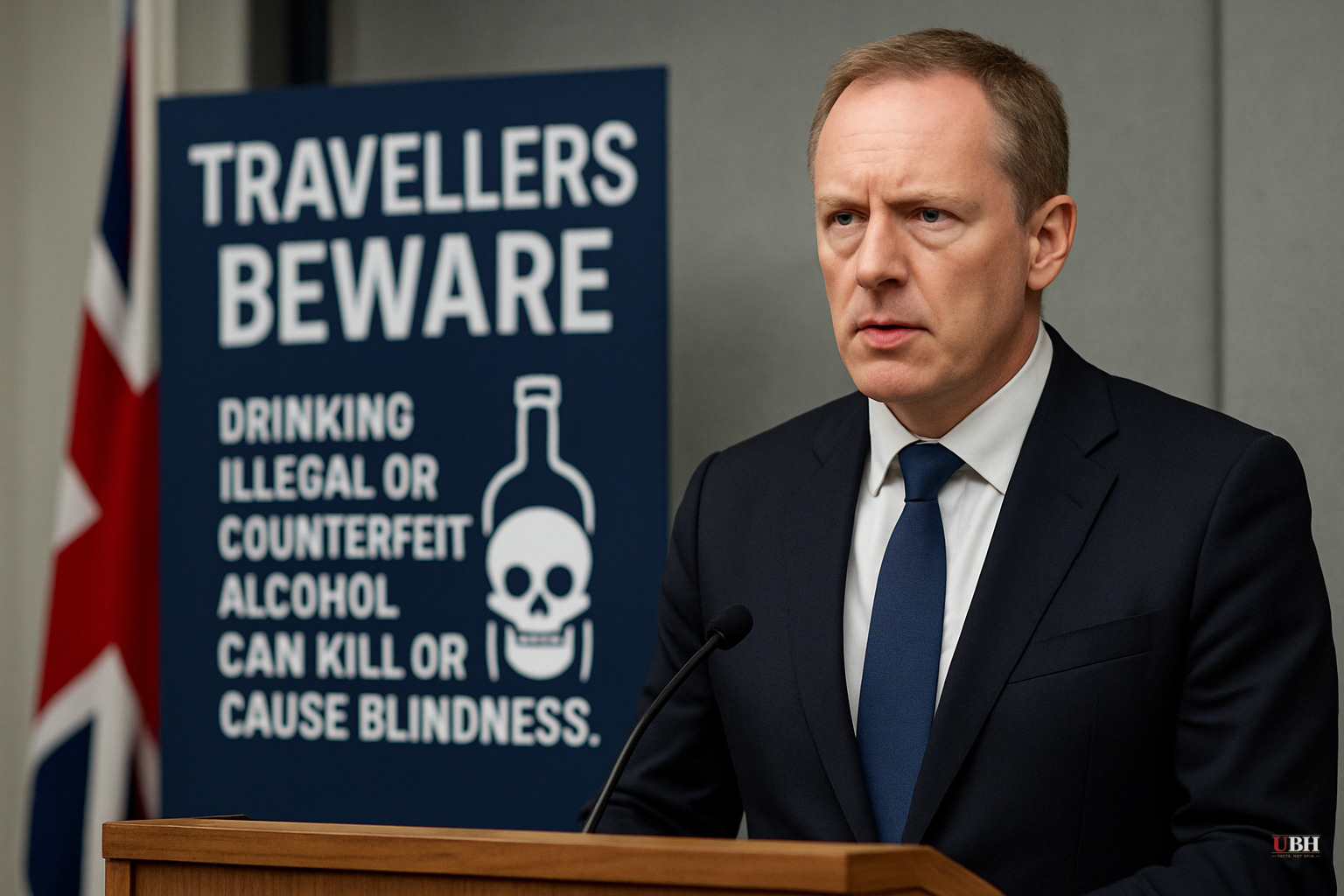
The UK government has launched a public awareness campaign warning travelers about methanol poisoning, a threat that has killed and permanently injured British tourists in Southeast Asia and beyond, according to the BBC.
Methanol is industrial-grade alcohol. It shows up in counterfeit or badly made spirits, sometimes because criminals cut real alcohol to stretch profits, sometimes because homemade liquor is distilled wrong. A single shot, about 30 milliliters, can kill an adult. Smaller amounts can cause permanent blindness.
Calum MacDonald, a man in his 20s from Surrey, is one face of the campaign. He told BBC Breakfast he drank at a bar in Laos in 2024 and within two days experienced what he described as a "blinding kaleidoscopic light" that permanently damaged his vision. He said he had no idea about the risk before it happened. "I probably would be in a different situation today," he said, if he'd known.
Margaret McKie's daughter Kirsty was not so lucky. Kirsty, 38 and originally from Stockport, was living in Bali and engaged to a man who ran a wine business and restaurant. According to McKie, Kirsty was careful, buying only from reputable suppliers. It didn't matter. She got sick, assumed it was a hangover, didn't seek help, and by the time she lost consciousness and her fiance got her to a hospital, it was too late.
"Look out for your friends, if you notice a friend who seems more ill, get them help," McKie told the BBC.
Twenty-nine countries, one warning label
The UK government's travel advice now flags methanol poisoning risk in 29 destinations, including Indonesia, Laos and Vietnam, according to the BBC. These are not obscure backpacker outposts. They're some of the most visited countries in the world for British and American tourists alike.
The symptoms are worth knowing because they mimic a bad hangover at first. Early signs include vomiting, poor judgment, loss of balance and drowsiness, according to the campaign's guidance cited by the BBC. Then, 12 to 48 hours later, things escalate: abdominal pain, vertigo, hyperventilation, breathlessness, blurred vision or blindness, coma and convulsions.
Vision problems are the biggest tell. Blurry vision, trouble with bright lights, "snowfield vision" (a static-like effect similar to an old analog TV with no signal), or tunnel vision are all red flags the campaign specifically calls out.
Why this keeps happening
Nobody is claiming methanol poisoning is new. It's a known hazard tied to black-market booze, bad home brewing, and unregulated bars in countries where alcohol production isn't tightly policed. What's changed is the volume of documented cases hitting British and Australian headlines over the past couple of years, enough that the UK government decided a formal campaign was warranted instead of a line item buried in travel advisories.
Warning labels and public information don't cost much and they don't restrict anyone's freedom to travel or drink. This isn't a regulation asking bars in London to do anything differently. It's basic consumer information handed to British citizens making a personal choice abroad.
What actually protects a tourist in a Balinese bar or a Laotian guesthouse where you can't verify what's in your glass? A government pamphlet doesn't inspect the bottle. As both MacDonald and McKie stressed to the BBC, personal responsibility matters: know the symptoms, watch your friends, and treat cheap unlabeled spirits with real suspicion, especially in countries flagged on that 29-destination list.
What's unresolved
The BBC report doesn't say how many total cases the UK has logged this year, whether any of the 29 flagged countries have tightened their own alcohol enforcement in response to Western pressure, or what specifically triggered this campaign's timing beyond a pattern of individual tragedies. Until the government publishes hard case counts, travelers are left with what MacDonald and McKie offered: know before you go, and don't assume a hangover is just a hangover.
Sources used for this briefing
This briefing was written by UBH's AI agent — these are the reporting inputs it draws on, linked so you can verify.


