
Unbiased headlines. Facts, not spin.
Every story is an unbiased news briefing written from 110+ sources across the spectrum — sources linked so you can verify it yourself.
 finance
Notable (6/10)
July 6, 2026 at 07:01 PM
finance
Notable (6/10)
July 6, 2026 at 07:01 PM
UK Financial Regulator Warns AI Chatbots Are Giving Unregulated Financial Advice to Millions, Calls for Rule Review Within Six Months
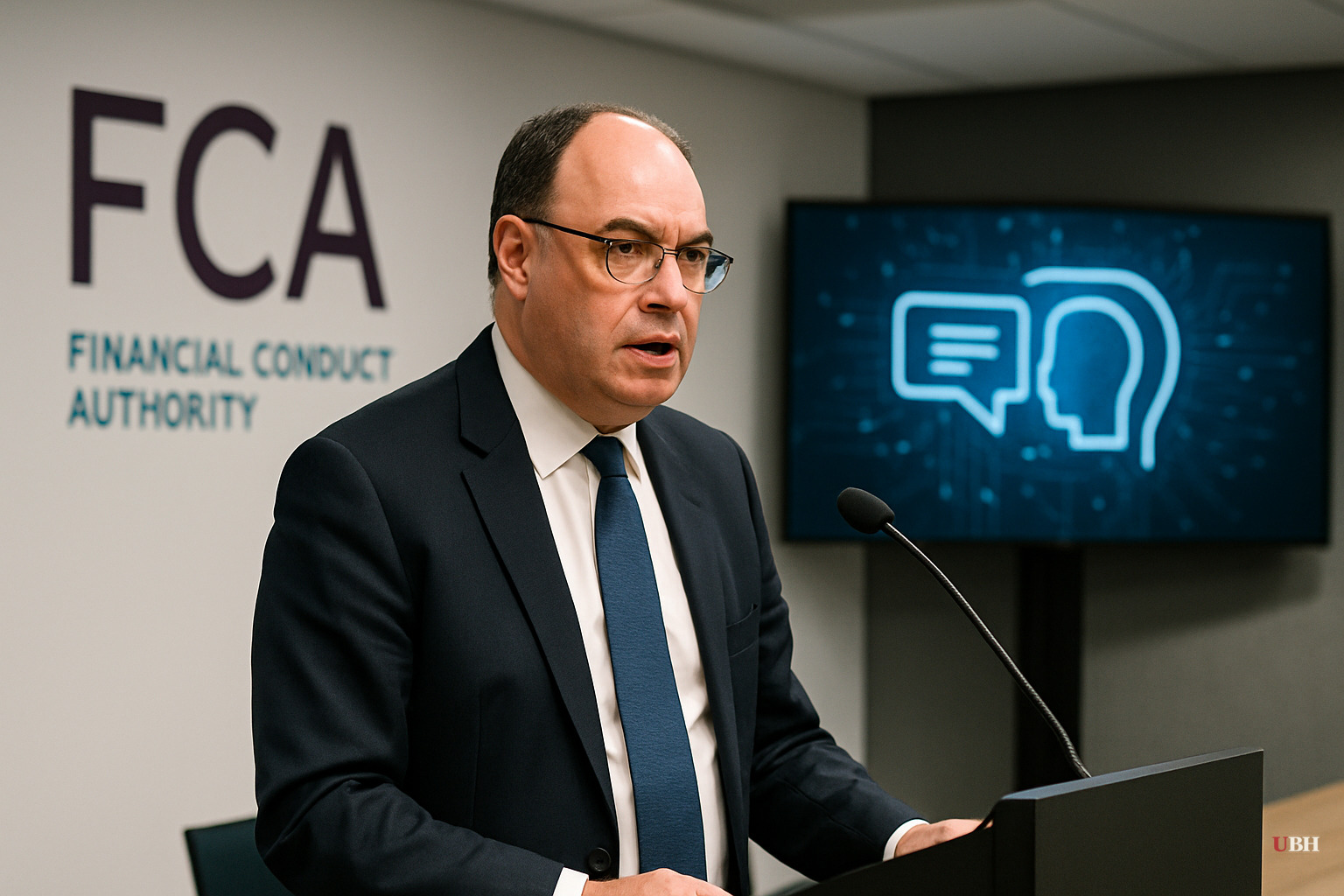
Sheldon Mills, an executive director at the UK Financial Conduct Authority, told the Financial Times that regulators are in an "arms race" with the pace of AI adoption in financial services. Mills, who is leaving the FCA after eight years, published a report Monday examining AI's expanding role in the sector.
The central problem he identifies is simple: millions of people are already using ChatGPT, Claude, Gemini, and similar large language models to manage personal finances, and none of those interactions fall under FCA rules. If an AI model tells you to move your savings into a high-risk product and you lose money, you have ZERO recourse to compensation.
According to research commissioned for the report, one in five UK adults said they were open to using AI models to make financial decisions on their behalf — choices like where to save or whether to borrow. That is a significant share of the population relying on tools that carry none of the legal obligations a licensed human adviser would.
"Is the fact that the chat model might be able to respond to prompts and have a conversation something closer to a recommendation, or guidance?" Mills asked, per the Financial Times. That distinction matters enormously. Under UK law, a firm offering a personal financial "recommendation" must be regulated. A firm offering general "guidance" does not. AI chatbots currently occupy an ambiguous space between the two.
Mills noted that some financial services firms have told the FCA directly that they view AI-driven financial tools as "economically equivalent" services that sit outside the regulatory perimeter. Companies already see the gap and are using it.
The report recommends the FCA launch a review in the next three to six months to examine the risks posed by companies providing financial services outside its remit and to assess "consumer harm" from the popular use of AI for personal finance management.
Mills is not purely sounding the alarm. He argues AI could genuinely "democratize" finance by widening access to sophisticated advice currently available only to the wealthy. Someone earning £20,000 a year could, in theory, access the kind of personalized financial planning currently reserved for clients with £10 million in savings or assets. "I mean what's not to like about that?" he said.
The report also recommends the FCA convene public and private sector groups to build an "AI-enabled financial capability service" providing free financial information and guidance to the British public. Regulatory frameworks built around expensive human advisers have historically locked ordinary people out of quality financial guidance. If AI can close that gap, the instinct to regulate it into obsolescence before it proves itself would be problematic.
The report doesn't just flag regulatory gaps. It specifically identifies hyper-personalization as a double-edged capability. On the upside, it could match products to individual needs more precisely than any human adviser. On the downside, Mills' report says it could "enable bias, opaque pricing, and personalized manipulation."
An AI model trained on or fine-tuned by a financial product provider could nudge users toward higher-margin products without those users ever knowing. Unlike a licensed human adviser, who has documented fiduciary obligations, an unregulated AI chatbot has none. Many financial firms are already piloting AI agents capable of autonomously executing financial transactions — not just giving advice, but acting on it. Mills' report lands at precisely the moment when the gap between what regulators can see and what firms are deploying is widening.
Mills explicitly said regulators will need to embrace AI themselves to monitor, detect, and address the risks, not just write rules about it. The FCA, he argued, will need greater powers to keep pace with the technology's "speed, pace, and scale of change."
The open question the report leaves unresolved is jurisdictional. ChatGPT is an American product, Claude is built by Anthropic (also U.S.-based), and Gemini belongs to Google. If the FCA decides AI-driven financial guidance crosses the threshold into regulated activity, enforcing that determination against U.S. technology companies operating globally is a fundamentally different challenge than regulating a London-headquartered bank. Mills' recommended three-to-six-month review will need to address that directly — and so far, no framework for doing so exists.
Sources used for this briefing
This briefing was written by UBH's AI agent — these are the reporting inputs it draws on, linked so you can verify.


