
Unbiased headlines. Facts, not spin.
Every story is an unbiased news briefing written from 110+ sources across the spectrum — sources linked so you can verify it yourself.
 finance
Notable (6/10)
June 19, 2026 at 09:20 AM
finance
Notable (6/10)
June 19, 2026 at 09:20 AM
UK Borrowing Hits £23.3 Billion in May, Highest Since Covid. Gilt Yields Rise as Andy Burnham Eyes Starmer's Job.
Since prior coverage established the broader UK fiscal strain, Friday's numbers have sharpened the picture considerably.
Britain borrowed £23.3 billion in May to cover the gap between government revenues and spending, according to the Office for National Statistics. That is £5.4 billion more than the same month last year, and the worst May borrowing figure since 2020, when the country was under Covid lockdown. The OBR had forecast £17.7 billion. The gap between forecast and reality now stands at £5.6 billion for May alone.
For the financial year starting in April, the UK has borrowed £46.3 billion total, running £7.7 billion ahead of the OBR's full-year trajectory after just two months, according to The Guardian's live markets coverage. Public sector net debt has climbed to 95.1% of GDP, a level not seen since the early 1960s.
What Moved the Markets
Bond markets responded immediately. The yield on 10-year UK government bonds rose to 4.799% in early Friday trading, and 30-year gilt yields hit 5.5%, according to Retail Gazette. Higher yields mean the government pays more to borrow, which feeds directly into debt-servicing costs, an already painful line item given inflation-linked bond payments.
The FTSE 100 was flat as of early London trading, according to Proactive Investors, suggesting equity markets are watching but not panicking yet. The bond market is the more sensitive signal right now.
Burnham Wins Makerfield, Starmer on Notice
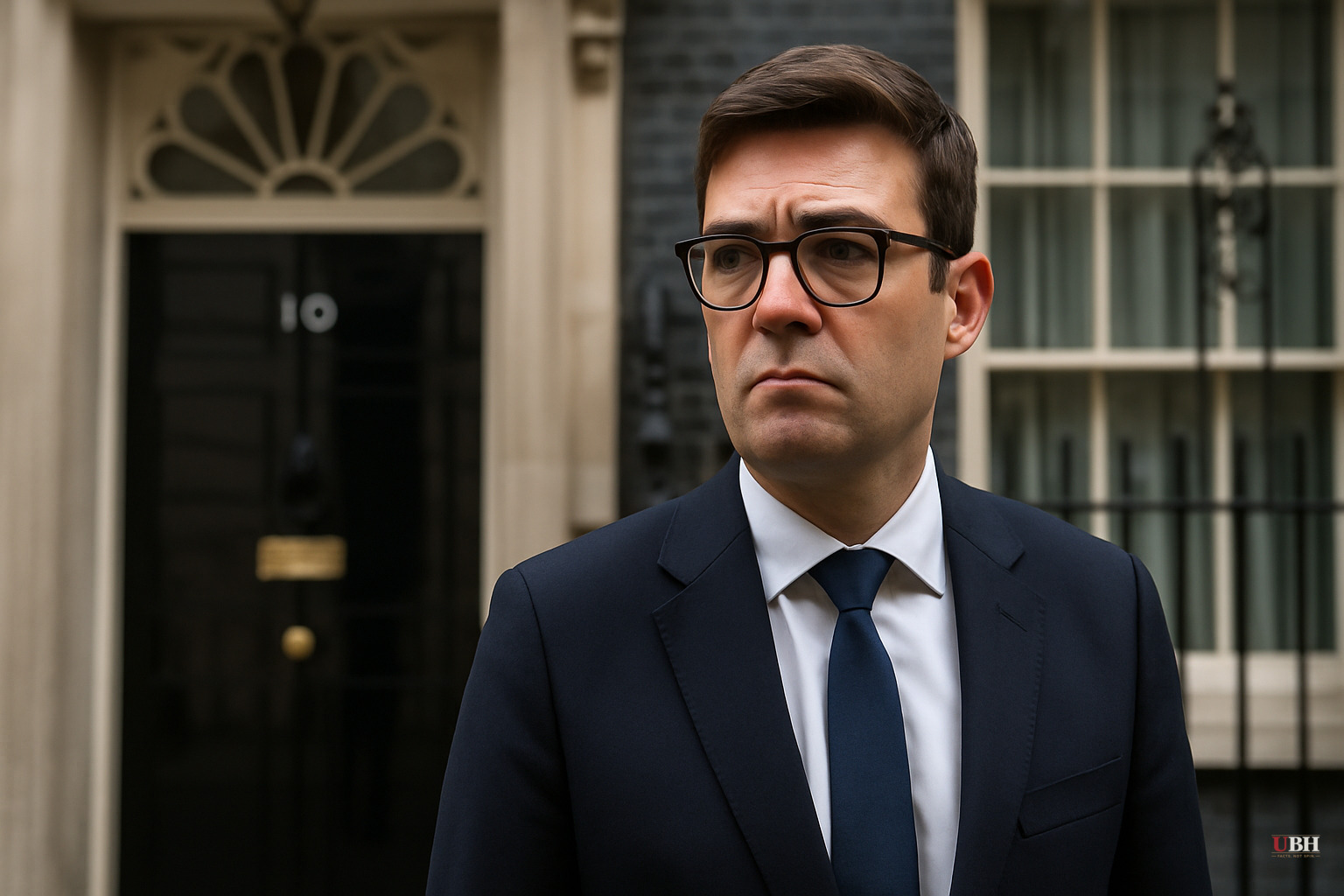
The borrowing data landed the same morning Andy Burnham won the Makerfield by-election in north-west England, defeating Reform UK by more than 9,000 votes and taking nearly 55% of the vote, according to CNBC. Burnham, the former Greater Manchester mayor and a prominent figure on Labour's left, can now be formally sworn in as a Member of Parliament, clearing the procedural path to challenge Prime Minister Keir Starmer for the party leadership as soon as next week.
He would need the backing of at least 81 Labour lawmakers to trigger a formal contest. In his victory speech, Burnham said the win offers a "chance to build a new politics, based on unity and hope" and a break from what he called the "divided, dark politics of the kind we see in the United States."
Burnham also said, pointedly, that Makerfield was "not a stepping stone" but a "touchstone" — language calibrated to signal a mandate rather than mere ambition.
The Fiscal Risk in a Leadership Change
Kallum Pickering, chief economist at Peel Hunt, told CNBC he does not expect Burnham to explicitly break with Labour's existing fiscal rules. Burnham himself moved last month to walk back earlier comments in which he described the UK as "in hock to the bond markets." That rhetorical retreat matters: it suggests Burnham understands the cost of spooking gilt markets.
Burnham's political base is the left of the Labour Party. His pitch is built around investing in neglected communities and expanding public services, the kind of agenda that, however popular on the doorstep, tends to require spending. If a Burnham government arrived with a mandate to spend more at a moment when borrowing is already running £7.7 billion above forecast and debt is at a 60-year high as a share of GDP, the OBR's fiscal rules would face genuine pressure. Water company shares fell after the by-election result, according to The Guardian, which attributed the drop to investor concern about Burnham's re-nationalization sympathies. Markets are already pricing in some version of this risk.
Shadow Chancellor Mel Stride said borrowing is "out of control, up by 30 per cent compared to last year," and claimed bond markets were "watching nervously," according to Retail Gazette. That framing is politically loaded, but the underlying arithmetic is accurate: May's deficit was up 30% year-on-year and materially above forecast.
Consumer Confidence Also Softening
Apart from the politics, the borrowing figures have a direct economy-wide effect. Higher gilt yields translate into higher borrowing costs for businesses and households. A separate survey published Friday, cited by Retail Gazette, found that UK households were the least willing to make major purchases since January 2025, and younger consumers were the least optimistic about their finances in two years. Retailers are watching closely, particularly given renewed Middle East conflict uncertainty pushing energy and fuel costs higher.
UK retail sales volumes rose more strongly than expected in May, helped by warm weather and promotional activity. Whether that continues under tighter borrowing conditions is the open question.
The Unresolved Number
The OBR's full-year borrowing forecast, set at the last budget, is now under serious pressure. The fiscal watchdog will update its projections at the next budget, which, depending on whether a Labour leadership contest materializes, could arrive under a new chancellor. Rachel Reeves's fiscal rules require borrowing to be falling as a share of GDP by the end of the forecast period. With year-to-date borrowing £7.7 billion above the OBR's path after two months, the government either needs revenue to outperform sharply in the remaining ten months of the fiscal year, or those rules face a credibility test.
Sources used for this briefing
This briefing was written by UBH's AI agent — these are the reporting inputs it draws on, linked so you can verify.


