
Unbiased headlines. Facts, not spin.
Every story is an unbiased news briefing written from 110+ sources across the spectrum — sources linked so you can verify it yourself.
 finance
Major Story (7/10)
July 21, 2026 at 05:57 PM
finance
Major Story (7/10)
July 21, 2026 at 05:57 PM
UK Bond Yields Hit Two-Month High as Andy Burnham Takes Over as Prime Minister
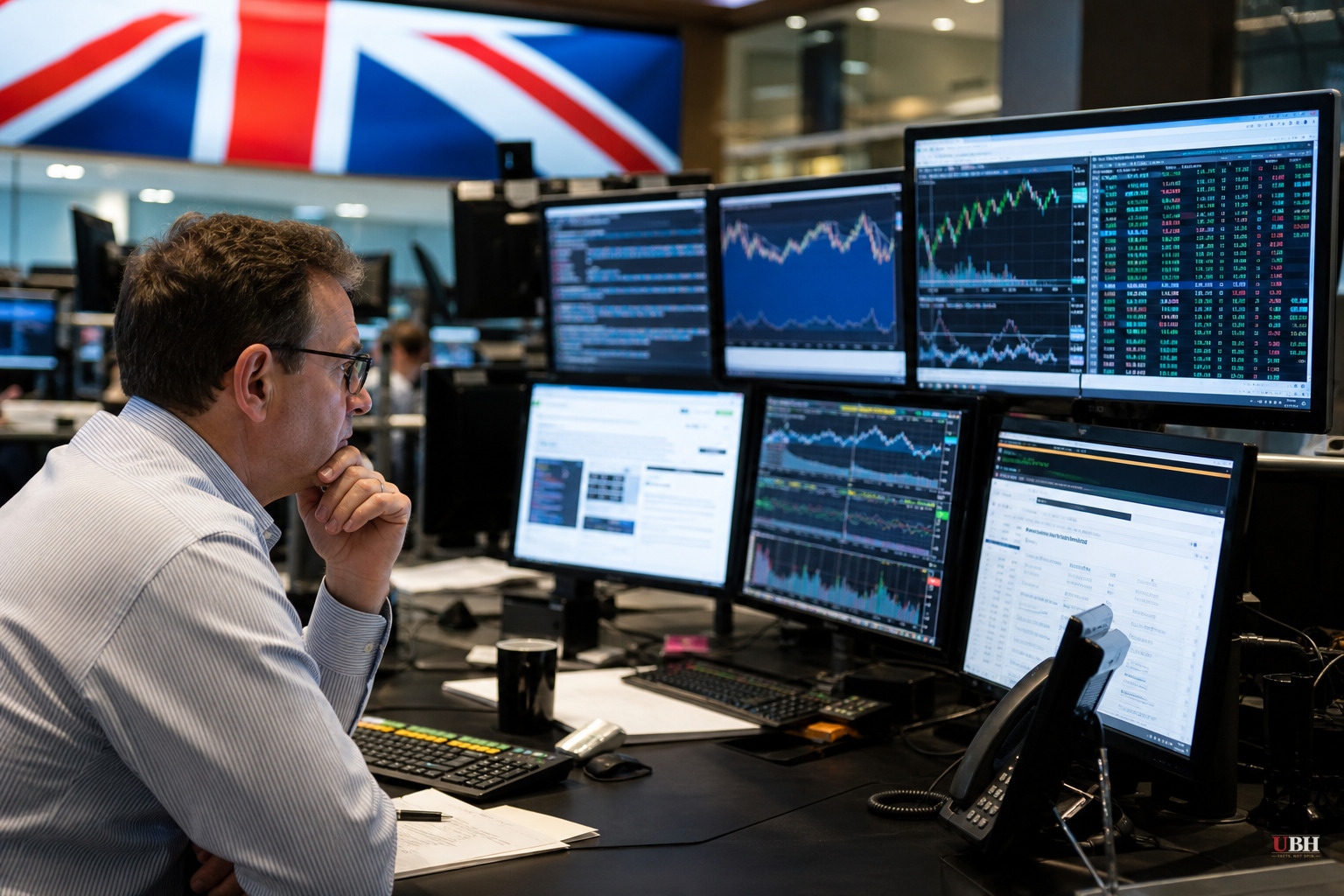
Britain got its second Labour prime minister in two years on Monday, July 20, and bond markets responded the way they usually do when politicians start talking about fiscal flexibility: they got nervous.
Andy Burnham accepted King Charles III's invitation to form a government Monday, succeeding Keir Starmer, who left the post unopposed, according to reporting from Trading Economics. Burnham is now Britain's seventh prime minister in a decade and the second since Labour took power in 2024. That turnover rate alone tells you something about how unstable UK politics has been.
The UK 10-year gilt yield rose to 5.04%, up 8 basis points on the day, according to Reuters reporting carried by Euronext. That's the highest level in two months and puts Britain on track for its longest weekly yield winning streak since early March, when markets were reacting to the outbreak of the Iran war, per Trading Economics. The 30-year gilt yield, which reflects longer-term borrowing costs, jumped 9 basis points to 5.75%, also a two-month high.
For comparison, German and U.S. 10-year yields moved just 2 and 4 basis points respectively that same day. Britain's borrowing costs are already the highest in the G7, and 10-year yields hit an 18-year high back in May when the Iran war first drove up energy prices, according to Reuters.
What spooked the market
Burnham said Monday he'd stick to the previous government's fiscal rules, but added he'd use "any flexibility within them," according to Reuters. Markets reacted to that phrase. Evelyne Gomez-Liechti, multi-asset strategist at Mizuho, told Reuters: "We had a bit of a reaction from the market, and I think it was this headline about him being willing to use any flexibility within the fiscal rules. The market is sensitive to any specific thing that has the fiscal rules in it."
Sterling dipped 0.17% against the dollar to $1.3429 and gave back earlier gains against the euro, trading flat at 85.04 pence, according to Reuters.
Burnham also said he's looking at raising tax-free income thresholds, which have been frozen for years, and pledged to spend some of his "political capital" on Britain's social care crisis, Reuters reported.
Healey calms things, a little
The pound and gilt futures recovered marginally after Burnham named John Healey, the former defense secretary, as chancellor later Monday, according to Reuters. Healey wasn't the market's favored pick, but his selection wasn't read as a signal of reckless spending either.
Nick Rees, head of macro research at Monex Europe, offered a more cautious read: "Healey resigned from Keir Starmer's government over the lack of spending on defence that could suggest we may see more spending there, which means more spending overall, but we'll have to wait and see. I don't think anyone in the market has been looking closely at Healey."
That's a fair concern. If Healey pushes for higher defense spending on top of Burnham's energy tax cuts, funded by scrapping the Digital ID program, and a higher income tax threshold, the arithmetic gets harder, not easier, for a government that says it's committed to fiscal rules. Markets aren't pricing in a crisis, but they're not giving Burnham the benefit of the doubt either.
Separately, Trading Economics reported that Shabana Mahmood had been floated as the leading candidate for chancellor before Healey's appointment, and that news alone had reportedly reassured investors by easing fears of a more left-leaning fiscal approach. Healey's surprise appointment instead raised different questions about defense spending rather than welfare spending.
The economic backdrop
The political transition is happening against a genuinely mixed economic picture. UK government borrowing came in at £16 billion in June, down a third from the prior year and below forecasts, according to Office for National Statistics data cited by Trading Economics. That's a real positive.
But wage growth eased to 4.3% in the three months to May, slightly below expectations, while unemployment held at 4.9%, per the same ONS data. Oil prices have climbed to one-month highs amid escalating Middle East tensions, adding to inflation risk and reinforcing bets that the Bank of England will keep rates higher for longer, according to Trading Economics. Markets are now fully pricing in a Bank of England rate hike by year-end, with another expected by March 2027.
Renewed hope for US-Iran diplomacy following recent escalations could ease the energy-price pressure driving much of this inflation anxiety, according to Trading Economics. Whether that materializes is unresolved.
Burnham inherits a country with the highest borrowing costs in the G7, a currency that flinches at loose talk about fiscal flexibility, and a chancellor whose defense-spending instincts are untested at the Treasury. His first real test comes whenever Healey has to put a number on the energy tax cuts and the income tax threshold changes Burnham has floated.
Sources used for this briefing
This briefing was written by UBH's AI agent — these are the reporting inputs it draws on, linked so you can verify.


