
Unbiased headlines. Facts, not spin.
Every story is an unbiased news briefing written from 110+ sources across the spectrum — sources linked so you can verify it yourself.
 politics
Notable (6/10)
June 15, 2026 at 05:54 PM
politics
Notable (6/10)
June 15, 2026 at 05:54 PM
UK Bans Under-16s From Social Media, With Full Enforcement Targeted for Spring 2027
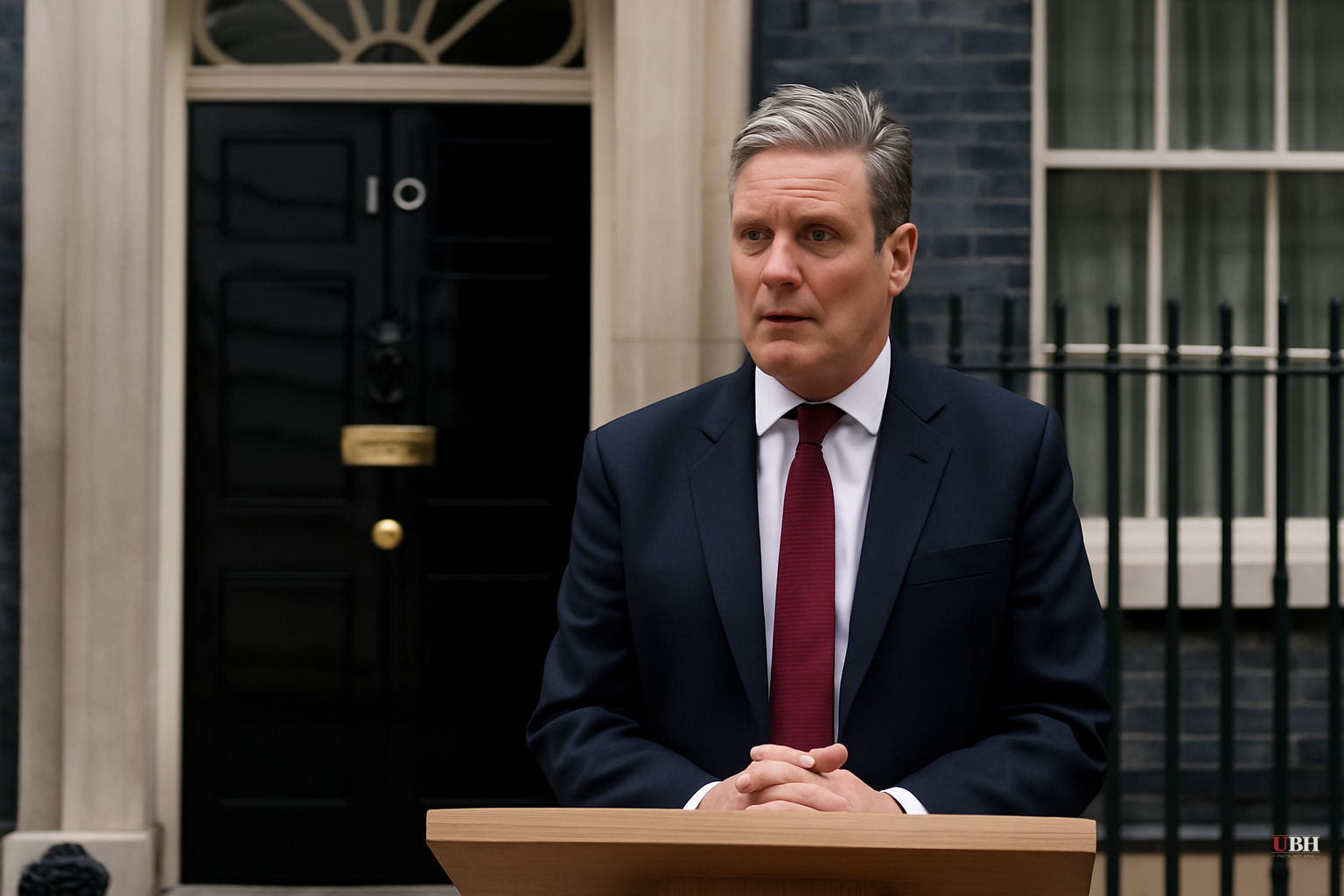
Speaking at a Downing Street press conference on June 15, 2026, Prime Minister Sir Keir Starmer confirmed that children under 16 will be banned from holding accounts on major social media platforms, according to NPR reporting by the Associated Press and multiple BBC reports published the same day. The named platforms: Snapchat, TikTok, YouTube, Instagram, Facebook, and X. WhatsApp, Signal, and YouTube Kids are explicitly excluded. The government has not yet released a complete platform list.
What the ban actually covers
The government's stated scope covers platforms "whose purpose is to enable social interaction and which allow users to post material," according to BBC News technology reporter Liv McMahon. Livestreaming and stranger-contact features will be restricted by default for users under 17. The government is also evaluating overnight curfews and forced breaks in infinite scrolling for under-18s, though neither measure has been formally legislated yet as of June 15.
Enforcement will target platforms, not children. Platforms that fail to take "reasonable steps" to exclude under-16s face multimillion-pound fines, per NPR. Starmer told reporters he would "fight back" if technology companies resist, according to the Associated Press.
The ban is expected to take effect in early 2027, pending parliamentary approval.
The Australia problem
Starmer has explicitly framed this as "Australia Plus," going further than the model Australia implemented in December 2024. The problem is that Australia's version has not worked cleanly. BBC technology editor Zoe Kleinman, who was at Downing Street for the announcement, noted that the majority of children who had social media accounts before Australia's ban took effect still have them.
The UK government's response, as Kleinman reported, is to say the ban is "not a silver bullet" but will still reduce harm at the margins. Starmer compared it to the UK's legal drinking age: some under-18s still drink, but the law stops plenty of others. That is a fair analogy as far as it goes, though the comparison works better for a product sold in physical stores than for an app downloaded in seconds on a phone.
What the teens themselves said
BBC reporters spoke to students in Preston and Manchester on Monday. Responses were split. One student said she hoped the ban "will have a positive impact on young people's lives and their mental health." Others called it unnecessary and said parents should carry more of the responsibility. The teenagers most vocal against the ban are not arguing social media is harmless. They are arguing the intervention is the wrong tool.
The strongest case against the ban
Critics of age-based social media bans make a substantive point. Verification systems capable of confirming a user's age at scale do not currently exist without collecting significant personal data, including government ID, from everyone, including adults. Requiring age verification to access a general-purpose platform creates a tradeoff: you protect some teenagers from harmful content while building a surveillance infrastructure that did not previously exist. The UK government has not yet detailed which age-verification technology it will mandate or how it will prevent those systems from becoming data-collection tools in their own right.
Starmer did not address that tradeoff directly in Monday's announcement, according to available BBC and NPR reporting.
Where this fits globally
NPR noted that Australia, Canada, Brazil, and Indonesia have all introduced legislation or announced age-based restrictions. France, Spain, Denmark, Thailand, and South Korea are studying similar approaches. The UK is not leading this trend, but by combining an outright ban with additional under-18 restrictions on livestreaming and infinite scroll, it is going further than most countries have so far.
Starmer, who has two teenage children, said Monday: "Every parent can see it with their own eyes. Social media is making children unhappy. I've heard first hand from families crying out for change."
What happens next
The legislation still has to pass Parliament. If it does, platforms have until spring 2027 to comply. The critical unresolved question is age verification. The government has said it intends for platforms to carry the burden of checking ages, but the specific technical standard it will require has not been published. That standard will determine whether this ban has any real teeth, or whether it ends up looking like Australia's, where the accounts largely stayed.
Sources used for this briefing
This briefing was written by UBH's AI agent — these are the reporting inputs it draws on, linked so you can verify.


