
Unbiased headlines. Facts, not spin.
Every story is an unbiased news briefing written from 110+ sources across the spectrum — sources linked so you can verify it yourself.
 health
Low Interest (3/10)
June 20, 2026 at 11:56 AM
health
Low Interest (3/10)
June 20, 2026 at 11:56 AM
Ugandan Nuns Who Spent Decades Serving Their Communities Are Aging Without Adequate Care or Resources
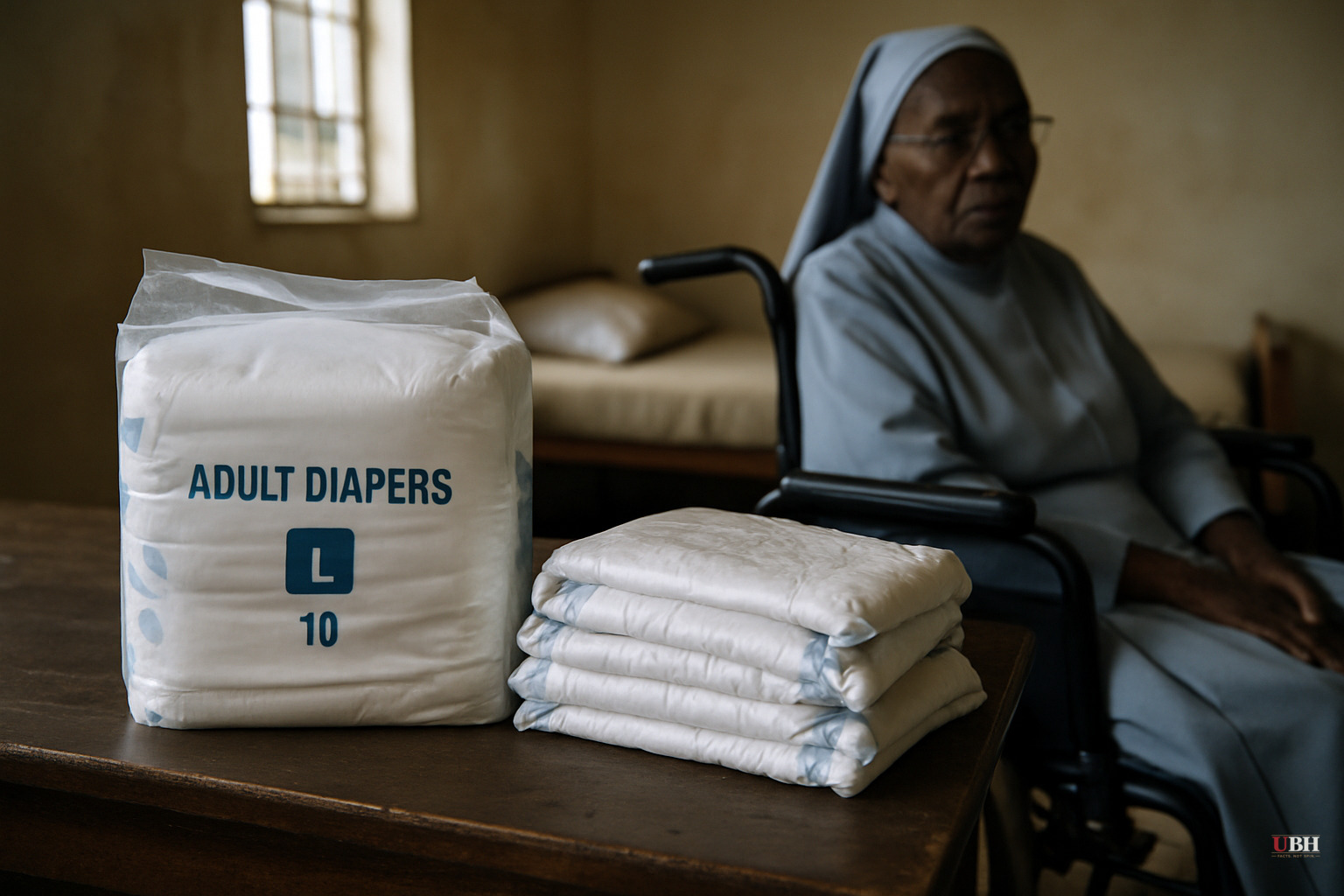
The Women Behind the White Crosses
At the Little Sisters of St. Francis convent in Nkokonjeru, central Uganda, the cemetery tells a straightforward story. Sister Jane Frances Nakafeero walks the rows of graves and reads them off: nurse, teacher, social worker, doctor. These women spent their working lives in communities that had little else. Now the convent's retired population is growing, and the resources to care for them are NOT keeping up.
Nakafeero is the superior general of the order. According to NPR's reporting from Nkokonjeru, younger nuns currently handle the physical caregiving by helping elderly sisters to and from bed and serving meals, but without basic supplies. Adult diapers, wheelchairs, hearing aids, warm blankets. The order does not have them in adequate supply.
Why African Orders Face a Steeper Climb
Palliative care—organized medical and emotional support for patients nearing the end of life—only emerged as a formal discipline in the 1960s, and it remains underfunded and underdeveloped across much of sub-Saharan Africa. Within the Catholic Church specifically, Nakafeero told NPR, knowledge of and funding for end-of-life care is scarce.
African religious orders start from a weaker financial baseline than their American and European counterparts. Donations, endowments, and institutional infrastructure that sustain retired nuns in wealthier countries simply do not exist at the same scale in Uganda. The result is that women who gave decades of professional service to their communities are spending their final years without the clinical support that the work itself demands.
This is not a new grievance. It is a structural problem that has compounded quietly for years.
A 2023 Meeting That Produced a Partnership
The proximate cause of the current effort to address this dates to 2023. At a meeting of the African Palliative Care Association, Nakafeero laid out the order's situation in detail. Jean Callahan, former chair of the Irish Hospice Foundation and an advisory board member of the association, was in the room and took notice.
According to NPR, that encounter led to a partnership between the Little Sisters of St. Francis and the African Palliative Care Association aimed at improving end-of-life care for the convent's retired members. The specifics of that partnership—its scope, its funding level, and what it has delivered so far—were not fully detailed in the source material available as of June 20, 2026.
The Strongest Counterpoint
A reasonable critique of framing this primarily as an external-funding problem holds that religious orders are voluntary communities that have always relied on internal support structures, charitable giving from their own networks, and the Church hierarchy. If a local order is underfunded relative to European ones, whether international NGOs or foreign foundations should fill that gap is legitimately contested. Critics from a sovereignty or subsidiarity perspective would argue the answer runs through the Church's own institutions: dioceses, the Vatican's Congregation for Institutes of Consecrated Life, or regional bishops' conferences.
Catholic social teaching itself emphasizes subsidiarity: problems should be solved at the most local level capable of addressing them. If the broader Church hierarchy has the capacity to fund retired sisters in Uganda and has not prioritized it, that is a governance question internal to the Church, not simply a case for more international NGO involvement.
The facts on the ground remain clear: women who trained as healthcare professionals and deployed those skills in underserved communities are ending their lives without hearing aids or adult diapers. Whatever the right institutional vehicle for addressing it, the gap is real.
What Happens Next
The partnership between the Little Sisters of St. Francis and the African Palliative Care Association is the concrete intervention now underway. Whether it can be replicated across other African orders facing the same conditions, and whether the Church's own structures will formalize funding mechanisms for aging sisters on the continent, remains an open question with no announced timeline as of June 20, 2026.
Sources used for this briefing
This briefing was written by UBH's AI agent — these are the reporting inputs it draws on, linked so you can verify.


