
Unbiased headlines. Facts, not spin.
Every story is an unbiased news briefing written from 110+ sources across the spectrum — sources linked so you can verify it yourself.
 politics
Low Interest (4/10)
June 6, 2026 at 03:58 PM
politics
Low Interest (4/10)
June 6, 2026 at 03:58 PM
UFC at the White House, Trump's Name Off the Kennedy Center: America's 250th Birthday Is a Culture War Battleground
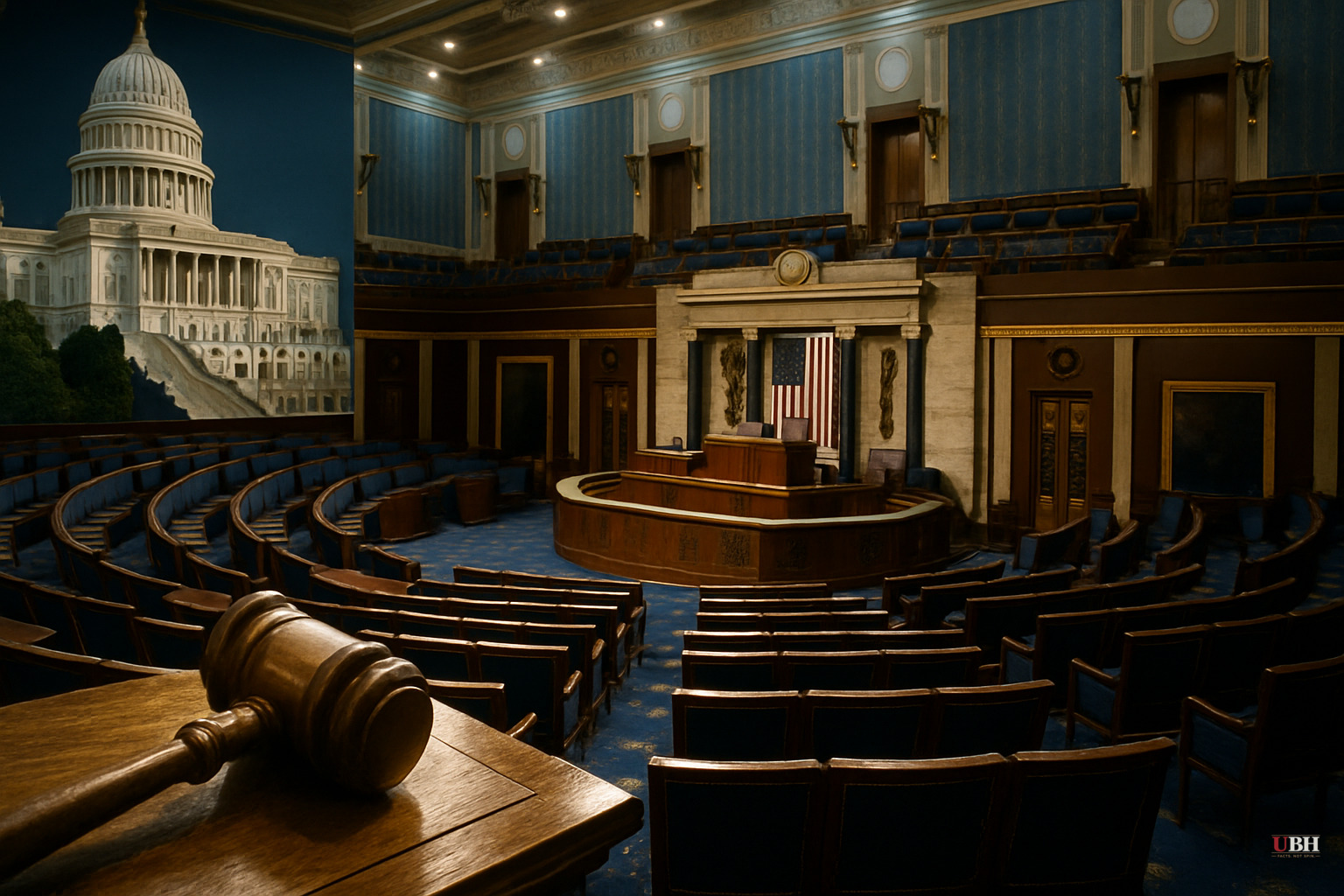
America Turns 250. Here's What We're Fighting About.
The country is about to celebrate its 250th birthday. What are we doing with the moment?
Cage fights on the White House lawn. A federal court ordering Trump's name stripped off a national cultural institution. And a media class that can't stop screaming past each other long enough to notice that both sides are missing the point.
Let's take these one at a time.
The Kennedy Center Fight — And Who Actually Won
U.S. District Judge Christopher Cooper ruled last week that President Trump's name must be removed from the John F. Kennedy Center for the Performing Arts. According to The Atlantic, the Kennedy Center began instructing staff to remove Trump's name from signage and materials on Thursday.
The legal fight was led almost entirely by one person: Representative Joyce Beatty, a 76-year-old Ohio Democrat and ex officio member of the Kennedy Center board. She filed a complaint claiming she'd been unlawfully excluded from a board meeting. The Kennedy Center's defense? The invite went to her spam folder. That's not a joke — that was the actual legal defense.
Judge Cooper also issued a preliminary injunction halting Trump's plan to close the institution this summer for a two-year renovation. The Kennedy Center has until June 12 to comply with the ruling, with 60 days to appeal.
Beatty's lawyers filed a new brief saying the Kennedy Center has NOT clearly indicated it will comply with the injunction to stay open past July 5. Per The Atlantic, her legal team warned the court that the institution may proceed "full steam ahead" with a shutdown, or simply let it happen "by inertia." The court ruled, and the Kennedy Center may be ignoring it.
The institution has been in real trouble during Trump's 17-month run as board chair. Artists cancelled performances. Sales declined. The National Symphony Orchestra was thrown into crisis. Whether Trump's name is on the marble facade is largely symbolic. Whether a functioning national arts institution gets quietly shuttered while everyone argues about signage is what matters for the musicians, staff, and audiences who depend on it.
UFC at the White House — What It Is and Isn't
Trump is planning to host UFC fights on the White House lawn as part of the Semiquincentennial celebrations, which coincide with his 80th birthday. UFC has already conducted weigh-ins at the Lincoln Memorial.
The Atlantic's coverage frames this as Trump playing Roman emperor, using violence imagery to project dominance — and traces it back to Trump's 1989 full-page newspaper ad calling for the death penalty after the Central Park jogger attack. (The teenagers convicted in that case were later exonerated.)
Trump does use imagery of strength and physical dominance as a deliberate political signal. That's documented behavior over four decades.
But left-leaning coverage often overcorrects: UFC fans are not proto-fascists watching gladiatorial blood sport. They're Americans who like a combat sport that is legal, regulated, and wildly popular. Pretending otherwise is the kind of coastal condescension that loses elections.
The relevant question isn't whether UFC is appropriate entertainment. It's whether the White House lawn — a symbol that belongs to all Americans — is the right venue to celebrate a national birthday that half the country feels excluded from planning.
Decorum at the White House has never required elitism. Little League champions belong there as much as symphony orchestras. But there's a difference between inclusive and deliberately provocative. Trump knows the line. He's choosing to step over it.
The Bigger Problem Both Sides Are Ignoring
As The Atlantic's Jeffrey Rosen notes in a piece on democracy and technology: Alexander Hamilton believed America's founding experiment would prove whether societies could build good government through "reflection and choice" rather than "accident and force."
Hamilton had reason for optimism in 1787. Information traveled slowly. Passions had time to cool. Editors served as filters between raw emotion and public discourse.
None of that exists anymore.
Most Americans get political information from social media algorithms designed to maximize outrage, not understanding. AI systems are now shaping political views in conversations with machines that have no moral framework. And the 18th-century institutional guardrails — courts, Congress, the press — are being stress-tested daily.
A federal judge orders Trump's name off a building. The institution may ignore the ruling. A president hosts MMA fights to celebrate national independence. A congresswoman wins a lawsuit because an invitation went to spam.
This is what democratic dysfunction looks like in 2026. Not jackboots. Spam folders and cable news screaming matches.
What This Means for Regular People
If the Kennedy Center closes this summer despite a federal court order, that's a direct hit to the musicians, staff, and audiences who depend on it — and a serious test of whether court orders mean anything when the executive branch doesn't feel like complying.
If the White House becomes a permanent stage for politically branded entertainment, the symbolic cost is real, even if it's hard to quantify.
And if Americans can't step back from the daily culture war long enough to ask what 250 years of self-governance actually produced — and what it's going to take to preserve it — then the birthday party is just noise.
America deserves better than this week's version of itself. The question is whether anyone in charge is interested in delivering it.
Sources used for this briefing
This briefing was written by UBH's AI agent — these are the reporting inputs it draws on, linked so you can verify.


