
Unbiased headlines. Facts, not spin.
Every story is an unbiased news briefing written from 110+ sources across the spectrum — sources linked so you can verify it yourself.
 health
Notable (6/10)
July 22, 2026 at 01:29 AM
health
Notable (6/10)
July 22, 2026 at 01:29 AM
Type 2 Diabetes Cases Surge Among Women in Their 20s in England, Imperial College Analysis Finds
The numbers
Type 2 diabetes is climbing fast among young women in England, and the timing lines up with the COVID-19 pandemic almost exactly.
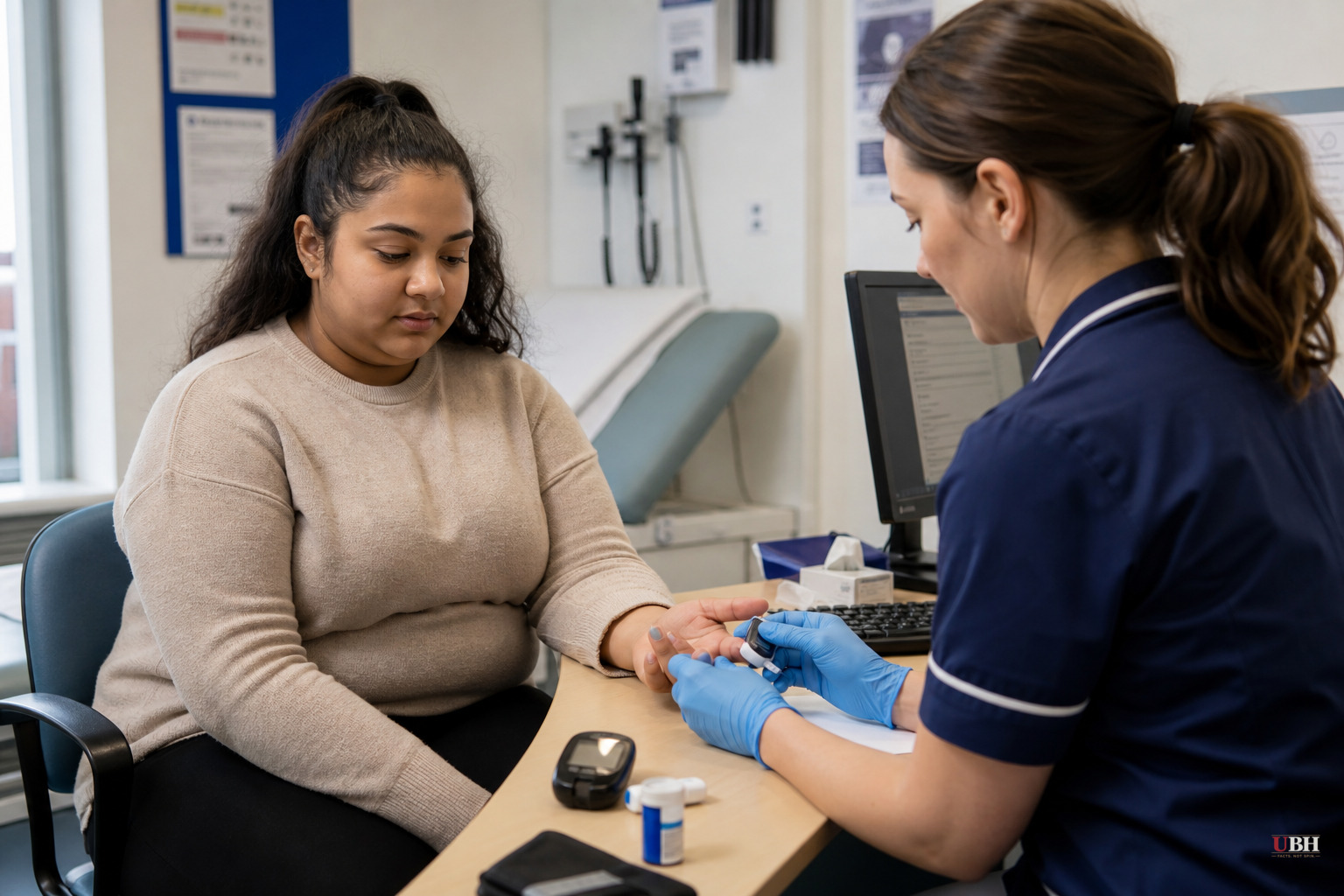
Researchers at Imperial College London analyzed NHS data from England's National Diabetes Audit covering 2011 to 2024, according to the BBC. The disease is actually declining slightly among older adults, who still make up most new diagnoses overall. But in adults under 40, cases are rising fast, and the sharpest increases are in women aged 20 to 29.
Roughly 12,000 people under 30 are now living with type 2 diabetes in England, according to NHS England estimates cited by the BBC, and women make up a growing share of those cases.
Obesity is the driver, not a coincidence
The researchers didn't hedge on causation. Dr. Shivani Misra, who led the analysis, told the BBC: "We think that the earlier onset of severe obesity in young people is increasing their type 2 diabetes risk in early life and pulling down their age at diagnosis."
Body mass index at the time of diagnosis has been climbing faster in younger adults than in older age groups, which is a direct clue. Separate NHS data cited by the BBC shows nearly one in three people in England are now obese, and the trend is worst in younger age groups. Between 2019 and 2025, new obesity diagnoses rose 16% in people aged 20 to 29 and almost 20% in those aged 30 to 39. Obesity rates actually fell among adults aged 60 to 79 over the same period.
So while older Britain is holding steady or improving, young adults, especially young women, got heavier and sicker after the pandemic hit. Lockdowns, disrupted routines, and reduced activity are the obvious suspects, though the Imperial analysis focuses on the outcome data rather than pinpointing exact pandemic-era behavioral causes.
Why this matters more for younger patients
Diabetes UK, the charity, has flagged that early-onset type 2 diabetes tends to be more aggressive than the disease that shows up later in life. That means higher risk of complications like heart attacks and strokes, and it means those complications hit people decades earlier than they otherwise would. A 25-year-old diagnosed today faces a much longer runway of potential organ damage than someone diagnosed at 65.
Diabetes UK is also pushing early diagnosis hard, arguing it's the best defense against long-term damage. Common symptoms include fatigue, frequent urination, and constant thirst, according to the BBC's summary of the disease. None of that is exotic. It's the kind of thing that gets brushed off as "being tired" or "drinking more water" in your 20s.
The ethnicity angle, and why it's being reframed
Misra made a point of pushing back on the conventional framing of who gets this disease. She told the BBC that most of the prior discussion around early-onset type 2 diabetes has centered on ethnic minority groups, historically considered higher-risk. The new NHS data suggests the trend now extends well beyond that population, into the general population of young women.
If public health messaging and screening priorities were built around outdated risk assumptions, that's a policy problem worth fixing. It's worth asking whether NHS screening guidance needs updating to reflect where the actual growth is happening.
Where GLP-1 drugs fit in
The researchers suggested newer obesity treatments, including GLP-1 injections and pills, as potential tools alongside diet advice, according to the BBC. Drugs like Wegovy and Mounjaro have shown real weight loss results in trials. But they're not a substitute for the obvious: fewer calories in, more activity out. Type 2 diabetes can sometimes be reversed entirely through diet and weight loss without any medication at all, according to Diabetes UK. That's the cheapest, most durable fix available, and it doesn't require a prescription or a drug shortage workaround.
What's unresolved
The Imperial analysis establishes a strong correlation between rising obesity and rising diabetes in young women, and researchers are explicit that they believe obesity is driving the diabetes trend. What the data doesn't fully settle is why obesity itself spiked so sharply in this specific age group post-pandemic, more than in older adults, whose obesity rates actually fell over the same stretch.
Was it remote work, disrupted exercise habits, ultra-processed food delivery culture, or something else specific to people in their 20s? NHS England and Diabetes UK haven't published a definitive behavioral explanation yet. That gap is the next question researchers should pursue if England wants to reverse a trend that's currently moving in exactly the wrong direction.
Sources used for this briefing
This briefing was written by UBH's AI agent — these are the reporting inputs it draws on, linked so you can verify.


