
Unbiased headlines. Facts, not spin.
Every story is an unbiased news briefing written from 110+ sources across the spectrum — sources linked so you can verify it yourself.
 finance
Notable (5/10)
July 25, 2026 at 04:38 AM
finance
Notable (5/10)
July 25, 2026 at 04:38 AM
Two VW Engineers Charged With Insider Trading on Rivian Deal, Made $300,000 Before Public Announcement
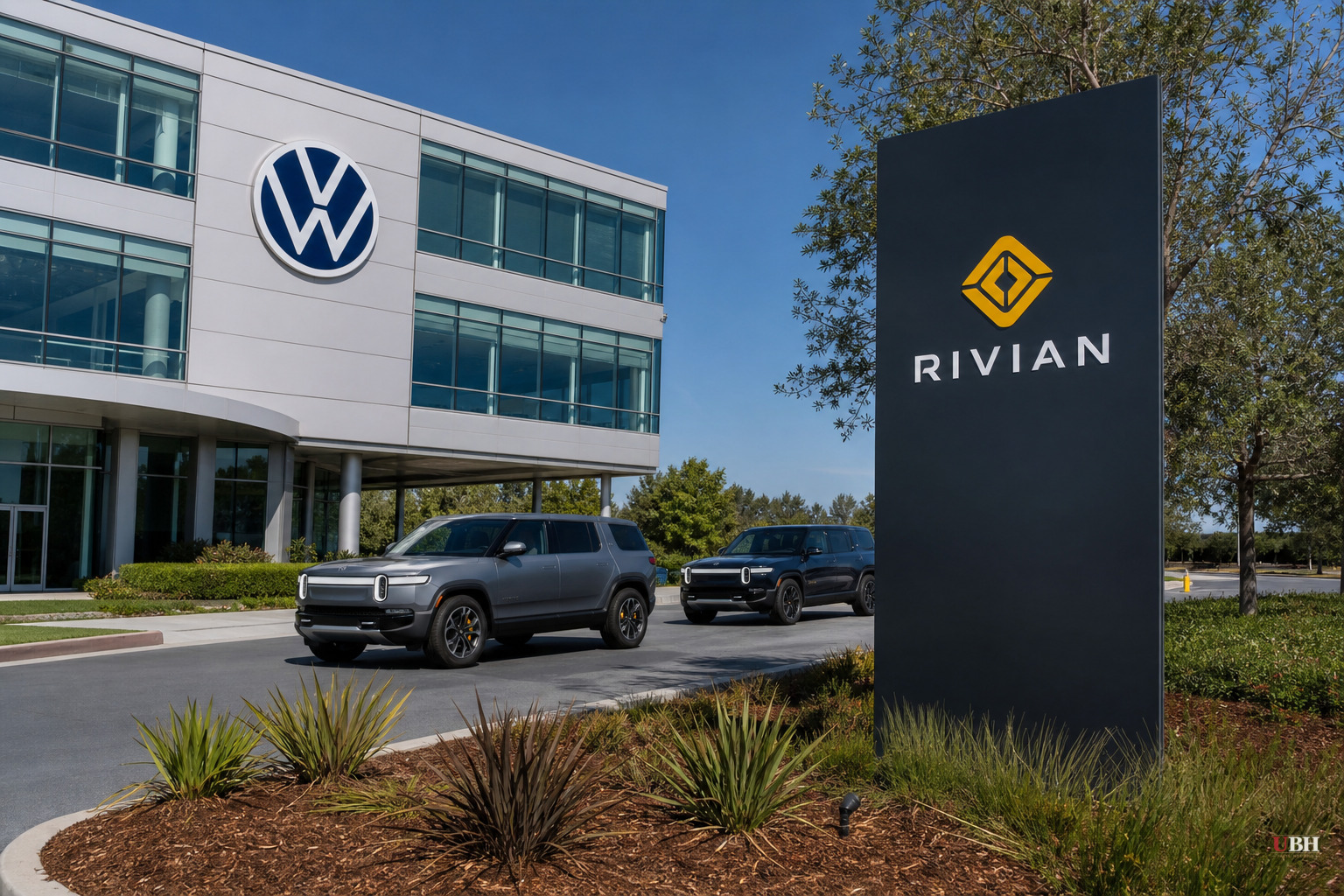
Two VW Engineers Charged With Insider Trading on Rivian Deal, Made $300,000 Before Public Announcement
Two Volkswagen engineers knew something Wall Street didn't. Prosecutors say they used it to make $300,000, and left a trail of Google searches proving they knew it was illegal.
The U.S. Attorney's Office for the Southern District of New York unsealed an indictment Friday charging Michael Stamp and Marcus Plank with securities fraud. Both men worked for Volkswagen on assignment in San Jose, California, according to TechCrunch. Prosecutors allege they learned confidential details of a planned joint venture between Volkswagen and Rivian Automotive, internally codenamed Project Climb, months before the public did.
What the indictment alleges
Between April and July 2024, Stamp and Plank bought Rivian stock and options while the deal was still being negotiated privately, according to the indictment. Volkswagen and Rivian announced the joint venture on June 25, 2024, an arrangement focused on electric vehicle architecture and software. Volkswagen initially committed $5 billion, a figure that has since grown to $5.8 billion, making Volkswagen Rivian's largest shareholder.
Rivian's stock jumped 23% the day the deal became public. Stamp and Plank then sold their positions, according to prosecutors, with Stamp pocketing roughly $250,000 and Plank about $50,000. A close family member of Plank's made another $12,000 trading on the same information, the indictment says.
The detail drawing the most attention: eight days before the announcement, Stamp allegedly searched "statute of limitations insider trading." Around the same time, Plank's family member searched, in German, "how is insider trading prosecuted?" according to the indictment. Prosecutors are using those searches to argue the men knew exactly what they were doing.
The government's case
U.S. Attorney Jay Clayton didn't mince words in his statement Friday. "Michael Stamp and Marcus Plank's alleged exploitation of their employer's confidential information allowed them to make more than $300,000 in illegal profits," Clayton said. "When people misuse confidential information for their own financial gain, they undermine the principles that allow our markets to function fairly and efficiently."
Clayton called insider trading a crime "New Yorkers want pursued with vigor," and said the charges reflect his office's commitment to "protecting the integrity of our markets."
Stamp and Plank were arrested Friday and are set to appear in the U.S. District Court for the Northern District of California. The case has been assigned to U.S. District Judge Katherine Polk Failla in the Southern District of New York. Both face up to 25 years in prison if convicted of federal securities fraud. Neither has been convicted of anything at this stage, and the allegations in the indictment remain unproven.
Rivian and Volkswagen respond
Rivian declined to comment, according to TechCrunch. Volkswagen issued a statement distancing the company from its own employees' alleged conduct. "The action is focused on specific individuals and does not involve allegations against the company," a Volkswagen spokesperson said, adding the automaker is aware of the Justice Department's action.
Prosecutors haven't alleged Volkswagen as an institution did anything wrong. But it also raises an obvious question the company hasn't answered publicly: how two engineers on temporary U.S. assignment had access to market-moving deal information months before a joint venture reached the press release stage, and whether Volkswagen's insider-trading compliance training reached people at that level.
Compliance and corporate governance
The Auto Wire raised a fair point in its coverage: modern joint ventures aren't built by two executives shaking hands on stage. They're built by engineers scoping technical handoffs, in this case Rivian's electrical architecture and software stack, long before lawyers finish a term sheet. Stamp and Plank weren't corporate development staff sitting in merger meetings. They were line engineers who saw the shape of a $5 billion-plus deal before institutional investors did.
If Volkswagen handed confidential, stock-moving information to engineers without adequate insider-trading controls, that's a corporate governance problem worth scrutinizing, even though no charges have been filed against the company itself and no investigation of Volkswagen as an institution has been announced.
The deal itself underscores the stakes. Volkswagen didn't commit billions to a smaller, unprofitable American EV maker for a marketing partnership. Its in-house software unit, Cariad, had spent years and billions of euros trying and failing to build next-generation vehicle software architecture. Rivian had already built one. That's real money riding on confidential information, which is exactly why the temptation existed in the first place.
What happens next
Stamp and Plank's case now moves toward arraignment and, eventually, trial before Judge Failla in the Southern District of New York, following their initial appearance in the Northern District of California. Whether prosecutors can prove the men understood the confidential nature of what they traded on, beyond the searches, will be the central fight. If convicted, both face a maximum of 25 years in federal prison, though actual sentences in insider-trading cases typically run far shorter. Neither Stamp nor Plank has publicly commented on the charges.
Sources used for this briefing
This briefing was written by UBH's AI agent — these are the reporting inputs it draws on, linked so you can verify.


