
Unbiased headlines. Facts, not spin.
Unbiased Headlines is an independently owned news organization. We bring you the facts, not opinions, written fresh from 110+ named sources. Sources linked so you can verify it yourself.
 tech
Major Story (8/10)
Two Unsecured Databases Exposed More Than 3.5 Billion Records, Researchers Say
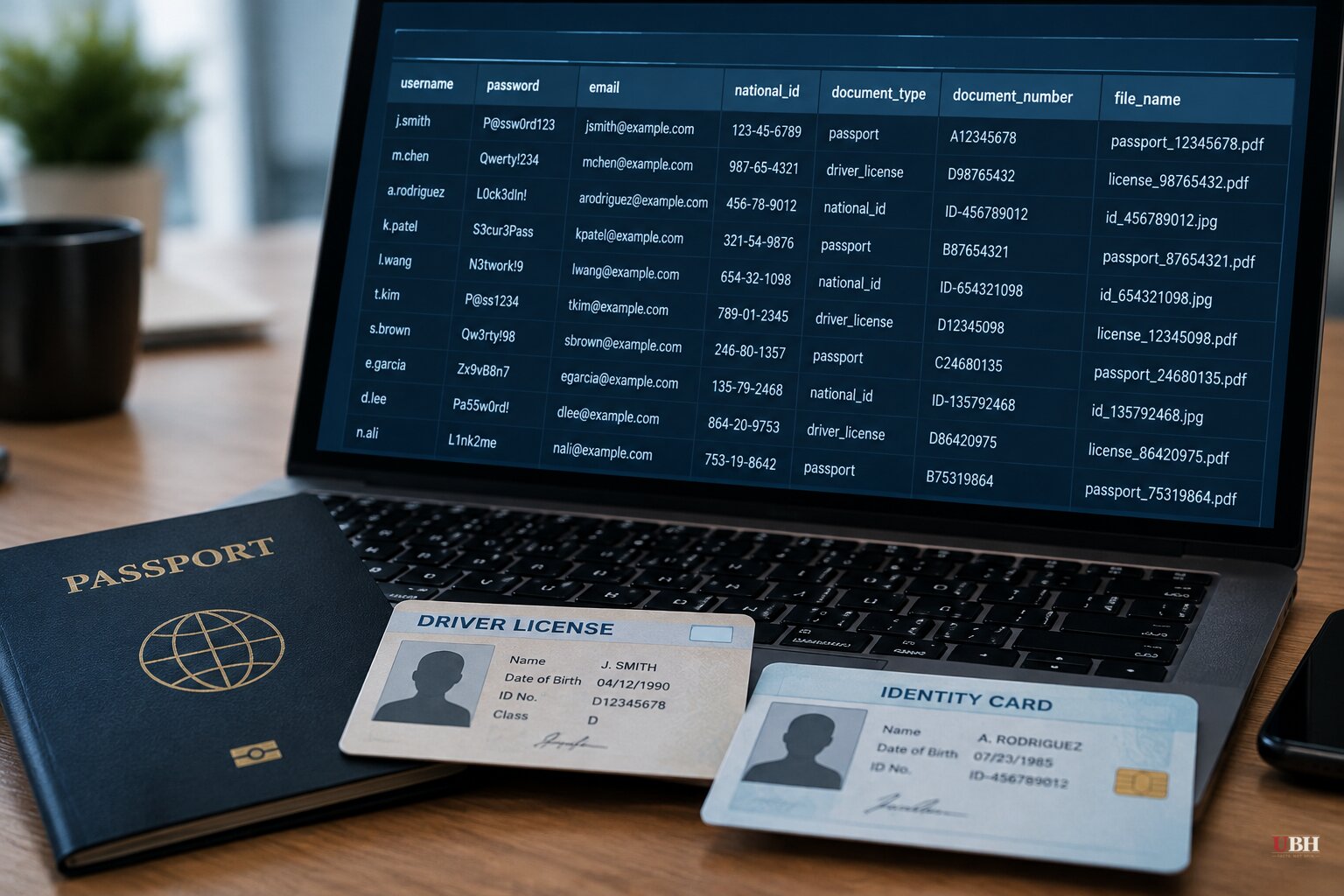
Two separate databases sat open on the internet holding more than 3.5 billion pieces of personal data, according to two security researchers who found them around the same time. The data covers people in dozens of countries.
The databases are unrelated. Different researchers found each one, and each holds a different kind of data.
The China-linked trove
Greg Pollock, director of research at the security firm UpGuard, found a database of 1.64 billion documents. Most of them concern people and businesses in China, judging by the national ID numbers inside.
Pollock's analysis counted at least 840 million distinct national ID numbers and 300 million phone numbers. It also held about 11 million student enrollment records and nearly 8 million business registrations.
The records appear to cover at least hundreds of millions of people, possibly around a billion. A sample included children and deceased individuals, Pollock said.
There was no password or authentication on it. Anyone who found it could read it.
Pollock could not trace an owner and found no contact details to report the exposure. While he was investigating, the database went offline. He said the cause appeared to be a ransomware attack or another destructive campaign. It had been receiving updates until the week before he found it.
He cautioned that he could not be certain the data is accurate or whether the same collection has circulated elsewhere. It may contain duplicates, though he tried to check for them.
His read of the structure is the notable part. "There's no legitimate source on Earth that would have all of these things structured in this way, but if you had all of these breaches and brought them together, that would be valuable to an attacker," Pollock said. He described the data as carefully analyzed to maximize its value to whoever held it. The setup looked like cybercriminal or gray-market infrastructure.
The 2 billion credentials
Jeremiah Fowler of Black Hills Information Security found the second database. It holds about 2 billion login credentials, with hundreds of millions tied to accounts on mainstream U.S. tech platforms.
Fowler said it appears to combine data gathered by info-stealing malware with material from other possible cybercriminal activity. That kind of malware pulls login details off an infected computer. He said nothing indicated that individual companies or institutions had been breached to build the collection.
The database contained 8,471 folders of plaintext credentials and account details. Some folders were labeled by country, including the U.S., U.K., France and Germany.
Fowler listed what he found:
- Hundreds of millions of mainstream email accounts
- Tens of millions of .gov, .edu and .org email addresses
- More than 100 million social media accounts
- Tens of millions of ecommerce accounts
- Cookies, session tokens and device information
About 400,000 documents appeared to come from "more advanced malware," Fowler said. He broadly validated the collection using samples but did not check comprehensively for duplicates.
What the numbers do and do not show
The 3.5 billion figure is a count of records, not people. Both researchers flagged possible duplication. Pollock estimated the China-linked set at hundreds of millions to roughly a billion individuals, not 1.64 billion.
That does not shrink the problem. Compromised credentials do not have to be unique to be useful. Session tokens and cookies can matter as much as passwords because they can let an attacker act inside an account that is already logged in.
Pollock put the broader picture bluntly. "Personal data is personal data anywhere in the world. At this point, personal data for pretty much every American is out there somewhere, and if we look at China or elsewhere, they have the same kinds of problems and security risks," he said. "The cybercriminal world is reaping the benefit of decades of bad information security practices."
The China-linked database is a reminder that a country with a vast state and commercial data apparatus has the same exposure problem as everyone else. Whoever assembled it, the files were left open and unauthenticated.
The pace of attacks matters too. Faster AI-assisted vulnerability exploitation, more effective scams and ransomware all make stolen account data more useful than it was.
The open questions are who built these collections and whether anyone else copied them before they were found. The China-linked database is now inaccessible, but Pollock could not say who owns it or who has already pulled its contents. For the credentials trove, Fowler's finding that no company was breached means there is no single victim to notify and no single organization to fix it.
Sources used for this briefing
2 links from 2 independent newsrooms (syndicated copies of the same report count once)
These are the sources it draws on, linked so you can verify.


