
Unbiased headlines. Facts, not spin.
Every story is an unbiased news briefing written from 110+ sources across the spectrum — sources linked so you can verify it yourself.
 health
Notable (5/10)
June 20, 2026 at 05:22 PM
health
Notable (5/10)
June 20, 2026 at 05:22 PM
Two Studies Find Endocrine-Disrupting Chemicals in Majority of Breast Milk Samples from Hundreds of Mothers
What the Studies Found
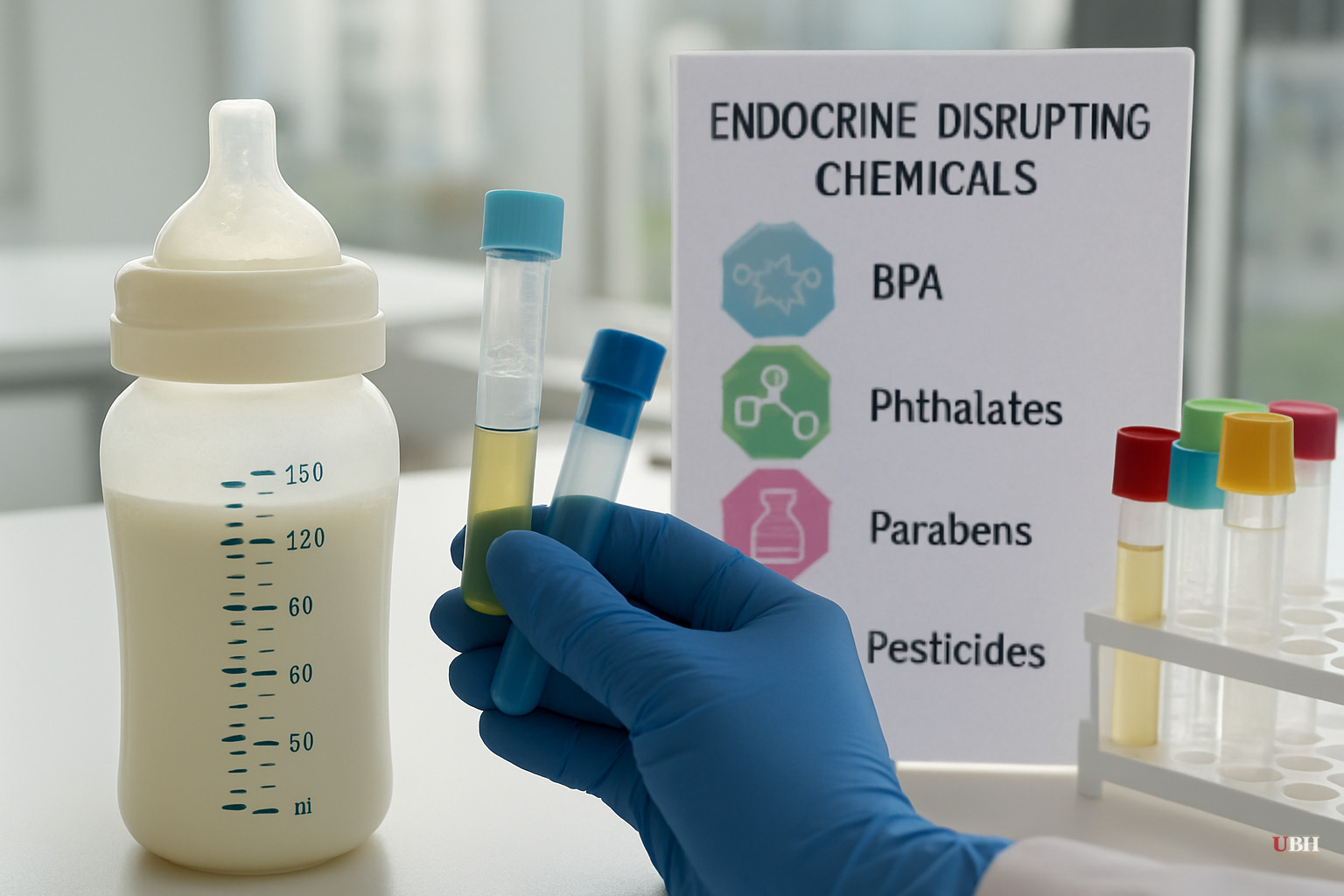
Two new studies examined breast milk samples from hundreds of mothers and found a broad mix of endocrine-disrupting chemicals, or EDCs, present in a large share of the samples.
The Italian research team, led by Dr. Maria Elisabeth Street, director of the Division of Pediatric Endocrinology at the University of Parma, analyzed breast milk and urine from 336 mothers and their babies at one month, three months, and six months postpartum. They screened for more than 50 potentially harmful substances, according to reporting by the New York Post.
The results showed widespread contamination.
The Specific Chemicals
Bisphenol A (BPA), the chemical found in plastic food containers and receipt paper, showed up in 51.2% of breast milk samples at one month postpartum and remained at 49.8% by six months. Among the infants themselves, roughly one in three had BPA in their urine shortly after birth. By six months, that figure climbed to nearly two-thirds.
Bisphenol S, a chemical frequently marketed as a BPA-free substitute in plastics, was also detected in both mothers and babies, with levels rising over the study period.
Phthalates, which are used to make plastics flexible, appeared in more than 90% of breast milk samples taken at one month postpartum and remained common at six months. Infant urine levels rose sharply over time.
Parabens, the preservatives in shampoos, lotions, and cosmetics, were consistently detected, with infant levels increasing as the babies aged. Glufosinate, an agricultural weedkiller, was found in both mothers and babies at multiple collection points.
Polycyclic aromatic hydrocarbons, chemicals linked to vehicle exhaust and fuel combustion, were rarely found in the milk itself but were consistently detected in babies' urine, suggesting a separate exposure pathway.
What the Researchers Said
Dr. Street's team was direct. "Breast milk is the optimal nutritional source for any child and must be protected as it is a vehicle of environmental contaminants," she said, according to the New York Post. She also noted that "infancy represents a critical window of exposure since effects are magnified at this age with damage becoming evident after many years."
A second study, conducted by researchers in Seattle, examined breast milk from 50 new mothers and found that about 92% contained at least one endocrine-disrupting chemical. Those same samples had already been shown to contain PFAS and flame retardants, both of which are also known to interfere with hormones.
Studies have linked these chemical classes to hormone disruption, altered growth and weight patterns, and potential effects on brain development and long-term metabolism. The developmental concern is specific to infants: their hormonal systems are forming in real time, and EDCs are defined precisely by their ability to interfere with that process.
The Strongest Counterargument
Detection is not the same as harm. Modern chemical analysis can identify trace concentrations that would have been invisible to earlier instruments, and the presence of a chemical in a sample does not automatically establish that the dose is high enough to produce measurable health effects. The New York Post notes that some of the chemicals detected in the Seattle study were below World Health Organization safety thresholds. Critics of alarmist interpretations argue that the risk of NOT breastfeeding—including higher rates of respiratory illness, ear infections, and reduced immune function in formula-fed infants—is well-documented and substantial.
The Dietary Guidelines for Americans recommend exclusive breastfeeding for the first six months of life, and at least 84% of U.S. mothers begin breastfeeding after delivery, according to the New York Post. No major health authority has changed that recommendation based on these findings.
Dr. Street's own statement supports this framing: she said breast milk "must be protected," not avoided. The authors of both studies stressed that their findings are not meant to discourage breastfeeding. The call is to reduce contamination at the source, not to abandon breastfeeding.
What's Still Unknown
The Italian study is observational and conducted in Italy, which limits how directly the findings translate to American mothers, whose environmental exposures, diets, and consumer product habits differ. The research does not establish what dose of these chemicals, delivered through breast milk, produces a clinically measurable health outcome in an infant. Long-term follow-up data on the 336 infants in the study has not been published.
The New York Post's coverage accurately summarizes the study's findings but does not note the Italy-to-U.S. generalizability question, which is a material omission for American readers assessing their own risk.
The Unresolved Question
The practical gap here is regulatory, not scientific. Researchers have known for years that BPA and phthalates show up in human biological samples at high rates. Bisphenol S, which replaced BPA in many products, has shown up in this study's samples in rising concentrations despite being marketed as a safer substitute.
Dr. Street's team has called for breast milk to be formally recognized as something that requires environmental protection upstream, meaning restrictions on the products and industrial processes that introduce these chemicals into the food chain, water, and consumer goods in the first place. Dr. Ryan Babadi, science director for Toxic-Free Future, which contributed to the Seattle research, put it plainly: "The presence of these chemicals in breast milk shows we need to do more to protect public health." Whether U.S. regulators treat that as an actionable research signal or file it alongside years of prior EDC studies is the question that will determine whether anything actually changes.
Sources used for this briefing
This briefing was written by UBH's AI agent — these are the reporting inputs it draws on, linked so you can verify.


