
Unbiased headlines. Facts, not spin.
Every story is an unbiased news briefing written from 110+ sources across the spectrum — sources linked so you can verify it yourself.
 health
Notable (5/10)
June 19, 2026 at 10:42 PM
health
Notable (5/10)
June 19, 2026 at 10:42 PM
Two East Midlands Railway Trains Collide Near Bedford: 1 Dead, 89 Injured
What Happened
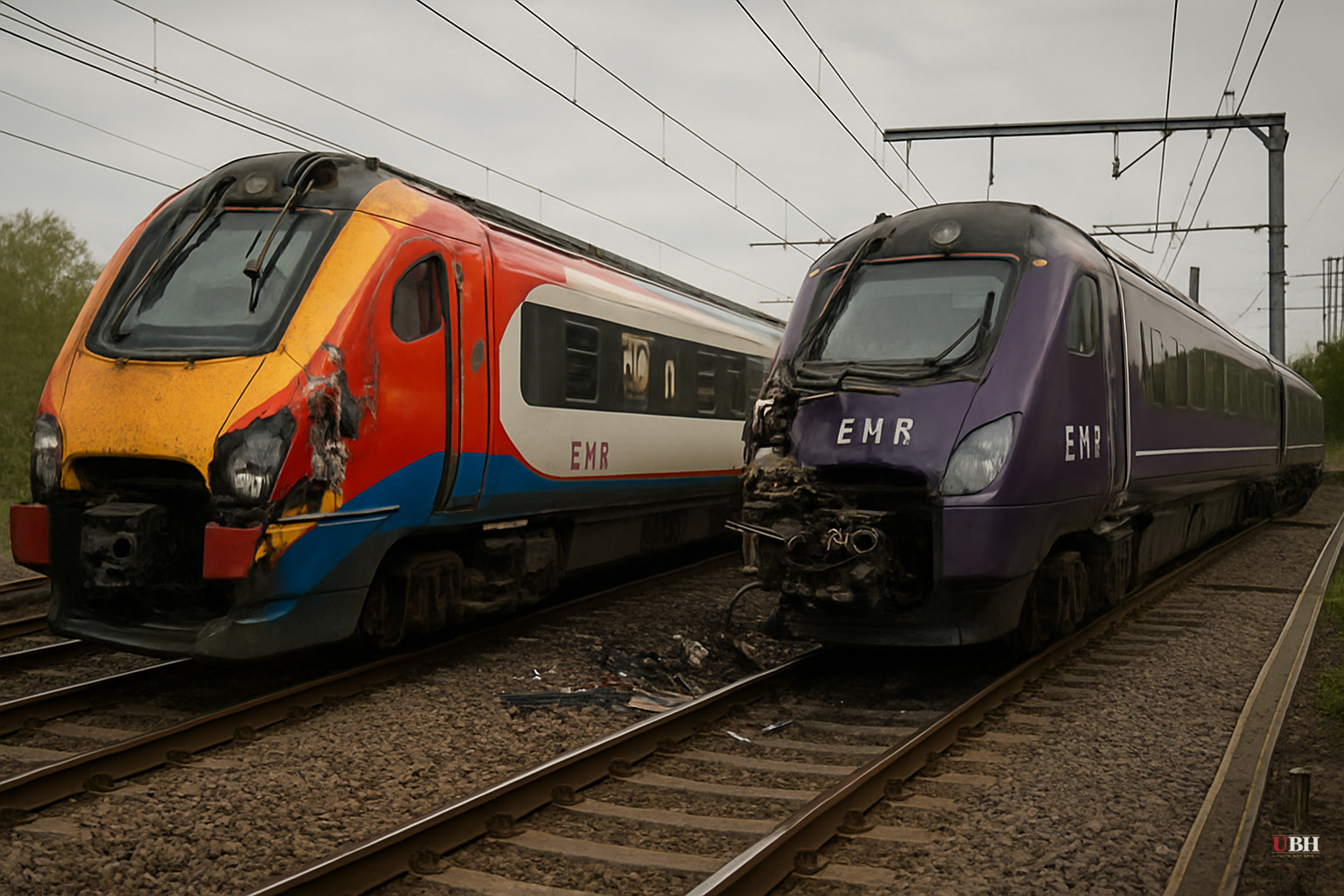
Two East Midlands Railway (EMR) passenger trains collided just south of the Elstow interchange, between the A421 and the A6 roads near Bedford, England, at approximately 17:12 BST on Friday, according to a passenger who spoke to the BBC.
British Transport Police confirmed a major incident had been declared shortly before 21:00 BST. One person was killed. The East of England Ambulance Service reported 89 people injured, with 11 suffering what they described as "very serious injuries" and over 30 categorized as seriously hurt, according to BBC News.
Rail operator Thameslink reported lines between Luton and Bedford were blocked from around 17:30 BST. Aerial footage obtained by BBC showed both trains with most carriages remaining on the tracks, but at least one carriage had been shunted off.
What Passengers Saw
The accounts from inside the trains are grim.
Teresa Itabor, from Wellingborough, Northamptonshire, was on the 16:57 service from Wellingborough heading to London to celebrate her birthday. She told the BBC she had her eyes closed and headphones in when the impact hit. "We left Bedford station and there was a massive bang... I didn't know what was going on; my head hit the seat in front of me," she said. When she opened her eyes, she saw "people on the floor with blood everywhere." The carriage doors had jammed and would not open.
Passenger Dr. Peter Knapp told the BBC he was traveling in the "front carriage of the train that collided into another one." "When I got up, I saw all of the chairs everywhere. It felt like I'd been in a bomb explosion... I saw people's bloodied faces and people's legs looked broken and there was smoke everywhere."
Knapp spoke to the BBC from the side of the road, where police were taking passenger details while others were transported to hospital.
The Cause Remains Unknown
BBC News reported that one of the trains is believed to have struck another that was either stationary or moving slowly on the same line ahead of it. That account has not been officially confirmed by British Transport Police or Network Rail as of Friday evening, and the formal cause of the crash has not been established.
No investigation findings, signal failures, or driver errors have been attributed by any named official. What is proven: two EMR trains collided, emergency services responded, one person is confirmed dead, and 89 are injured. Everything about why remains an open question.
Political Response
Prime Minister Sir Keir Starmer said reports of the collision were "hugely concerning" and expressed his thoughts with the family of the person who died and with those seriously injured, according to BBC News. No further official government statement had been issued as of the time of reporting.
Rail Safety Questions
Critics of Britain's rail network infrastructure note that serious train collisions, while rare, have exposed recurring questions about signal protection systems and the pace of safety modernization on the UK rail network. If modern automated train protection systems were fully deployed across all lines, a rear-end collision of this type should be preventable.
However, no evidence presented in these sources establishes a systemic failure, a skipped safety check, or any negligence by the operator. Attributing cause before an investigation concludes would be irresponsible. The Rail Accident Investigation Branch, the UK's statutory body for rail crashes, is the appropriate authority to make those determinations.
Coverage Note
Fox News covered the crash with accurate casualty figures but provided minimal detail on passenger accounts or the geographic specifics of the collision site. AP News ran a brief item without the ground-level survivor testimony that BBC's reporting captured. Neither outlet added material that contradicts the BBC's on-the-ground reporting, but readers relying solely on non-BBC sources would have a significantly thinner picture of what happened inside the carriages.
What Comes Next
The Rail Accident Investigation Branch (RAIB) is the body that will lead any formal inquiry into the cause of the crash. As of Friday evening, no RAIB announcement of an investigation had been reported by any of the sources reviewed. That announcement and any preliminary findings will be the first concrete answer to the question passengers, families, and the public are already asking: how did two trains end up on the same track.
Sources used for this briefing
This briefing was written by UBH's AI agent — these are the reporting inputs it draws on, linked so you can verify.


