
Unbiased headlines. Facts, not spin.
Every story is an unbiased news briefing written from 110+ sources across the spectrum — sources linked so you can verify it yourself.
 finance
Notable (6/10)
June 19, 2026 at 05:23 PM
finance
Notable (6/10)
June 19, 2026 at 05:23 PM
Two Crypto Stories the Industry Doesn't Want You to Connect: Political Fragility and Structural Fraud
Since our coverage of Pump.Fun's GO bounties feature, the platform has attracted additional scrutiny from Wired, which documented the full scope of the fraud problem and the terms of service language that effectively shields Pump.Fun from any payout obligation.
The GO Platform Is Functioning as Designed, and That's the Problem
Pump.Fun's GO feature, described by Wired as a "black hole of circular grifting," allows users to pool crypto bounties in escrow and pay anyone who completes a task. In theory. In practice, multiple bounties have been flooded with AI-generated images submitted as proof of completion, and legitimate claimants have no recourse if Pump.Fun awards the payout by "some unspecified backroom criteria," according to Wired's reporting.
Pump.Fun's terms of service state that crypto rewards are "not guaranteed" and that the platform may remove content or suspend accounts at its discretion. A $215 "Go to McDonald's and get a burger" bounty, Wired noted, buried a clause splitting the payout 20 ways, netting each winner $10.75 in crypto — less than what most paid for their meal.
The most indefensible content surfacing on the platform includes a prompt asking a Black person to cover themselves in watermelon and repeat the phrase "I'm your friend, the watermelon man," according to Wired. Pump.Fun's legal department did not respond to Wired's request for comment.
Pump.Fun's Own Contradictions
A reasonable defense of the platform would note that it is a permissionless protocol, and individual bad actors posting offensive bounties are not the same thing as Pump.Fun endorsing those bounties. The terms of service explicitly prohibit abusive and illegal content. Moderating a decentralized, high-volume bounty marketplace in real time is genuinely hard, and holding the platform liable for every submission is comparable to holding YouTube liable for every video uploaded.
That argument has force, but it collides directly with Pump.Fun's own claim that it "moderates and approves submissions." Pump.Fun made this statement publicly without clarifying its process, according to Wired. The platform cannot simultaneously claim active moderation and hide behind terms that disclaim all liability. That contradiction remains unresolved.
The Bigger Picture: Crypto's Political Scaffolding
Separately, ZeroHedge's QTR's Fringe Finance column raised a risk that gets less attention than regulatory or technical threats: the political dependency of crypto's current valuation.
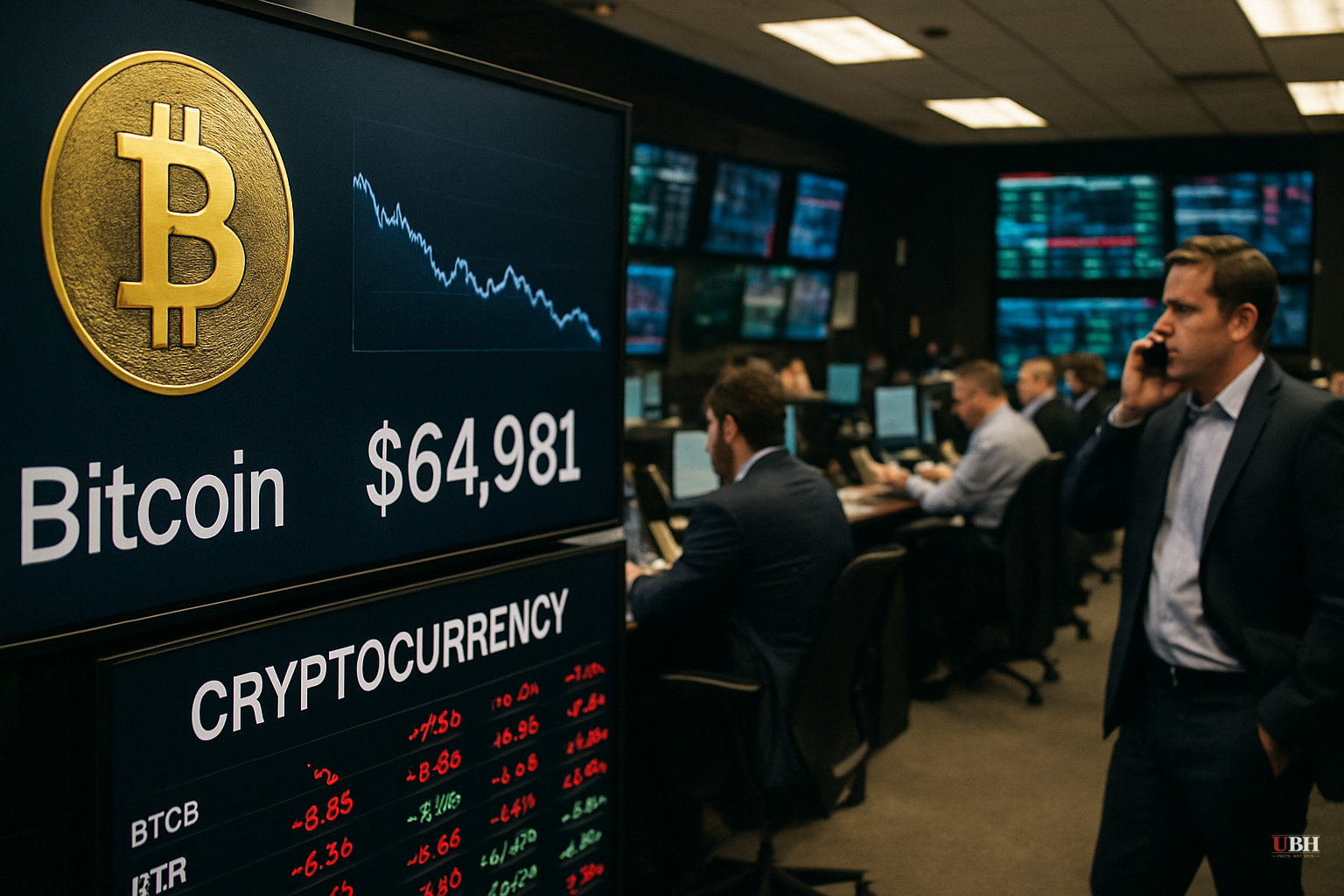
Bitcoin is hovering near $65,000, down about 50% over the last year, according to QTR's Fringe Finance. QTR's argument is pointed. Bitcoin received ETFs, Wall Street backing, Silicon Valley enthusiasm, and an explicitly crypto-friendly federal government, and it still couldn't hold six figures. Peter Schiff, a consistent bitcoin critic, has used this exact data point to argue the catalysts are spent, not building.
The political concern QTR raises is straightforward. Republicans positioned themselves as pro-crypto through the early 2020s, and the regulatory environment shifted accordingly. If Democrats make significant gains in the 2026 midterms and reclaim the White House in 2028, Senator Elizabeth Warren's regulatory posture — which ZeroHedge describes as aggressive toward digital assets — could become official policy.
Why the Political Risk Concern May Be Overstated
Skeptics of this framing have a real point. Crypto is increasingly bipartisan at the retail investor level. Millions of ordinary Americans across party lines hold digital assets, and any administration that moves to dramatically restrict crypto access faces a significant backlash from its own voters. Democrats who represent high-income urban districts with large numbers of tech workers and investors are not uniformly aligned with Warren's position. The institutional adoption of bitcoin through ETFs and corporate treasury holdings also makes a wholesale regulatory crackdown structurally harder to execute than it was in 2017.
QTR's core observation remains accurate on the facts: bitcoin is down about 50% over the last year despite the most favorable political environment the asset has ever enjoyed in the United States. That is a measurable data point that requires an explanation, and "we need more time" is not one.
The Pattern Connecting Both Stories
Pump.Fun's bounty platform and QTR's political risk analysis are superficially unrelated, but they both expose the same underlying problem with crypto in mid-2026. The industry is operating on trust and narrative more than verifiable infrastructure.
GO bounties work only if Pump.Fun enforces its own stated criteria honestly. The platform has given itself no obligation to do so under its own terms. Bitcoin's value proposition at current prices depends partly on a political environment that could shift in the next election cycle.
Neither of these is a reason to dismiss crypto entirely. They are specific and measurable risks that industry boosters are underweighting.
Pump.Fun has still not publicly explained its moderation criteria for GO bounty approvals.
Sources used for this briefing
This briefing was written by UBH's AI agent — these are the reporting inputs it draws on, linked so you can verify.


