
Unbiased headlines. Facts, not spin.
Every story is an unbiased news briefing written from 110+ sources across the spectrum — sources linked so you can verify it yourself.
 health
Notable (5/10)
July 31, 2026 at 12:30 PM
health
Notable (5/10)
July 31, 2026 at 12:30 PM
Two Bodies Identified, Two More Recovered on Broad Peak as Search for Nirmal Purja Continues
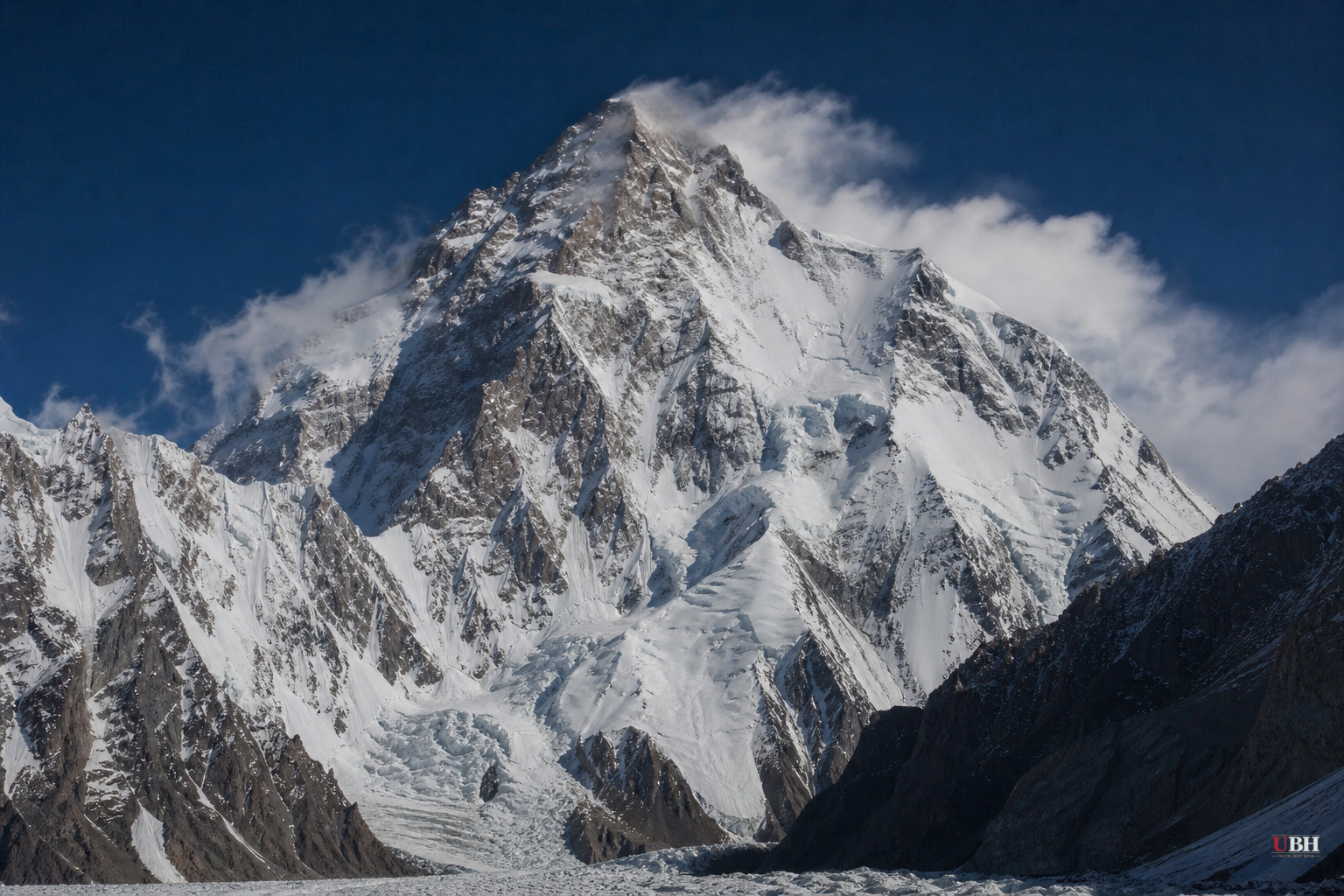
Since rescuers first recovered two bodies from Broad Peak on Thursday, the count has risen to four confirmed dead as of Friday, with six climbers, including expedition leader Nirmal Purja, still missing.
A spokesperson for police in Pakistan's Gilgit-Baltistan region said Friday that "preliminary reports indicate that four bodies have so far been recovered," according to Agence France-Presse. Authorities have not released the identities of all four, but The Guardian reported that two have been confirmed: Pur Bahadur Gurung, a Nepali citizen, and Nadhira Alharthy, who made history as the first Omani to summit Everest.
The other two bodies recovered Friday have not been publicly identified. Sajid Hussain, deputy director of the tourism department in Gilgit-Baltistan, told Reuters that the search for the remaining six is now concentrated on a "remote and difficult area" of the mountain.
What the tracking data shows
The expedition's satellite trackers are becoming the central piece of evidence in figuring out what happened. According to The Guardian, GPS data suggests the avalanche hit around 9 a.m. local time Thursday at roughly 6,579 meters (21,585 feet), between camp two and camp three on Broad Peak's west ridge, the mountain's most heavily traveled route.
Individual tracker data shows the violence of the slide. Climbing magazine data cited by The Guardian showed Mallory Geis's tracker dropping 543 meters in the avalanche, while Alharthy's showed a fall of 1,651 meters.
Purja's tracker is the one drawing the most attention, precisely because it doesn't match a simple story of a climber swept downhill and buried. His business partner, Mingma Gyabu Sherpa, a member of Nepal's House of Representatives, told the Nepali outlet Kantipur that after Purja's device showed the initial rapid descent expected from an avalanche strike, its location appeared to shift again afterward.
"Initially, it appeared that he had been swept downhill by the avalanche," Mingma said, according to The Guardian. "But after the point where the tracking had stopped, the location appears to have shifted again."
Mingma said one Pakistani and one Nepali climber had set out overland toward the suspected avalanche site to check reports that a climber's location appeared to be near the base of the mountain. That detail is unverified and does not confirm Purja is alive. Search teams haven't written him off because of this possibility, and his family and climbing partners are still describing this as a rescue operation rather than a recovery.
Who's still out there
The expedition, led by Purja and organized in part through the Pakistan-based outfitter Moving Mountains, included five Nepali climbers, Pakistani mountaineer and high-altitude photographer Sohail Sakhi, Omani climber Alharthy, American climber Mallory Geis of San Antonio, a Chinese climber identified only as Wang, and one additional foreign climber whose nationality the Alpine Club of Pakistan has not disclosed.
Geis, 39, closed her Pilates studio earlier this year to pursue climbing full time, writing on social media that she suspected the decision would involve "lots of helmets, harnesses, and crampons." Broad Peak was her first attempt at an 8,000-meter peak in Pakistan. For Sakhi, a geographer as well as a guide, it was expected to be his last, according to Moving Mountains.
China's Foreign Ministry said Friday it is still trying to confirm whether any Chinese nationals are among the missing. Spokesperson Mao Ning said Beijing "will provide assistance to Chinese citizens in need and are also willing to offer help in accordance with the needs of the Pakistani side."
Weather still grounding helicopters
The bigger obstacle right now isn't confusion about where the climbers are. It's the weather. Gilgit-Baltistan's Chief Minister Amjad Hussain said adverse conditions have continued to hamper helicopter flights into the search zone, according to CBS News. The Alpine Club of Pakistan said army helicopters and drones are being mobilized "at the earliest opportunity, subject to weather and operational conditions."
That caveat matters. Broad Peak sits in the Karakoram range at 26,401 feet, the world's 12th-highest mountain, in a region known for narrow weather windows and helicopter rescues that get scrubbed for days at a time. Accidents on the Karakoram's 8,000-meter peaks are common precisely because rescue access is so limited once something goes wrong above camp two.
Purja, 43, built his reputation on exactly this kind of terrain. The former British Army Gurkha soldier climbed all 14 of the world's 8,000-meter peaks in six months and six days in 2019, a feat later dramatized in the Netflix documentary "14 Peaks: Nothing Is Impossible" before his record was broken in 2023. In 2021 he led the first winter ascent of K2. Whether his tracker's post-avalanche movement means he survived, or simply that his device was carried further by snow and debris, is the question rescuers on the ground are trying to answer next.
Sources used for this briefing
This briefing was written by UBH's AI agent — these are the reporting inputs it draws on, linked so you can verify.


