
Unbiased headlines. Facts, not spin.
Unbiased Headlines is an independently owned news organization. We bring you the facts, not opinions, written fresh from 110+ named sources. Sources linked so you can verify it yourself.
 defense
Major Story (8/10)
Turkey and Qatar Sign Mutual Defence Pact in Istanbul Amid Gulf War Tensions
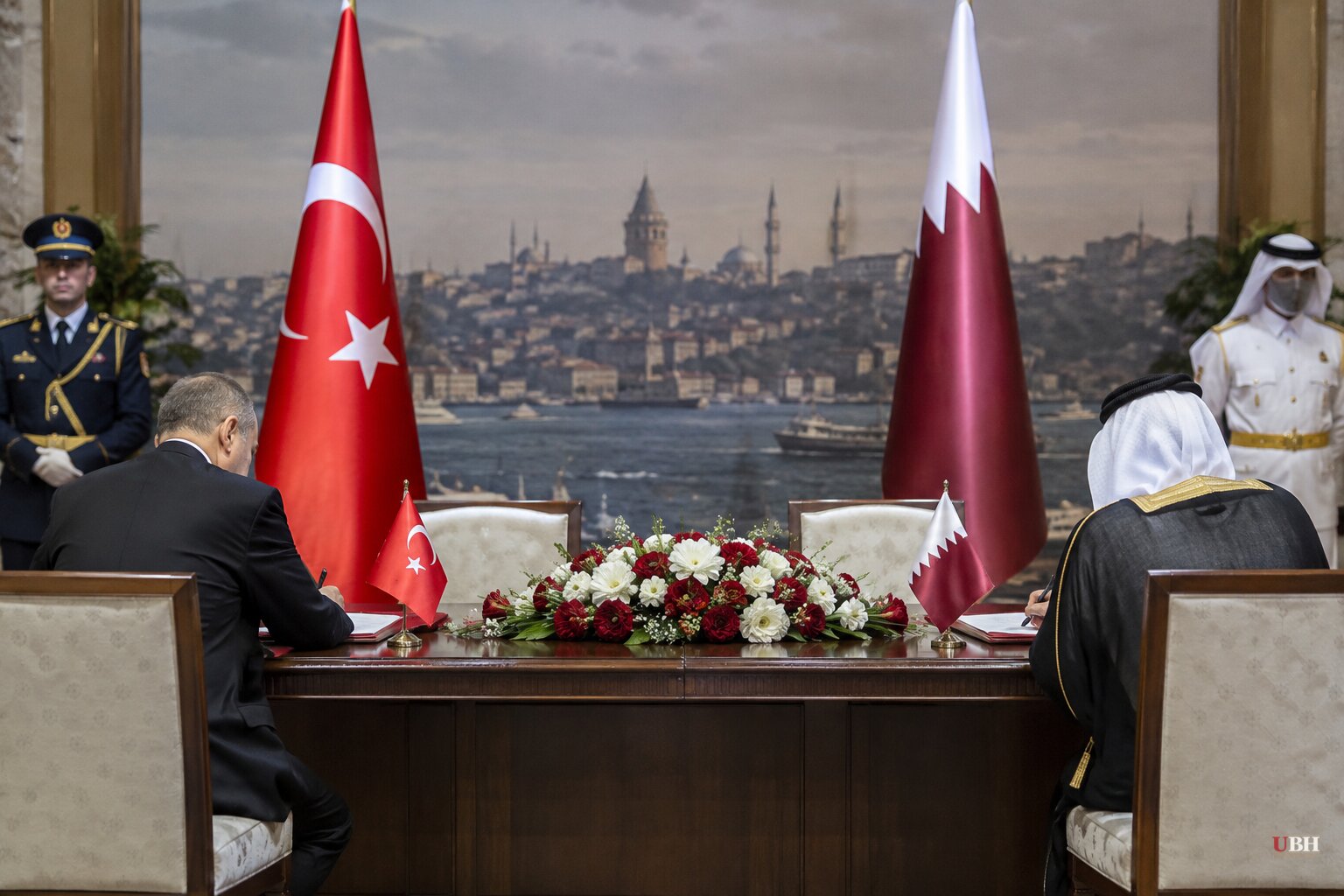
Turkey and Qatar signed a mutual defence agreement in Istanbul on Friday, Nov. 13, after Erdogan met Emir Sheikh Tamim bin Hamad Al Thani. The emir had come from the COP31 climate summit in southern Turkey.
Erdogan's office said the deal would "add a new dimension to the brotherly ties between the two countries." A joint statement carried by Qatar's state news agency said the aim is "bolstering collective defence and achieving regional security and stability." It also commits both sides to a "unified position in the face of any external armed attack targeting either or both parties."
What the agreement says
The joint statement lists four concrete commitments:
- Consultations on threats to either country's security.
- Joint military exercises.
- Cooperation in defence industries.
- Exchange of personnel training.
Erdogan said the two countries would expand defence-industry cooperation.
The statement does not say what would trigger a military response or what that response would be. Qatar's Foreign Ministry said in its readout that the deal carries weight similar to the August pact among Turkey, Pakistan and Saudi Arabia, under which each pledged to treat an attack on one as an attack on all.
The third pact in three months
The Qatar deal is the latest in a run of defence arrangements. In August, Turkey, Pakistan and Saudi Arabia signed their mutual-aid pact. Turkey's parliament ratified it last week.
That agreement links a NATO member with the alliance's second-largest military, the Muslim world's only nuclear-armed state, and the Gulf's leading power. In October, Qatar, Indonesia, Pakistan and Turkey signed a multilateral memorandum of understanding on defence cooperation in Doha, known as Badr.
Turkey has said the August pact is not aimed at any other country and remains open to others, including Egypt. Foreign Minister Hakan Fidan has signalled that openness.
The pledge on paper has not yet been tested. Turkey has not become militarily involved in defending Saudi Arabia against attacks by the Iran-aligned Houthis in Yemen.
Qatar, by contrast, has been on the receiving end. It came under repeated Iranian fire in the opening weeks of the U.S.- and Israeli-led war, which began Feb. 28.
Deterrence, not escalation
Al Jazeera quoted experts who describe the pact as a message of deterrence rather than preparation for imminent escalation. Erdogan framed it the same way. He said the two countries would keep working to prevent a renewed outbreak of war in the Gulf and press the parties toward diplomacy.
The two leaders also discussed Israel's attacks on Gaza, the humanitarian situation there, normalisation efforts in Syria, and developments in Libya, according to the statement.
The war around the signing
The signing came on a day of military and economic friction across the region. U.S. Central Command said Iran's Revolutionary Guard launched two one-way attack drones toward Bahrain and that U.S. forces shot down both, with no injuries or damage. The Guard's Aerospace Force had claimed it destroyed a U.S. early-warning radar in Bahrain, calling it retaliation for an American strike on a telecommunications tower in Iran's Sirik region. CENTCOM called that claim false.
Shipping through the Strait of Hormuz remains about 65% below pre-war levels, according to UK Maritime Trade Operations. Its latest seven-day count was 139 outbound and 169 inbound transits and eight maritime incidents. The agency has logged 163 Iran-US conflict-related incidents since Feb. 28 and rates the threat level as severe, meaning an attack is assessed as highly likely.
Iran's Revolutionary Guards Navy said two tankers hit sea mines while attempting to cross Hormuz without coordinating with Iranian authorities. That account came from Iranian state television and has not been independently verified.
Brent crude was at $95.89 a barrel at 2 p.m. ET Friday, compared with about $72 in late February. Wholesale inflation data released Friday showed food and other costs rising even as energy costs eased somewhat.
Washington's posture
President Donald Trump said this week the U.S. does not need a deal with Iran. Iran's chief negotiator, Mohammad Bagher Qalibaf, has claimed Washington asked Russian President Vladimir Putin to help start talks. That claim is uncorroborated.
Israel's Mossad chief, Roman Gofman, arrived in Washington on Friday for talks with Trump administration officials, Axios reported. He is also scheduled to meet CIA Director John Ratcliffe. Axios reported that Israel is pressing Trump to launch another major campaign against Tehran.
On the nuclear side, a confidential International Atomic Energy Agency report obtained by Reuters says inspectors still cannot determine whether Iran is holding nuclear material at its underground Isfahan enrichment facility. Iran has not let inspectors in or supplied enough information to establish the site's status.
Iran's Assembly of Experts has described considering withdrawal from the Nuclear Non-Proliferation Treaty as an "unavoidable necessity."
What is still open
Neither Ankara nor Doha has said what would obligate either country to send forces if the other were attacked. Turkey's August commitment to Saudi Arabia has so far involved no military action against the Houthi strikes on Saudi oil infrastructure.
The next test of the Istanbul agreement is whether the promised consultations on security threats produce a joint response to the Hormuz disruptions, the Houthi attacks, or a resumption of U.S. or Israeli strikes on Iran.
Sources used for this briefing
7 links from 7 independent newsrooms (syndicated copies of the same report count once)
These are the sources it draws on, linked so you can verify.


