
Unbiased headlines. Facts, not spin.
Unbiased Headlines is an independently owned news organization. We bring you the facts, not opinions, written fresh from 110+ named sources. Sources linked so you can verify it yourself.
 defense
Major Story (8/10)
Event date: November 10, 2026 ·
Putin Tells Witkoff and Kushner European Troops in Ukraine Would Be 'Legitimate Military Targets'
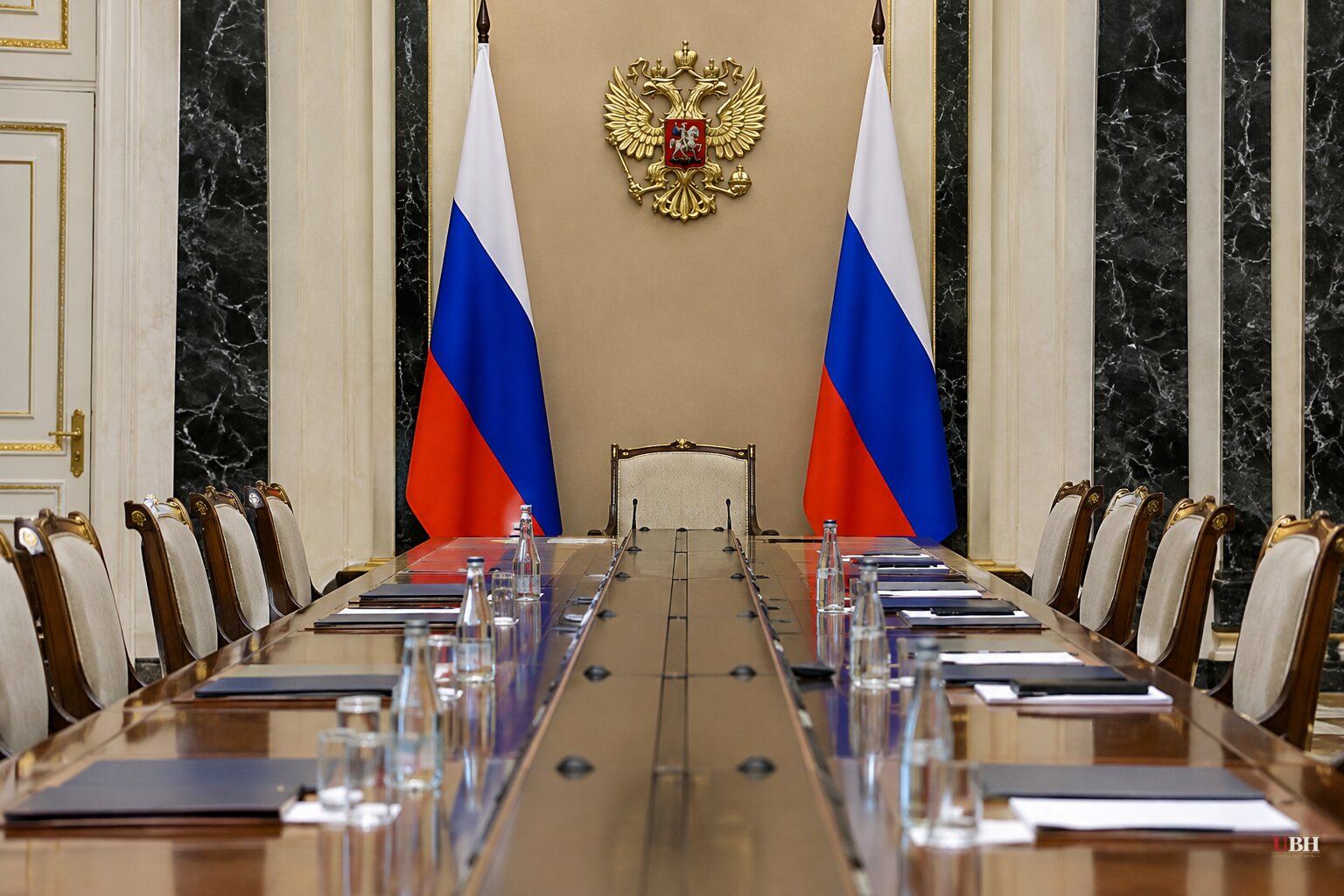
Since U.S., Ukrainian and Russian negotiators opened talks in Abu Dhabi on Nov. 10, the first three-way session since Geneva ended without a deal in February, the diplomacy has moved to Moscow. Putin met U.S. envoys Steve Witkoff and Jared Kushner at the Kremlin on Thursday, Nov. 12. He did not move on the central question of who protects Ukraine after a ceasefire.
What Putin said
Putin struck a conciliatory tone at first. He proposed a humanitarian operation in Kostiantynivka, modeled on the recent localized ceasefire in Oleshky.
Then he turned to Europe. "We've said from the very beginning that the presence of any foreign troops on Ukrainian territory is absolutely unacceptable to us," Putin told the American delegation. He said European troops deployed after a peace agreement would become "legitimate military targets," and that "the war would resume immediately."
He also rejected demilitarized or "grey" zones between the two armies. "For us, there is only one line of demarcation: the state border," he said.
The Institute for the Study of War assessed Thursday that the threat is aimed at blocking any meaningful Western security guarantee for Kyiv. ISW also concluded that Moscow has not abandoned its original war aims. In its reading, the Kremlin is pressing territorial demands well beyond the Donbas while reviving its 2021 ultimatums to roll NATO back across Eastern Europe.
The Abu Dhabi session
The two-day Abu Dhabi round was built around security guarantees. Rustem Umerov, head of Ukraine's Foreign Intelligence Service, said the day began with the Ukrainian team, the U.S. envoys and representatives of the UK, France, Germany, Italy, NATO and the European Commission. The trilateral format with Russia followed. Vladimir Medinsky led the Russian side.
Witkoff said participants discussed how to build on existing European security institutions and agreements. He said they made clear NATO would remain central to Euro-Atlantic collective defense and called for "credible security guarantees" for Kyiv.
Before the talks, a U.S. official told reporters on a background call that the administration had asked Russia to accept an "Article Four and an Article Five-like security guarantee" for Ukraine, "effectively very similar to NATO." The same official said President Trump has not decided what guarantee the U.S. itself would provide. That would be a "really, really big deal" to be settled between Trump and Zelenskyy.
Kushner said Wednesday that "there is no trust right now between the sides." He said the talks touched on territory, which he expects to be the hardest issue.
Territory and the gap that remains
Russia publicly demands all of Donetsk. Ukraine wants the conflict frozen along the current line of contact. Putin has also demanded that Ukraine withdraw from Luhansk, Zaporizhzhia and Kherson, give up its NATO bid and accept limits on its military. He has said he wants a comprehensive deal rather than a general halt in fighting.
The U.S. official said both sides had shown "a little bit of flexibility privately." Zelenskyy, speaking from Denmark during the Abu Dhabi round, said his delegation would propose de-escalation measures. He also said a trilateral meeting of leaders is needed to end the war. Trump has said Ukraine could emerge with "a little bit different shape."
National Review's Jim Geraghty, writing Thursday, was far harsher on the process. He counted this as Witkoff's tenth in-person meeting with Putin in under two years and said it produced no concessions beyond prisoner exchanges and the four-day Oleshky ceasefire. He wrote that Russia closed the Abu Dhabi round by attacking power plants and grain cargo ships. He also quoted Medinsky saying "Every inch of our land will be returned" and calling Ukraine "an abscess that burst." Geraghty argued that the administration should either bring in a different negotiator or stop posing as an impartial mediator. The White House has said First Lady Melania Trump and her representative worked with Russian and Ukrainian leadership on the Oleshky terms.
The Kremlin's NATO demands have also reached allied countries. The outlets Yeni Safak and The News International reported that Russia demanded Finland leave NATO during the Abu Dhabi talks. Neither Moscow nor Helsinki has been quoted confirming it.
Europe's answer on the ground
Putin's warning came days after the British- and French-led Coalition of the Willing began its first major exercise, KOALICJA 26.2, on Monday, Nov. 9. The drills run through Nov. 22 across Poland, France and Turkey. They involve 2,800 troops from 11 nations and test how a multinational reassurance force would deploy and keep its supply lines open after a ceasefire.
That is the force Putin has now said he will treat as a target. Without some international presence, Ukraine and its backers worry a ceasefire could leave it exposed to a future Russian offensive.
The open questions are specific. Trump has yet to say what the U.S. would put behind a Ukrainian guarantee. Kyiv has not publicly answered Putin's Kostiantynivka proposal. And the Coalition of the Willing exercise continues through Nov. 22 while the Kremlin's position on any European deployment stands as stated.
Sources used for this briefing
6 links from 6 independent newsrooms (syndicated copies of the same report count once)
These are the sources it draws on, linked so you can verify.


