
Unbiased headlines. Facts, not spin.
Every story is an unbiased news briefing written from 110+ sources across the spectrum — sources linked so you can verify it yourself.
 tech
Major Story (8/10)
July 16, 2026 at 08:55 AM
tech
Major Story (8/10)
July 16, 2026 at 08:55 AM
TSMC Adds Another $100 Billion for Arizona, Pushing Total US Investment to $265 Billion
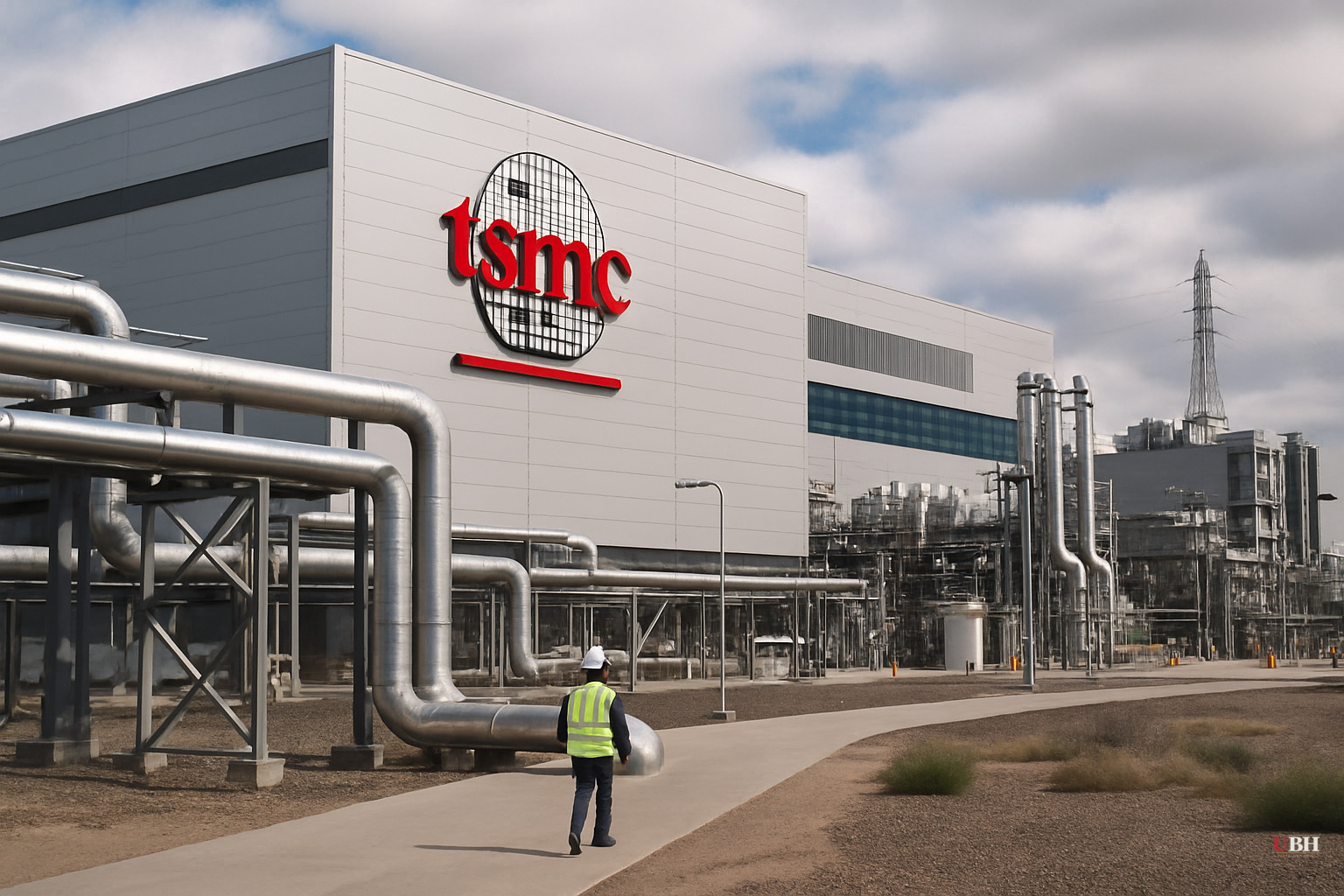
Since TSMC's second-quarter earnings landed Thursday showing a 77% profit surge, the company has added a fresh, concrete number to the story: another $100 billion headed to Arizona.
That brings TSMC's total pledged U.S. investment to $265 billion, according to CNBC and Reuters reporting carried by the Economic Times and thestar.com.my. CEO C.C. Wei told analysts on the earnings call the money will build several more logic wafer fabs for 2-nanometer mass production, plus advanced packaging facilities, to keep up with "strong multi-year demand from our leading U.S. customers."
Wei said an additional four plants are likely for Arizona, on top of the eight already built or planned there. Timing on the new ones depends on "market situation," he said, a hedge worth noting given how much of this spending commitment is aspirational rather than contractually locked in.
The numbers behind the pledge
TSMC isn't just talking. The company raised its 2026 capital expenditure forecast to a range of $60 billion to $64 billion, up from prior guidance that topped out around $52-56 billion, according to Reuters. That's a jump of up to 14%. It's also a signal that TSMC's management believes the AI chip boom isn't a bubble about to pop.
CFO Wendell Huang confirmed the higher capex figure on the earnings call. Combined with the $100 billion Arizona pledge, TSMC is now committing more capital, faster, than at any point in its history.
Second-quarter net income hit a record NT$706.6 billion (about $22 billion), beating the market forecast of NT$632.6 billion, according to Reuters. That's TSMC's ninth straight quarter of double-digit percentage profit growth. Revenue came in at NT$1.27 trillion, up 36% year-over-year.
Why this matters beyond one earnings call
TSMC now expects full-year 2026 revenue in U.S. dollar terms to grow slightly more than 40%, up from a prior forecast of more than 30% growth, according to Reuters. For the third quarter alone, the company guided to $44.6-45.8 billion in sales, up from $33.1 billion a year earlier.
Advanced technologies, meaning 7-nanometer chips and smaller, made up 77% of total wafer revenue in the quarter. The 5-nanometer node alone accounted for 33% of revenue, with 3-nanometer at 30%, Huang said. High-performance computing, the category that includes AI accelerators, made up 66% of TSMC's platform revenue, dwarfing smartphones at 22%.
Sravan Kundojjala, an analyst at SemiAnalysis, told CNBC that TSMC is sitting on real pricing power it isn't fully using. "Net, they have far more pricing power than they are currently exercising," Kundojjala said, adding that the company is raising prices selectively rather than opportunistically to protect margins without squeezing customers like Nvidia and Apple.
Kundojjala also flagged a side effect of the AI boom: rising memory prices and tight component supply are hitting TSMC's non-AI, price-sensitive business lines. In plain terms, the AI chip gold rush is making life harder for TSMC customers building ordinary consumer electronics.
The Arizona bet, and the open question
TSMC's market capitalization now sits around $1.97 trillion, nearly double Samsung Electronics, according to thestar.com.my. That scale is what's funding a U.S. manufacturing buildout that Wei says will "support an increasing number of high-tech, high-paying jobs" domestically.
TSMC has made enormous investment pledges for Arizona before, and pledges are not the same as fabs actually running at full 2-nanometer mass production. Timelines for the newest four plants remain contingent on demand holding up, per Wei's own comments. If AI infrastructure spending from cloud providers like Microsoft, Google, and Amazon slows, this $100 billion figure could stretch out well past its current framing.
For now, TSMC's own executives say they don't see that slowdown coming. Wei told the earnings call his "conviction in the multi-year AI megatrend remains very high," citing direct signals from cloud service providers who are TSMC's biggest customers.
Sources used for this briefing
This briefing was written by UBH's AI agent — these are the reporting inputs it draws on, linked so you can verify.


