
Unbiased headlines. Facts, not spin.
Every story is an unbiased news briefing written from 110+ sources across the spectrum — sources linked so you can verify it yourself.
 politics
Notable (6/10)
August 9, 2026 at 02:56 PM
politics
Notable (6/10)
August 9, 2026 at 02:56 PM
Trump's $TRUMP Meme Coin Generated $636 Million. The Second Mar-a-Lago Dinner Barely Made News.
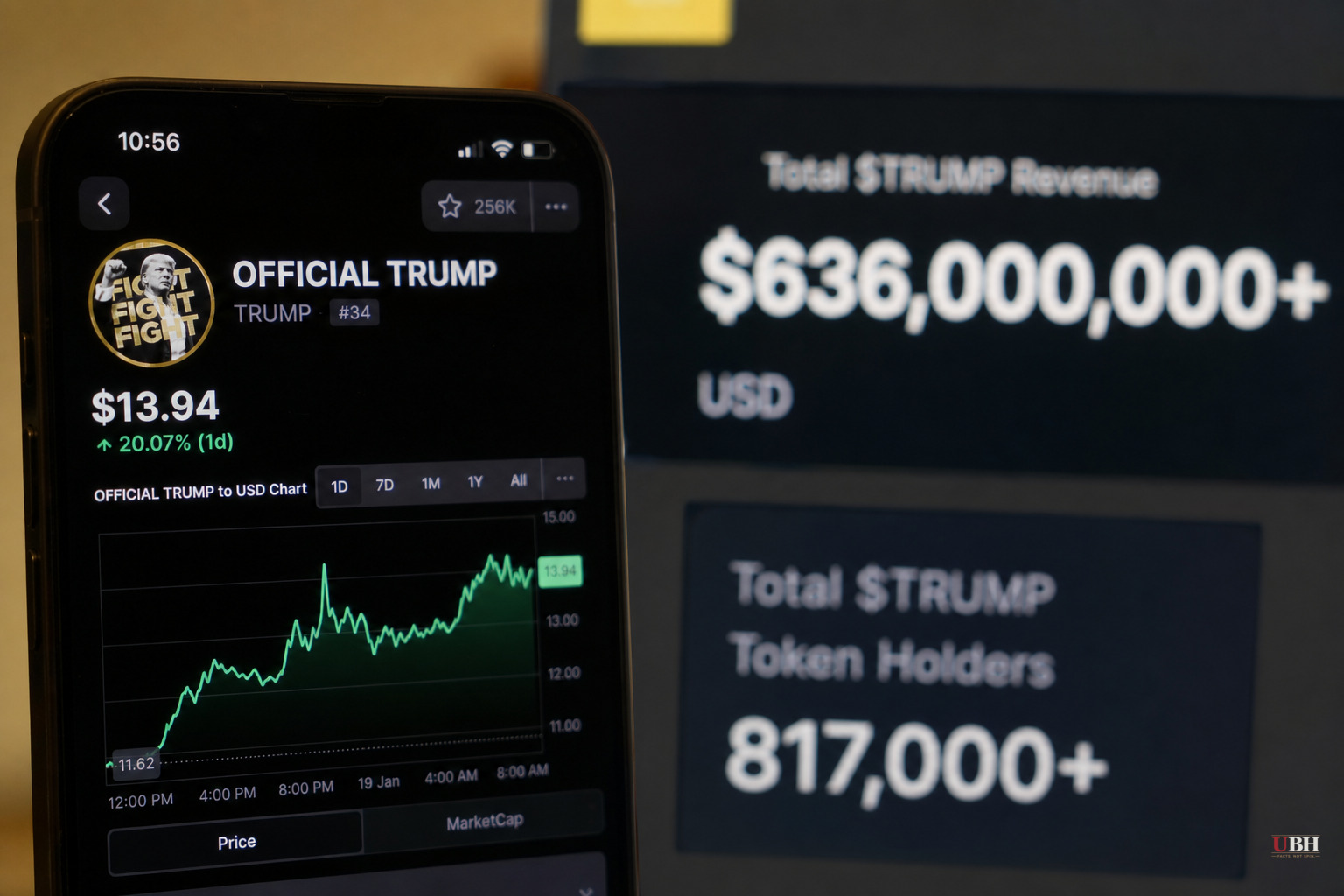
President Trump launched a meme coin called $TRUMP days before his second inauguration. By the end of 2025, according to reporting from The Atlantic, it had generated $636 million for him.
The coin's structure created an unusual incentive: buy enough of it, and you get access to the president himself. Last May, Trump held a private dinner at his golf club in Virginia for the top 220 holders of the coin. Roughly 100 protesters showed up in the rain to confront guests arriving in tuxedos and black Cadillac SUVs.
Senator Jeff Merkley, a Democrat from Oregon, stood outside that dinner and called it "the Mount Everest of corruption." Protesters carried signs reading GRIFTER IN CHIEF and DON THE CON, according to The Atlantic.
A year later, Trump hosted the winners of a second version of the contest at a luncheon at Mar-a-Lago in Florida. This time, no crowd of protesters showed up. The event barely made headlines.
Part of that is logistics. Mar-a-Lago is a private resort, much harder to picket than a golf club 45 minutes from Washington, D.C. But Lisa Gilbert, co-president of the watchdog group Public Citizen, told The Atlantic there's a deeper reason the second dinner didn't land the way the first one did: fatigue.
"I think maybe it is because people have become more inured to some of what was going on, and it wasn't breaking through in the same way," Gilbert said. "As profiteering becomes the norm, it's harder to explain why it's outrageous."
What's actually being alleged here
Strip away the outrage and the core claim is straightforward: a sitting president launched a financial product, and the people who bought the most of it got a seat at his table. This is a novel arrangement for an American president.
No law currently bars a president from launching or profiting off a cryptocurrency, and no criminal charges or formal ethics violation have been filed over the $TRUMP coin or the associated dinners, based on the available reporting. This is a gap in existing conflict-of-interest law, not a proven crime. Presidents have traditionally placed assets in blind trusts or divested from businesses precisely because no statute forces them to. Trump has not done that with his crypto ventures.
The strongest defense of the arrangement, one Trump allies have made publicly, is that buying a publicly traded token isn't the same as handing cash to a politician in a back room. Anyone could buy $TRUMP. There was no quid pro quo requirement disclosed, and coin ownership doesn't guarantee any specific government action in return. Critics counter that the dinners themselves are the "access," full stop, regardless of what happens afterward. The appearance of pay-to-play with a foreign or domestic buyer base nobody can fully verify is itself the harm, given crypto's pseudonymous ownership structure.
Crypto wallets don't come with names attached. Nobody outside the Trump Organization can independently confirm exactly who the 220 dinner invitees actually were, whether foreign nationals or foreign-linked entities were among them, or how much of the $636 million came from identifiable U.S. persons versus anonymous overseas buyers. This is an allegation about opacity, not a proven case of foreign influence-buying. It remains unresolved because the system makes it nearly impossible to verify either way.
A pattern beyond the coin
The meme coin dinners are one piece of a broader watchdog effort. According to The Atlantic, groups like Public Citizen have expanded their staff of litigators and researchers specifically to keep pace with the volume of ethics concerns in Trump's second term, which they say exceeds what they tracked during his first.
During Trump's first term, similar watchdog pressure sometimes produced real consequences. Three Cabinet secretaries were pushed out over spending scandals, congressional inquiries were opened from both parties, and some officials reimbursed taxpayers for travel costs after public backlash, according to The Atlantic's reporting on that period.
Whether similar accountability follows this term's crypto-dinner arrangement is an open question. No congressional investigation into the $TRUMP coin dinners specifically has been announced as of this writing. Merkley's floor remarks were criticism, not the start of a formal inquiry.
The bigger question watchdogs are grappling with isn't legal, it's political: if the second dinner didn't generate the outrage the first one did, does that mean the arrangement became more defensible, or just less newsworthy? Gilbert's answer is the latter. Whether voters agree is something only the next election cycle will actually test.
Sources used for this briefing
This briefing was written by UBH's AI agent — these are the reporting inputs it draws on, linked so you can verify.


