
Unbiased headlines. Facts, not spin.
Every story is an unbiased news briefing written from 110+ sources across the spectrum — sources linked so you can verify it yourself.
 politics
Notable (5/10)
June 6, 2026 at 05:52 AM
politics
Notable (5/10)
June 6, 2026 at 05:52 AM
Trump's Pulte Appointment Blows Up FISA Reauthorization — Senate Blocks Extension in 47-52 Vote
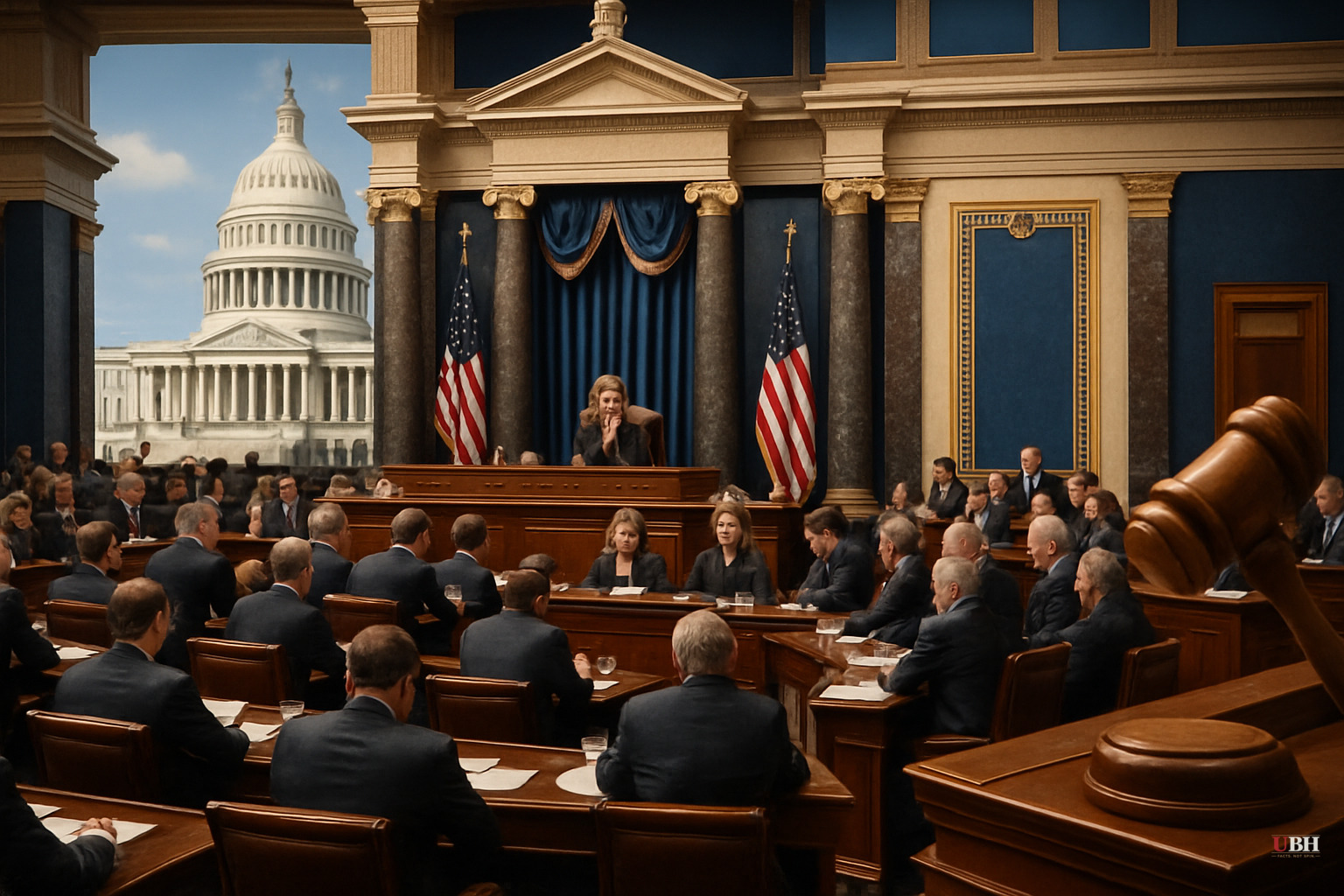
Since Trump named Bill Pulte as acting Director of National Intelligence earlier this week, the consequences have cascaded fast — blowing up a bipartisan surveillance deal in the Senate and putting a cornerstone of U.S. national security law at serious risk.
What Just Happened in the Senate
The Senate voted 47-52 Friday to block a procedural motion on extending Section 702 of the Foreign Intelligence Surveillance Act. That provision authorizes the government's warrantless surveillance of foreign targets — and their American contacts. It needs sixty votes to advance. It got forty-seven.
Seven Republicans crossed the aisle to join Democrats.
Section 702 was already operating on borrowed time. Congress reauthorized it in late April — but only for 45 days — to allow time for negotiations on reforms. The June 12 deadline is now six days away. According to The Verge, there is no deal in sight.
Pulte Is the Wrench in the Machine
Sen. Mark Warner, the top Democrat on the Senate Intelligence Committee, told reporters that a negotiated compromise on a strong FISA bill had been reached with Republican Chair Sen. Tom Cotton. That deal is now dead — and Pulte's appointment is the direct reason.
Pulte is a businessman. He runs the Federal Housing Finance Agency. He has NO intelligence community experience and, as of his appointment, NO security clearance. He is now being handed oversight of 18 U.S. intelligence agencies, including the CIA and the NSA.
Sen. John Thune, the Senate Majority Leader, acknowledged to the Associated Press that "the naming of Pulte to that position, although the timing arguably wasn't the best" was causing problems.
Trump's Plan for ODNI: Gut It
In a Wall Street Journal interview published Friday, Trump made clear he isn't just installing a placeholder. He wants Pulte to do the "hard work" of downsizing — before a permanent director is even confirmed.
"I'd like to see it smaller. I think there are a lot of people in there that shouldn't be there," Trump told the Journal, specifically targeting holdovers from the Obama and Biden administrations.
Trump told Pulte to "start the process" of large-scale firings. He also described ODNI as "unnecessary and/or too big" and floated the idea of possibly terminating it entirely. He compared the approach to Linda McMahon's work shrinking the Department of Education.
Trump said on Thursday that Pulte is "not going to be permanent" in the role, and told reporters Friday aboard Air Force One that he has "five interviews" with potential permanent DNI nominees.
The Numbers Behind the Downsizing
When Trump returned to the White House in January 2025, ODNI had roughly 1,800 employees, according to Federal News Network. Outgoing DNI Tulsi Gabbard already cut nearly 30% of that staff during her tenure. Now Pulte is being directed to cut further into whatever is left.
That's two rounds of major cuts to an office that coordinates intelligence across 18 agencies in a period of increasing geopolitical competition — particularly with China.
The Media Frame
Left-leaning outlets like The Verge frame this primarily as a civil liberties story — focused on warrant requirements and surveillance reform. That's a legitimate concern, but it buries the national security risk at the center of this.
Right-leaning coverage from ZeroHedge emphasizes the Senate's role in blocking intelligence powers, framing it as Congress impeding executive authority. That framing ignores the real problem: Trump's own personnel decision — not congressional obstruction — is what killed the bipartisan deal.
Trump installed a housing finance regulator with no intelligence background to run America's entire intelligence apparatus, explicitly to fire people fast while "less shackled" by the Senate confirmation process — and that decision directly killed a surveillance reauthorization that both parties had negotiated.
The Stakes
Section 702 isn't a minor regulatory footnote. It is a primary tool the U.S. intelligence community uses to track foreign adversaries, terrorist networks, and state-sponsored cyber threats. If it lapses on June 12, the legal authority to conduct that surveillance goes dark.
Trump wants a leaner intelligence community. That's a defensible position — bureaucratic bloat is real and Gabbard's earlier cuts weren't entirely unreasonable. But the execution here is reckless. Installing an unqualified acting director specifically to accelerate firings, while a critical legal authority is days from expiring, isn't bold reform. It's self-inflicted chaos.
Congress has six days. There is no deal. And the man now running the ODNI has never worked a day in intelligence.
Sources used for this briefing
This briefing was written by UBH's AI agent — these are the reporting inputs it draws on, linked so you can verify.


