
Unbiased headlines. Facts, not spin.
Every story is an unbiased news briefing written from 110+ sources across the spectrum — sources linked so you can verify it yourself.
 health
Major Story (7/10)
July 6, 2026 at 12:01 PM
health
Major Story (7/10)
July 6, 2026 at 12:01 PM
Trump's 'One Big Beautiful Bill' Is Shrinking U.S. Graduate Enrollment, According to Higher Education Analyst John Aubrey Douglass
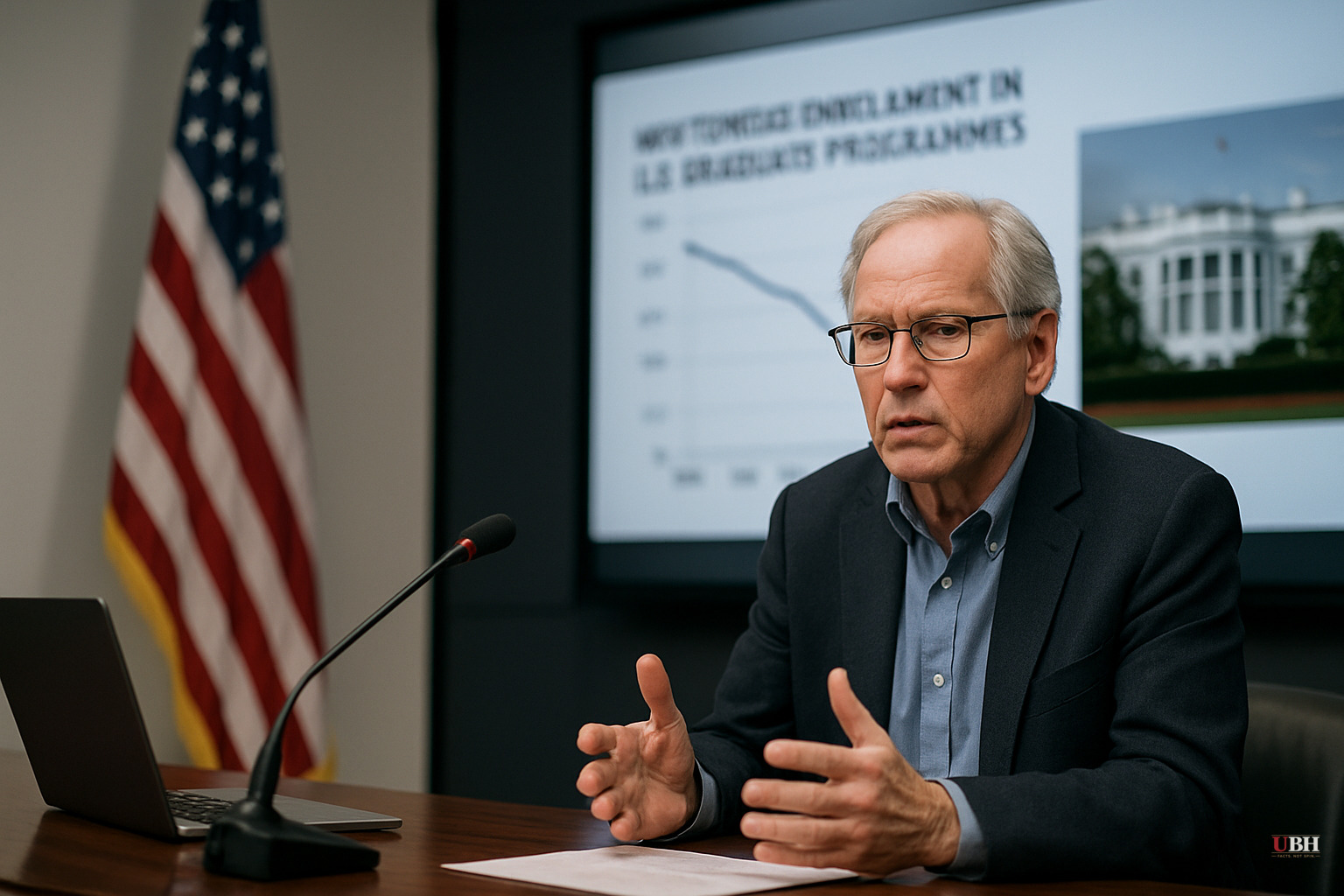
Graduate Enrollment Is Falling. The Question Is Whether That's a Problem.
New foreign enrollment in U.S. graduate programs has dropped 24%, according to University World News contributor John Aubrey Douglass, a higher education researcher writing on the one-year anniversary of President Trump's One Big Beautiful Bill Act.
The bill was framed as a tuition-relief measure. Douglass argues the downstream effect is the opposite of what was advertised: fewer graduate students, less research talent in the pipeline, and a weakening of the scientific infrastructure that feeds American economic growth.
What the Bill Actually Does
The One Big Beautiful Bill Act was intended to reduce tuition fees. But Douglass writes that its broader policy environment is producing a decline in graduate education enrollment that no tuition cut can offset.
His core argument: the U.S. research enterprise runs on graduate students, many of them foreign-born. When that pipeline shrinks, labs slow down, PhD programs thin out, and the downstream effects show up years later in fewer patents, fewer spinout companies, and a thinner bench of trained scientists.
According to Douglass, the long-term impact includes declining talent development and reduced U.S. science capabilities, with consequences for national economic competitiveness.
The Strongest Case for the Other Side
Critics of the status quo in graduate education have a legitimate argument that deserves fair treatment. For decades, American universities filled STEM graduate programs disproportionately with students from China and other countries, some of which have documented histories of intellectual property theft and academic espionage. The FBI and multiple congressional investigations have raised specific, documented concerns about Chinese military-linked researchers operating inside U.S. university labs.
From that vantage point, a 24% drop in foreign graduate enrollment isn't necessarily a failure. It could reflect a conscious, security-motivated recalibration. If the students who left were disproportionately from high-risk programs or institutions with poor oversight, a raw enrollment number tells you very little about whether American science is safer or more vulnerable.
The problem is that the data Douglass cites is a blunt instrument. A 24% decline across all foreign graduate enrollment doesn't tell us which fields, which nationalities, or which programs are affected. Without that breakdown, neither side can make a fully clean argument.
The Economic Stakes Are Real Either Way
On the economic side, the U.S. has historically converted foreign graduate students into permanent residents and citizens who then start companies, file patents, and pay taxes here. If the current policy environment is driving graduate talent toward Canada, Germany, the UK, or Australia instead, the loss isn't just symbolic. It's a transfer of human capital that took years to develop to competitor economies.
University World News notes separately that international students broadly report that UK academic qualifications have proved vital to their careers, with more than 73% of them requiring their UK qualification to obtain their current job, and 70% securing a relevant job within six months — a signal that the UK is actively marketing itself as a stable alternative to the U.S. for international academic talent.
Other Countries Are Watching and Moving
Germany's situation adds context. Universities and student bodies at the 2026 Members' Assembly of the German Academic Exchange Service (DAAD) adopted a resolution emphasizing the considerable importance of academic links with the Global South and criticizing federal plans to terminate DAAD funding for such cooperation. This reflects a different policy direction, but the same underlying tension: how much international academic engagement serves national interests versus draining them.
Meanwhile, the Indian Institute of Technology Bombay is opening its first overseas sub-campus in the United States, in collaboration with the State University of New York at Old Westbury. This marks the first time an IIT will run its own academic programs on American soil — a foreign university expanding into the American market at the exact moment American graduate programs are contracting. Whether that's complementary or competitive depends on how the programs are structured, and that question doesn't have a clean answer yet.
What Comes Next
The unresolved question Douglass raises but cannot fully answer: at what point does a decline in foreign graduate enrollment start showing up in measurable reductions in U.S. research output — published papers, patent filings, NIH-funded lab productivity? Those numbers lag by years. The 24% enrollment drop being reported now won't appear in the research output data until well into the next decade.
By the time the damage is quantifiable, reversing it will require rebuilding trust with international academic communities that may have already committed to other destinations. Whether the security and sovereignty benefits of the current posture outweigh that risk is a genuine policy question. No one has produced a rigorous cost-benefit analysis that settles it.
Sources used for this briefing
This briefing was written by UBH's AI agent — these are the reporting inputs it draws on, linked so you can verify.


