
Unbiased headlines. Facts, not spin.
Every story is an unbiased news briefing written from 110+ sources across the spectrum — sources linked so you can verify it yourself.
 politics
Major Story (7/10)
June 29, 2026 at 11:38 AM
politics
Major Story (7/10)
June 29, 2026 at 11:38 AM
Trump's May Financial Disclosure Shows Stock Buys in Axon, Nvidia, and Palantir Days Before His Administration Issued Each Company a Major Regulatory Win
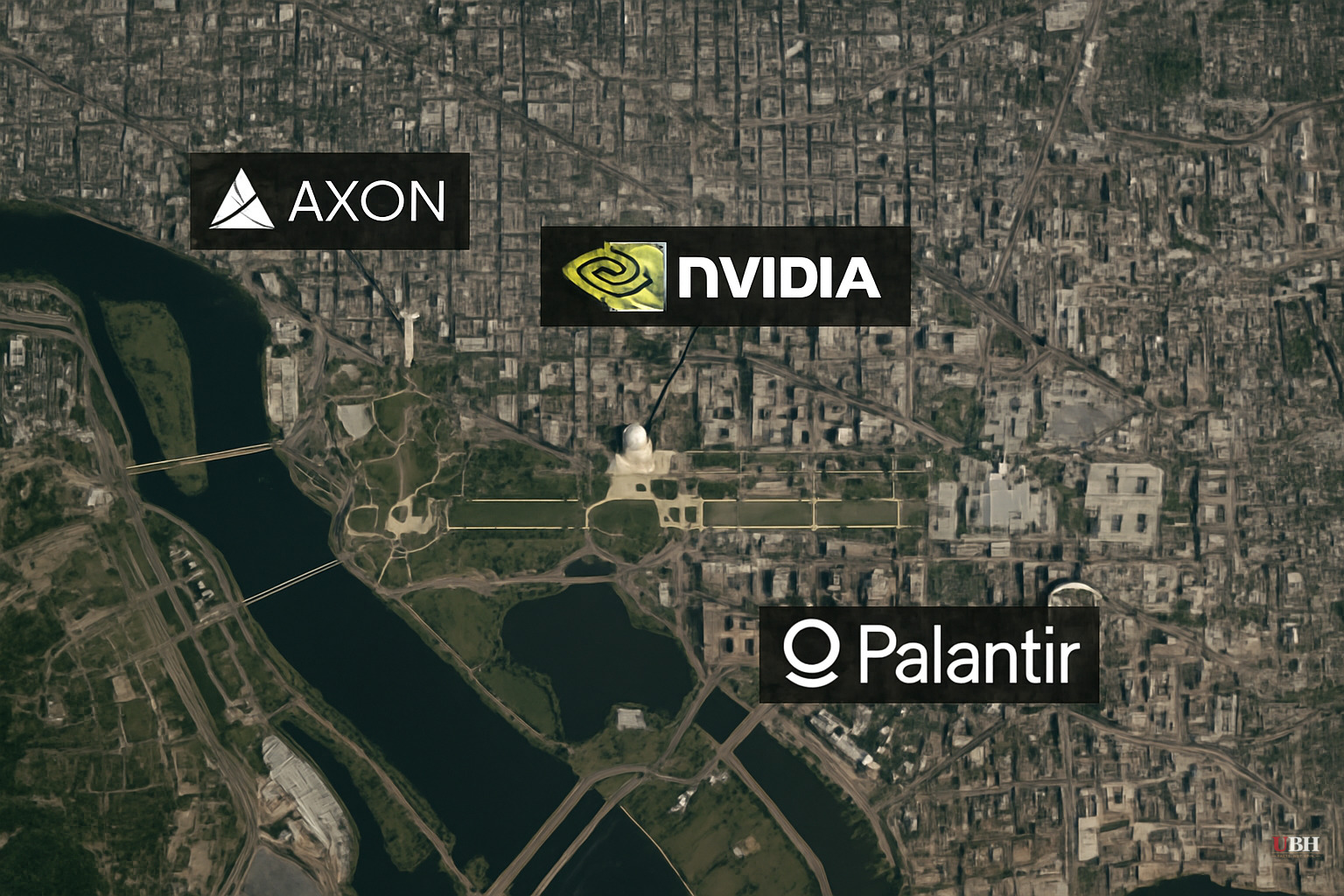
Since Trump's financial disclosure became public on May 14, the pattern of trades has drawn sustained scrutiny. The disclosure covers January through March 2026 and logs more than 3,600 individual transactions, worth between $220 million and $750 million in total, according to NOTUS and The UnPopulist. The forms list values in ranges rather than exact figures, as federal law permits.
What the Records Show
On February 10, Trump purchased between $1 million and $5 million in Axon Enterprise stock, according to the Office of Government Ethics filing reported by CNBC. Fourteen days later, on February 24, Immigration and Customs Enforcement posted a notice seeking roughly 17,800 new Tasers under a five-year, $220 million contract framework. The ICE notice doesn't name Axon, but it specifies a 45-foot range, 10 individually targeted probes, and an upgrade path from the X26P/X2 to the "T10" — all characteristics of Axon's TASER 10. Axon controls approximately 90% of U.S. Taser sales, according to investment firm Brown Advisory. Three policing experts and procurement reviewers told CNBC the specifications effectively exclude any other bidder.
Axon isn't the only overlap. Trump bought between $500,000 and $1 million in Nvidia stock on January 6. One week later, the Commerce Department approved the sale of certain Nvidia chips to China, a market Nvidia has long targeted and one the federal government directly controls through export licensing. Trump then bought another $1 million to $5 million in Nvidia on February 10, one week before Nvidia announced a major computing deal with Meta, according to NOTUS.
AMD received the same Commerce Department China-export authorization on January 13. Trump had purchased between $50,000 and $100,000 in AMD stock on January 6, NOTUS reported.
On Palantir: Trump purchased at least $260,000 in Palantir stock during Q1 2026. In February, Palantir signed a billion-dollar agreement with the Department of Homeland Security to provide software for the administration's deportation operations, per The UnPopulist.
The disclosure was also filed late. A handwritten notation on the cover confirms Trump paid late-filing fees, according to The UnPopulist.
The White House Defense, Stated Fairly
The administration's position deserves a straight hearing before any conclusion is drawn. The Trump Organization told NOTUS that "President Trump's investment holdings are maintained exclusively through fully discretionary accounts independently managed by third-party financial institutions with sole and exclusive authority over all investment decisions," and that "trades are executed and portfolios are balanced through automated investment processes and systems administered by those institutions." White House spokesperson Anna Kelly told CNBC there are "no conflicts of interest" and called the scrutiny a "tired narrative."
Those claims matter legally. Under federal law, presidents are exempt from the criminal conflict-of-interest statute that covers most executive branch officials. CNBC confirmed there is no evidence Trump was personally involved in or had knowledge of the ICE procurement process, no evidence contracting officials knew of his stock purchase, and no indication Axon had access to non-public information about the president's personal holdings. The stock purchase didn't become public until the May 14 disclosure, months after the ICE notice posted.
Automated, discretionary accounts genuinely do exist and are a legitimate vehicle for politicians to distance themselves from trading decisions.
What Remains Unresolved
Even if every trade was placed by an algorithm with zero input from Trump, the president of the United States holds between $1 million and $5 million in Nvidia stock while his Commerce Department writes the export rules that determine Nvidia's Chinese market access. That is a documented fact.
The volume alone is unusual. Roughly 58 trades per trading day across 3,600-plus transactions is an aggressive pace for a sitting president. At the State of the Union, Trump called on Congress to stop members from "corruptly profiting" from insider information. Democratic Rep. Mark Takano shouted back, "How about you first?" — a moment NOTUS reported.
No investigation has been announced by the SEC, the Department of Justice, or any congressional committee as of June 29, 2026. The ICE solicitation remains a Request For Information, not a finalized contract. Federal procurement records show no Axon award has been made.
The open question the disclosures leave hanging: whether the existing ethics framework, built around blind trusts and conflict-of-interest statutes that explicitly exclude presidents, is adequate when a president is simultaneously conducting nearly 60 trades per trading day in companies his own agencies regulate. That is the question neither the White House statement nor the current legal structure answers.
Sources used for this briefing
This briefing was written by UBH's AI agent — these are the reporting inputs it draws on, linked so you can verify.


