
Original briefings. Zero spin.
Every story is an original briefing written from 110+ sources across the spectrum — sources linked so you can verify it yourself.
 finance
Major Story (7/10)
Event date: June 18, 2026
finance
Major Story (7/10)
Event date: June 18, 2026
Trump's June Trades: Boeing Bought Same Day as $880M Navy Deal, Defense and Oil Stocks Traded Through Iran War
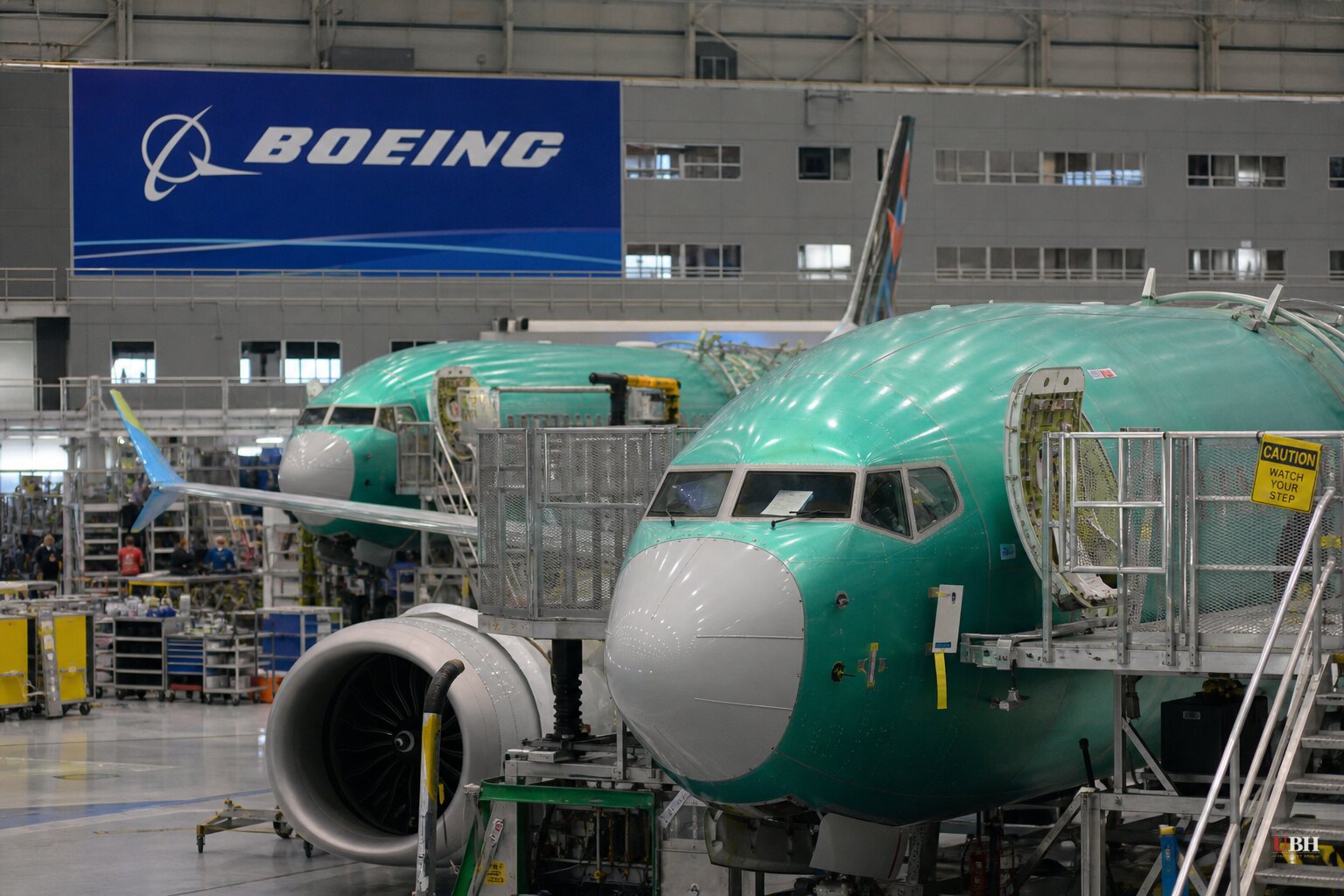
Since Trump's June financial disclosure landed at the Office of Government Ethics on August 22, the single detail everyone keeps coming back to is one date: June 18, 2026.
That's the day Trump's investment accounts bought between $250,001 and $500,000 in Boeing stock, according to the OGE filing. The Department of War announced an $880 million sole-source contract awarding Boeing money to modernize P-8A Poseidon aircrew training systems on the same day, a deal that could grow to $2.2 billion if the Pentagon exercises every option, according to BigGo Finance's review of the contract terms.
Boeing shares closed at $222.72 that day, according to Yahoo Finance data, putting a $500,000 buy at roughly 2,245 shares. Six days earlier, on June 12, Trump's accounts had sold between $50,001 and $100,000 of Boeing stock, per the same filing. Boeing shares actually fell in the days after the June 18 purchase, according to Snopes' review of the stock's historical price data.
Snopes rated the core claim, that Trump bought Boeing stock the same day as the Navy contract, as true. But the fact-checking outlet's own data shows the trade didn't even pay off in the short run.
A Filing With More Than 1,000 Trades
The Boeing purchase is one line in a 34-page disclosure covering more than 1,000 separate stock transactions in June alone, roughly 50 trades a day, according to the OGE filing reviewed by Tech Times. Total transaction value for the month ranged between $78.1 million and $263.1 million, per CNBC's review cited in that reporting. The single largest trade was a June 22 sale of a Vanguard ETF worth between $5 million and $25 million.
CNN reported that the filing includes purchases and sales in Exxon Mobil, Chevron, ConocoPhillips, Valero Energy and Occidental Petroleum during a stretch when the six-month Iran war has pushed U.S. gasoline prices above $4 a gallon. Congress's Joint Economic Committee, controlled by Democrats, estimated this week that Trump's oil and gas holdings gained as much as $15.5 million in value between January and mid-August, tied to rising energy prices connected to the war, according to the JEC's own analysis. That's a Democratic committee's estimate, not an independently audited figure, and the disclosure itself doesn't give exact dollar totals since it only reports value ranges.
Trump's accounts also traded Lockheed Martin, Northrop Grumman, General Dynamics and RTX between June 12 and June 24, per CNN, with some sales coming a day after purchases of the same stock. The filing shows a purchase of between $15,001 and $50,000 in SpaceX stock on June 23, eleven days after the company's IPO valued it at $1.77 trillion, according to Tech Times. IBTimes UK flagged reporting linking that purchase to a same-day $425.6 million NASA award to SpaceX, but said it could not independently confirm that specific connection from primary contracting records and cautioned readers to treat it carefully.
The New Republic's rundown adds more names to the list: Palantir, which won a $10 billion Army software contract this month; Meta, whose Scale AI subsidiary landed a $500 million Pentagon deal in May; Broadcom, which got $970 million in March for military cloud services; and Nvidia, whose chip sales to China Trump personally green-lit in January.
What the White House Says
White House spokesman Davis Ingle has given the same answer every time this comes up. "President Trump's stock and bond portfolio is independently managed by third-party financial institutions," Ingle told the Wall Street Journal, adding that Trump's holdings sit in a revocable trust run by Donald Trump Jr. and that "there are no conflicts of interest."
If the accounts genuinely run on automated, index-replicating strategies with zero input from Trump or his family, as the White House claims, then a same-day overlap with a government contract is a coincidence of computer algorithms trading across "virtually every sector of the U.S. economy," in Tech Times' words, not evidence of insider dealing. Nobody in these filings has produced proof that Trump or his managers had advance knowledge of the Navy contract before it was signed. IBTimes UK was explicit on this point: the disclosure "does not provide evidence that Trump or anyone involved in managing the accounts had advance knowledge of the Navy award."
But the White House's own explanation has gaps. An algorithm trading 50 times a day across the S&P doesn't explain why Boeing specifically got bought on the exact day of an $880 million award, why SpaceX got bought 11 days after its IPO, or why Palantir saw a buy-sell-buy-buy pattern spanning early and late June bracketing a $10 billion Army contract.
No federal investigation, ethics complaint referral, or criminal inquiry into these specific June trades has been announced by any agency as of this writing. The Office of Government Ethics database that surfaced the filing is a public disclosure tool, not an enforcement body, and it makes no findings about intent.
What happens next depends on Congress. Democrats on the Joint Economic Committee have already used the disclosure to push their $15.5 million oil-gains estimate, and lawmakers have floated legislation requiring presidents to divest from individual stockholdings, similar to rules many federal employees already follow. No such bill has passed either chamber. Until one does, or until an outside audit produces evidence of who actually pulls the trigger on these trades, the timing will keep raising questions the disclosure forms themselves aren't built to answer.
Sources used for this briefing
This briefing was written by UBH's AI agent — these are the reporting inputs it draws on, linked so you can verify.


