
Original briefings. Zero spin.
Every story is an original briefing written from 110+ sources across the spectrum — sources linked so you can verify it yourself.
 finance
Major Story (8/10)
August 27, 2026 at 08:21 PM
finance
Major Story (8/10)
August 27, 2026 at 08:21 PM
JPMorgan Shops $5 Billion Loan for 7-Month-Old AI Startup as Wall Street Piles Half a Trillion More Into the Sector
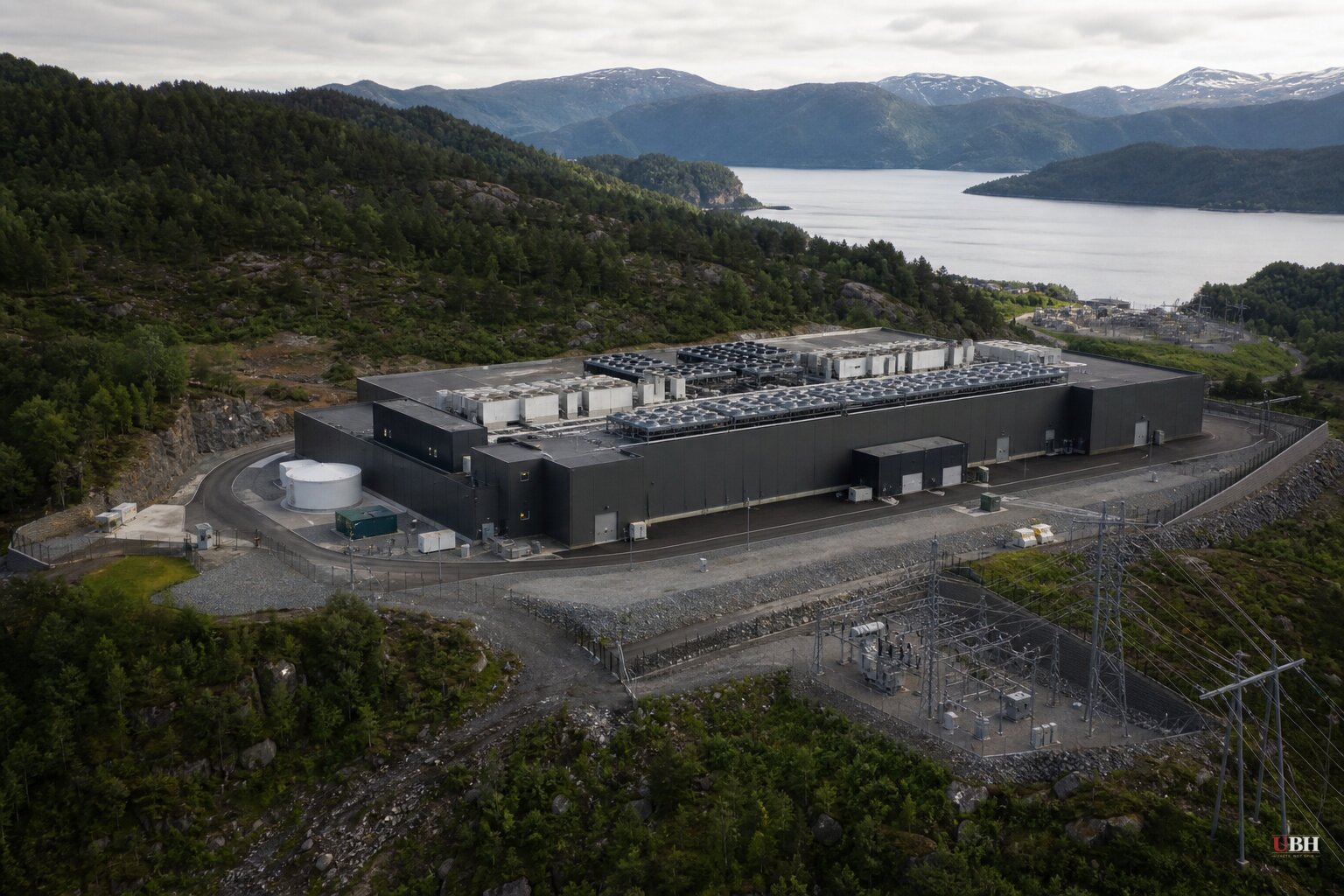
JPMorgan Chase is out talking to lenders about a $5 billion debt package for Volta Infrastructure Holdings, a company founded this year, according to Crypto Briefing and The Next Web, both citing people familiar with the financing. JPMorgan and Volta declined to comment to either outlet. Volta is seven months old. It was started by Ricard Boada and Sofia Gumuzio, two former Brookfield infrastructure executives, and it raised $300 million in venture funding earlier this month at a $2.4 billion valuation, backed by Andreessen Horowitz, Altimeter, Nvidia and Michael Dell, according to The Next Web. Its flagship project is a 121-megawatt data center campus in Tydal, Norway, leased from bitcoin miner Bitdeer Technologies and running on hydropower with Nvidia's Vera Rubin chips. Bitdeer values that lease at roughly $4.7 billion in contracted revenue over 16 years, extendable toward $8 billion, according to The Next Web. The Anthropic question nobody will answer Volta's marquee customer is reportedly Anthropic, in a $10 billion, six-year compute agreement. Bloomberg identified Anthropic as the client, citing unnamed sources. Volta itself told The Register only that the arrangement is a "commercial strategic partnership," not an investment, and that the $10 billion figure represents compute committed over the life of the deal rather than cash paid upfront. That distinction matters for the JPMorgan loan. Tech Insider flagged the core mismatch: Anthropic's compute agreement runs six years. Bitdeer's lease terms, per the same reporting, lock Volta into a commitment it cannot exit for ten years, with the lease itself running 16 years and potentially extending toward $8 billion. A six-year customer contract sitting under a decade-plus commitment is what any lender will ask first. Whether JPMorgan's $5 billion package addresses that gap, or is separate from a previously announced $5 billion non-dilutive infrastructure program Volta struck with Spanish asset manager Azora in early August, is not publicly known. The bigger number: Nvidia's $500 billion play Volta's financing is a small piece of something much larger. Nvidia announced Monday that it signed preliminary agreements with Apollo Global Management, BlackRock, Blackstone, Brookfield Asset Management, Goldman Sachs and KKR to mobilize more than $500 billion in financing for AI infrastructure, according to CNN Business and Breitbart. Nvidia CEO Jensen Huang told CNBC that AI chips are becoming "an investable asset class" for the first time, comparable to lending against a building or a toll road. "These are revenue-generating assets now. They're productive, they're long-lived, they're fungible, they're flexible," Huang said. Goldman Sachs CEO David Solomon called it a "pivotal moment of a historic AI investment cycle." Apollo President Jim Zelter said compute has become "a scarce, mission-critical asset class with compelling investment characteristics," according to CNN. That framing has a skeptic. Nigel Green, CEO of financial advisory firm deVere Group, told CNN that the whole model depends on an assumption that hasn't been tested at scale: "Chips have never been treated as a bankable, long-duration asset before, because chips depreciate fast and lose value the moment a newer generation arrives. Turning that into something institutions can lend against, the way they lend against a building or a highway, only works if the underlying asset actually holds its value over time." GPUs get replaced by faster chips every couple of years. Buildings and highways don't become obsolete because a newer building was invented. If Nvidia's next-generation chip makes today's fleet less valuable faster than lenders assume, the collateral backing hundreds of billions in new debt could be worth less than the loans against it. Numbers behind the boom Companies have borrowed roughly $600 billion for data centers and AI infrastructure since 2025, according to Bloomberg data cited by both Crypto Briefing and The Next Web. The total AI buildout is projected to cost nearly $5 trillion by the end of 2030, per the same data. JPMorgan's own banking division estimates capital spending by the five largest U.S. hyperscalers will hit $697 billion in 2026 alone, up $173 billion since the start of the year, according to an August 10 JPMorgan report. John Servidea, the bank's global co-head of Investment Grade Finance, called it "the biggest secular theme in our professional lifetimes." JPMorgan separately originated $9.6 billion in construction loans for the government-linked Project Stargate campus in Abilene, Texas. Meanwhile, CoreWeave, the Nasdaq-listed neocloud company that pioneered renting out GPUs, disclosed total debt of $35.6 billion in its second-quarter filing, according to Tech Insider. Three customers account for 72% of CoreWeave's revenue, the same report noted, an example of the concentration risk running through the industry. Regulators watching capital rules, not AI debt specifically Separately, JPMorgan Chase Business Bank CEO Stevie Baron warned in a memo obtained by Fox News Digital that pending Basel III capital rules could raise borrowing costs for small businesses, arguing regulators should not let capital surcharge formulas "penalize the everyday lending and banking services relied on by small businesses." That warning is about traditional small-business credit, not AI infrastructure lending, and no regulator has proposed rules specifically targeting AI data-center debt in the sources reviewed. No investigation into AI infrastructure financing has been announced by any banking regulator. What's on record is a stack of MOUs, term sheets and one $5 billion loan still being shopped to lenders, all resting on the same untested bet: that a GPU holds its value like a highway, not like a phone.
Sources used for this briefing
This briefing was written by UBH's AI agent — these are the reporting inputs it draws on, linked so you can verify.


