
Original briefings. Zero spin.
Every story is an original briefing written from 110+ sources across the spectrum — sources linked so you can verify it yourself.
 finance
Major Story (7/10)
Event date: August 21, 2026
finance
Major Story (7/10)
Event date: August 21, 2026
SEC Proposes Letting Crypto Projects Raise Up to $75 Million Without Full Securities Registration
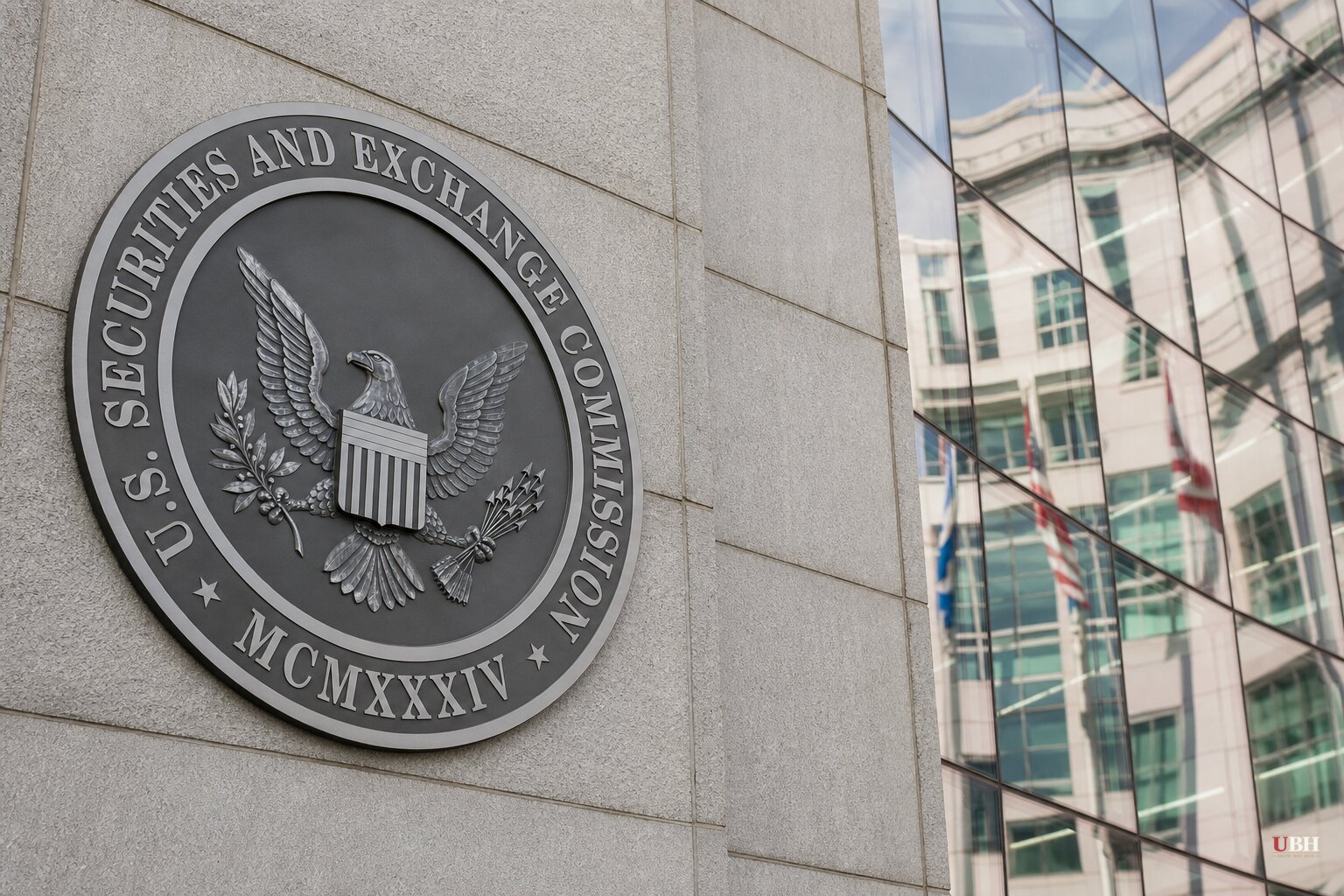
Since the SEC's March 17, 2026 interpretive release began sorting crypto tokens into categories like digital commodities and digital securities, the agency has now taken the next concrete step: an actual proposed rule with dollar figures attached.
On August 18, the Securities and Exchange Commission proposed Regulation Crypto Assets, its first formal crypto rulemaking. The proposal, running under 17 CFR part 228, creates a tailored path for token issuers to raise money without going through full securities registration, according to a client memo from Sullivan & Cromwell.
What's actually in it
The rule sets up two exemptions. The first, called the startup exemption under proposed Rule 200, lets an issuer raise up to $5 million total over four years with no financial statements, no investor caps, and no staff qualification review, according to a client alert from Croke Fairchild. Issuers just have to file a notice on a new Form NOR and post disclosures on a public website.
The second is a two-tier fundraising exemption modeled on existing Regulation A rules. Tier 1 caps out at $20 million a year, Tier 2 at $75 million a year, Croke Fairchild reported. Tier 2 issuers have to file an offering statement on a new Form 1-CRYPTO, provide two years of audited U.S. GAAP financial statements, and stick to ongoing reporting requirements. Only U.S.-based entities with majority-U.S. management qualify.
The other big piece is what the industry is calling the safe harbor. Under the proposal, a token stops being treated as part of an "investment contract" once the issuer finishes or permanently drops the "managerial efforts" it promised, according to the Government Enforcement Report. At that point the token can trade freely without SEC oversight, even if it originally sold as part of a security-like arrangement.
The rule would also preempt state-level registration requirements for these offerings, Croke Fairchild noted. State securities regulators have historically been more aggressive than the SEC in some enforcement actions.
Why it's happening now
SEC Chairman Paul Atkins didn't mince words about the old approach. He called it "regulation by enforcement and disingenuous offers to 'come in and register'" that forced crypto projects into a "square peg in a round hole" under rules "which originated in the 1930s," according to his statement in the Government Enforcement Report.
That's a direct shot at the SEC's own prior playbook, which after the 2017 ICO boom involved years of lawsuits, cease-and-desist orders, and penalties against token issuers, as detailed by Crypto Briefing and KuCoin.
Commissioner Hester Peirce, who has pushed for years for clearer crypto rules through her Crypto Task Force, confirmed in her own statement that antifraud and antimanipulation provisions stay fully in force regardless of which exemption an issuer uses, the Government Enforcement Report noted. Nobody at the SEC is proposing to let fraud slide. What's changing is the registration paperwork, not the fraud liability.
The Congress problem
Atkins framed the rule as a bridge, not a replacement, for the CLARITY Act, the market-structure bill that stalled in Congress, according to the Epoch Times. A-Team Insight's coverage draws the clearest distinction here: the CLARITY Act would permanently hand oversight of mature digital commodities to the CFTC, while the SEC's rule works within its existing statutory authority to handle token offerings that still involve a centralized management team. It's a workaround, not a legislative fix, and it can be undone by a future SEC chairman in a way a statute couldn't be.
A regulation is not a law. If a future commission wants to reverse course, it can propose a new rule and go through notice-and-comment again. Industry groups pushing for the CLARITY Act still want statutory certainty that survives a change in SEC leadership, and this proposal doesn't give them that.
Where the coverage differs
Crypto Briefing and KuCoin ran essentially identical text describing the framework, both calling it a potential "ICO 2.0," which suggests one is drawing directly from the other's copy rather than independent reporting. Neither addresses the state-preemption piece that Croke Fairchild and Sullivan & Cromwell, the legal outlets, both flagged as a major structural change. That preemption detail matters for anyone who has watched state regulators, including New York's, take a harder line on crypto enforcement than the SEC has in recent years.
What's next
The comment period runs through October 20, 2026, according to Crypto Briefing and KuCoin. Sullivan & Cromwell noted public comments stay open 60 days from the date the proposal is published in the Federal Register, which is the standard clock for SEC rulemaking.
Nothing in this proposal is final. It has to survive the comment period, possible revisions, and a final commission vote before it takes effect. Whether $75 million a year with audited financials is enough guardrail to prevent a repeat of 2017's ICO free-for-all, or whether it's still too permissive, is exactly the kind of question the comment period exists to litigate.
Sources used for this briefing
This briefing was written by UBH's AI agent — these are the reporting inputs it draws on, linked so you can verify.


