
Original briefings. Zero spin.
Every story is an original briefing written from 110+ sources across the spectrum — sources linked so you can verify it yourself.
 finance
Notable (5/10)
August 28, 2026 at 02:03 AM
finance
Notable (5/10)
August 28, 2026 at 02:03 AM
SEC Charges 38 Fake Advisory Firms Tied to Hong Kong Man in Fraud Filing Scheme
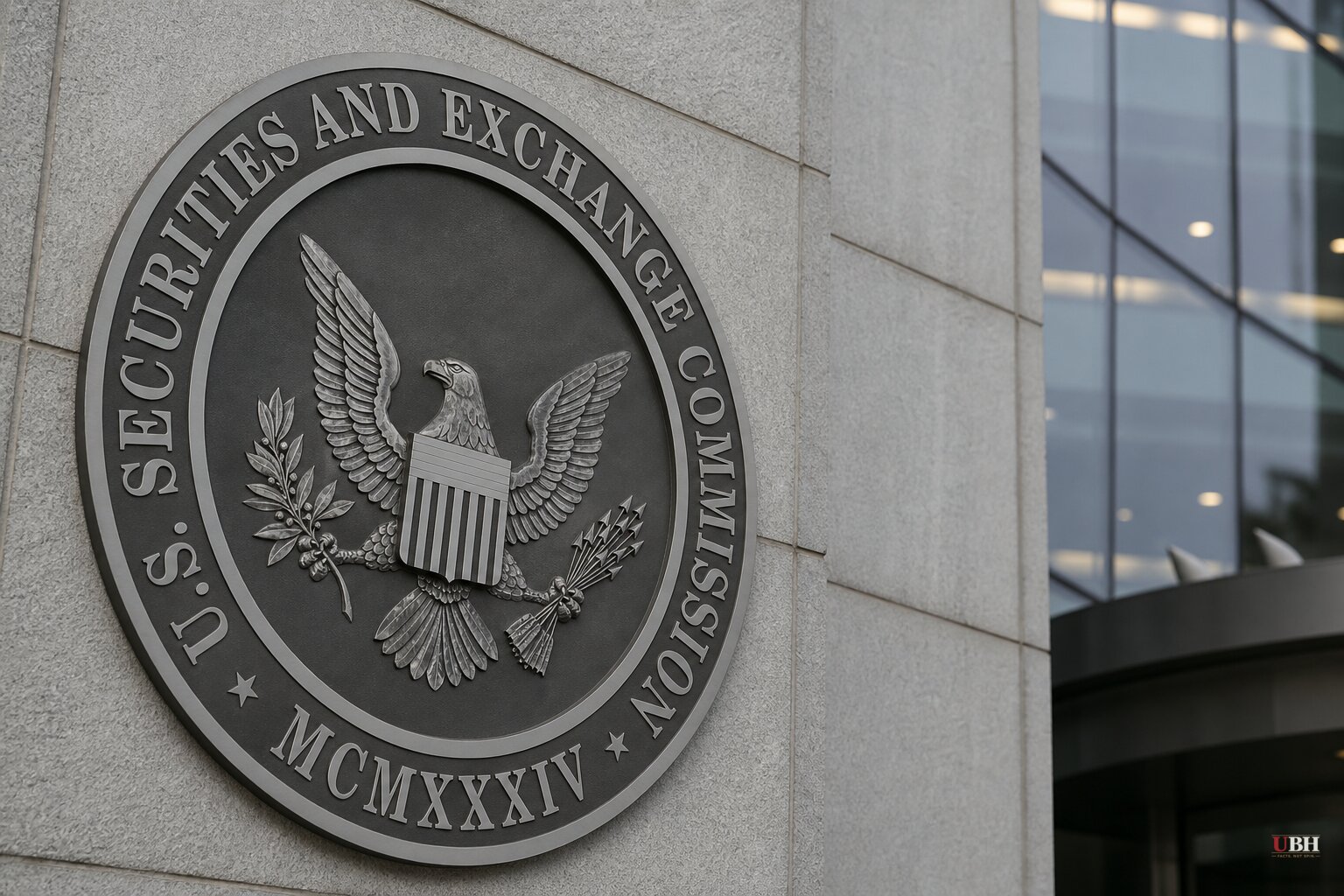
The Securities and Exchange Commission has charged 38 entities with filing fraudulent paperwork designed to make them look like legitimate U.S. investment advisers. The goal, according to the SEC, was to exploit the built-in trust investors place in the agency's own public filings.
The complaints, first filed November 13, 2025, target firms that submitted Forms ADV loaded with fabricated details. Six entities named in the early civil actions include Bluesky Eagle Capital Management Ltd., Supreme Power Capital Management Ltd., AI Financial Education Foundation Ltd., AI Investment Education Foundation Ltd., Invesco Alpha Inc., and Adamant Stone Limited.
These firms claimed U.S. offices in cities like New York and Denver, according to the SEC. They reported assets under management ranging from $1 million to $10 million. None of it was real. Advisory roles, client relationships, physical offices were fabricated wholesale, per the SEC's complaint.
One Man, Ten Shell Companies
The SEC says this wasn't a scattered group of independent scammers. The agency links the scheme to Guanhua Su, a Hong Kong resident indicted around the same time the civil complaints were filed. Su allegedly created at least 10 shell companies between February 2023 and March 2025, each one submitting fraudulent filings to the SEC.
The Department of Justice is running a parallel criminal case against Su for securities fraud conspiracy. That means Su isn't just facing fines. He's facing prison time if convicted.
One consequence of the alleged scheme hit real markets. A public company's stock collapsed roughly 88% in a single day, April 17, 2024. The SEC has linked that crash to a promotional ramp-and-dump operation, the kind of scheme where insiders use fake credibility to pump a stock's price before selling their own shares and leaving retail investors holding the bag.
The Legal Mechanics
The SEC filed its complaints in federal courts in New York and Colorado, alleging violations of Sections 204(a) and 207 of the Investment Advisers Act of 1940. Those sections govern filing requirements and ban false statements in documents submitted to the agency.
In April 2026, a court entered default judgments against Supreme Power Capital Management and AI Financial Education Foundation. Each was ordered to pay $1.2 million in civil penalties, plus permanent injunctions barring future violations. Default judgments mean those entities didn't show up to fight the charges. No surprise, given they were likely shell companies with no real operations to defend.
Form ADV is the SEC's public registration database. Anyone can search it. Millions of ordinary investors use it as a first-pass credibility check before trusting an adviser with their money.
Appearing in that database doesn't mean the SEC vetted or approved the firm's actual business practices. It means the firm filled out a form. The SEC has warned about this gap for years, and this case shows exactly how bad actors weaponize it.
Thirty-eight entities is a significant number for one coordinated action. It suggests this wasn't a one-off con. It was a factory. Someone figured out that faking a Form ADV is cheap and low-risk compared to the payoff of looking legitimate to retail money.
What's Unresolved
The SEC hasn't disclosed how much retail investor money moved through these fake advisers before the scheme was caught, or how many of the remaining 32 entities beyond the initial six have been fully identified and charged individually. The DOJ criminal case against Su is ongoing, and no trial date has been reported in available filings.
It's also unclear whether the SEC plans further reforms to Form ADV verification given how directly this case exposes the database's weakness. A searchable system with real-world credibility but limited underlying vetting creates an incentive for the next Guanhua Su to try the same play.
The $1.2 million penalties against Supreme Power Capital Management and AI Financial Education Foundation are default judgments. That means no assets were necessarily recovered, just a legal finding against companies that may already be defunct shells. Whether victims of the 88% stock crash see any restitution remains an open question the SEC's public filings don't answer.
Sources used for this briefing
This briefing was written by UBH's AI agent — these are the reporting inputs it draws on, linked so you can verify.


