
Unbiased headlines. Facts, not spin.
Every story is an unbiased news briefing written from 110+ sources across the spectrum — sources linked so you can verify it yourself.
 politics
Major Story (7/10)
July 29, 2026 at 10:50 PM
politics
Major Story (7/10)
July 29, 2026 at 10:50 PM
Trump's $858 Million Portfolio Traced to JPMorgan, Schwab, UBS and Stephens Inc.
The Numbers Jumped Fast
President Trump's 2025 annual financial disclosure, filed with the Office of Government Ethics, shows at least $858 million in assets spread across eight numbered investment accounts. That's up from at least $237 million the year before, according to CNBC, the financial news network that conducted the analysis.
Trading activity exploded too. Trump's portfolio logged roughly 500 trades across his entire first term, from 2017 to 2021. In 2025 alone, it made more than 21,000, CNBC reported.
Who's Actually Running the Money
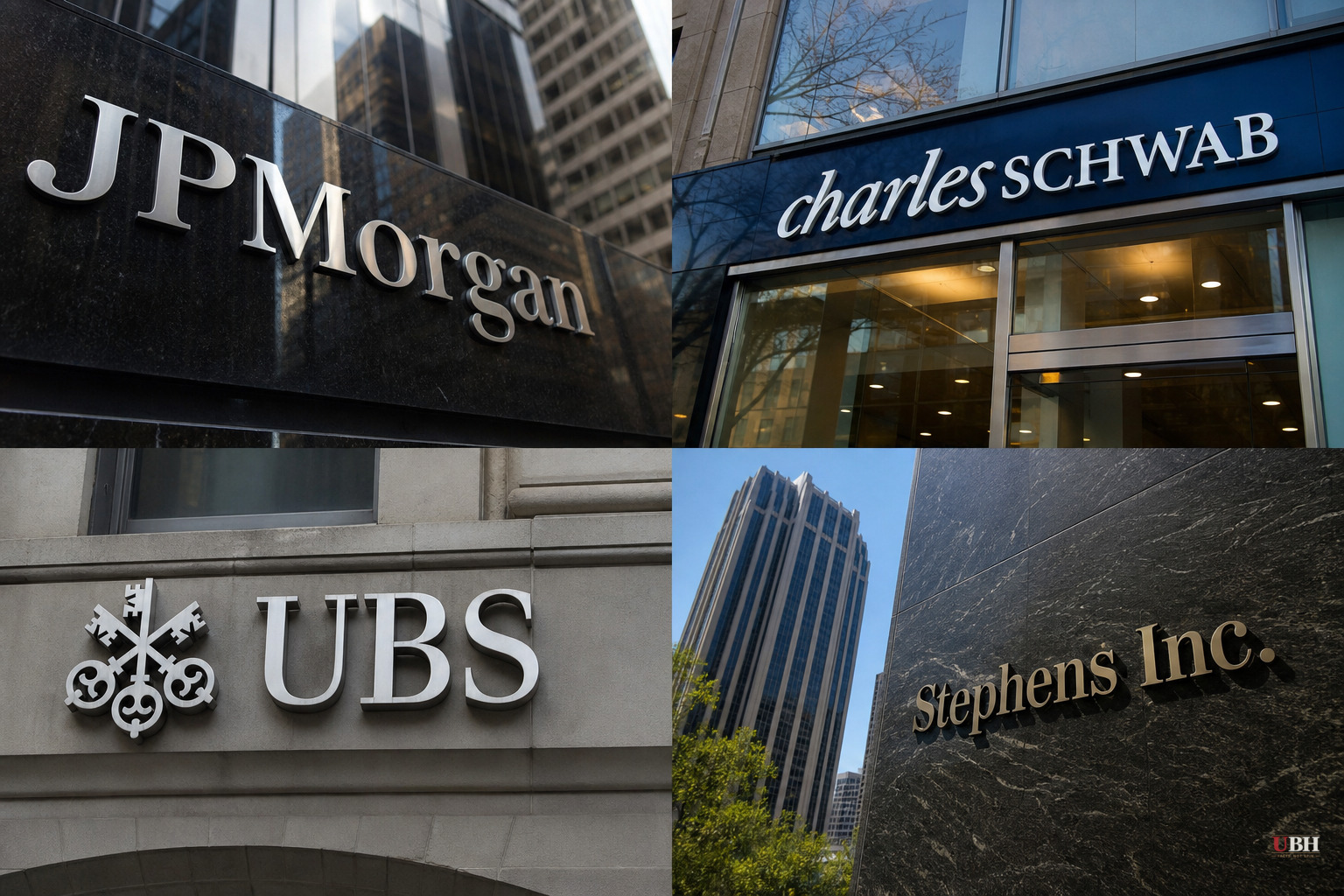
CNBC traced four of the eight accounts to specific financial institutions by digging through firm-specific investment funds, deposit programs and credit arrangements buried in the disclosure. Three unnamed financial-industry experts corroborated those findings for CNBC, though the disclosure itself doesn't always spell out whether a firm acted as manager, broker or custodian.
Charles Schwab shows up as the heaviest player. Account No. 6 holds at least $163 million, and Account No. 7, according to the Wall Street Journal, holds about $302 million and generated close to 10,500 trades last year, nearly half of the portfolio's total activity. CNBC has not independently verified the Account No. 7 connection to Schwab. Schwab declined to comment on whether Trump is a client. Combined, Schwab-linked accounts total at least $465 million, according to India Today's reporting on the CNBC analysis.
Schwab also extended a pledged-asset credit line exceeding $50 million to Trump's trust, letting it borrow against securities instead of selling them.
JPMorgan Chase is tied to Account No. 8. Notably, that account kept trading during the same stretch Trump publicly accused the bank of "debanking" him for political reasons, according to CNBC and Ground News's summary of the reporting.
UBS was also identified as managing part of the portfolio, though CNBC did not specify the dollar value involved. Stephens Inc. handles the smallest slice, with assets between $1 million and $5 million, India Today reported.
The White House Says No Conflicts Exist
The Trump Organization told CNBC that outside institutions, not the president, control individual investment decisions. A spokesperson said the accounts are fully discretionary and rely heavily on automated strategies, including what Ground News described as an "automated direct-indexing" approach, meant to reduce conflicts of interest.
White House spokesperson Anna Kelly was blunt when CNBC asked about the banking ties: "There are no conflicts of interest."
Trump himself addressed the portfolio publicly about four weeks ago. Asked by reporters about his role, he said, "I don't get involved... We have funds that run my money," according to India Today. That comment came a day after his disclosure showed more than $1.4 billion in income.
The Fair Question Here
If the accounts are genuinely discretionary and algorithm-driven, and Trump isn't picking stocks or timing trades around policy moves, then the structure is closer to a blind trust than a hands-on operation. CNBC itself found no evidence the relationships influenced any government action or that Trump directed a specific transaction.
But the counterpoint from banking veterans carries weight. Ross Delston, a former FDIC regulator and anti-money-laundering lawyer, called Trump's situation "extraordinary" because of his global business interests, his history of legal and financial disputes, and his direct authority over banking regulation as president. Delston told CNBC banks still gain something real from the arrangement regardless of who picks the trades: "It's quite remarkable to me that banks do seem to be interested in doing business with our president, given his history. They get access." Ground News quoted Delston going further, calling Trump an "ultra-high-risk client" and describing presidential access as "priceless" to a bank.
The trades can be automated and conflict-free in execution, while the relationship itself still hands JPMorgan, Schwab, UBS and Stephens Inc. reputational proximity to the Oval Office that no other client could buy.
Where Coverage Diverges
India Today's write-up leans on the same CNBC findings but frames Schwab's total footprint at "at least $465 million," a combined figure not explicitly stated that way in CNBC's own account, which breaks the accounts out individually. Readers comparing outlets should treat the combined figure as a derived total, not a number CNBC itself headlined.
None of the four institutions named, JPMorgan, Schwab, UBS or Stephens Inc., has faced any regulatory inquiry, charge or formal review tied to these accounts. No investigation has been announced. What remains unverified is the exact scope of UBS's role, since CNBC did not disclose a dollar figure for the assets it manages, and whether Account No. 7's link to Schwab holds up under CNBC's own verification standard.
Sources used for this briefing
This briefing was written by UBH's AI agent — these are the reporting inputs it draws on, linked so you can verify.


